Pure solar flight is the gag.
The sun is powerful, but aircraft need energy density, reliability, safety, certification, night operation, and weather tolerance.
The absurd dream
A solar-powered jet sounds heroic until the weather report arrives. That is where the comedy begins — and where the real airport power story becomes useful.
Solar panels are brave. Batteries are responsible.
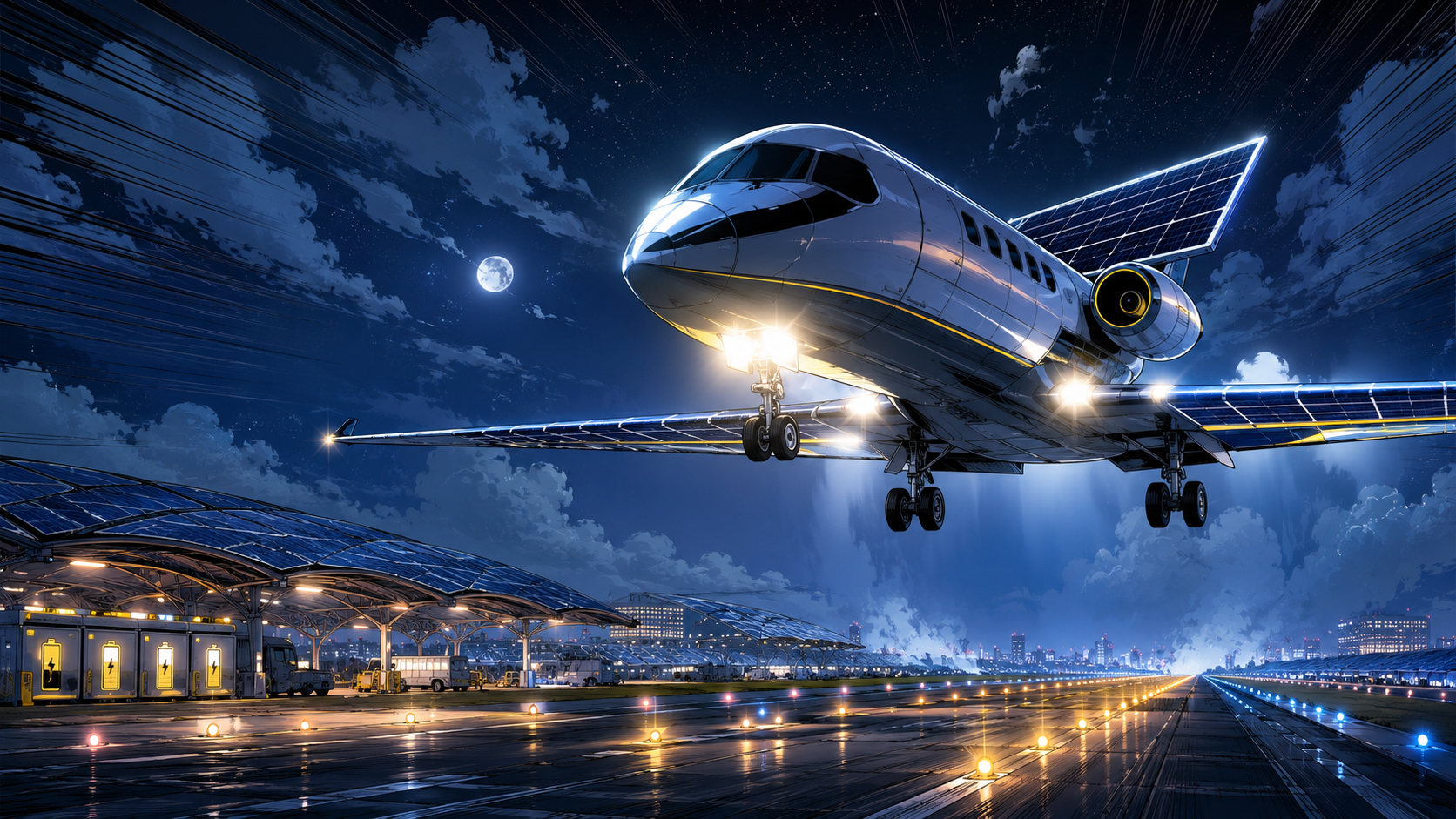
The joke with wings
SolarJets.com starts with a ridiculous idea: a heroic pilot shouting that he will fly on sunshine alone. Then the sun sets. Then Cloudzilla shows up. Then the runway lights still need power.
The solar jet makes people smile. The practical lesson is better: airports can use solar and batteries on the ground long before anyone tries to cover a passenger jet with panels.
Why the fantasy works
A serious airport energy page can be dry. A manga solar jet gives the reader a reason to enter. Once inside, the story lands on practical infrastructure.
The sun is powerful, but aircraft need energy density, reliability, safety, certification, night operation, and weather tolerance.
Airports have rooftops, canopies, parking areas, maintenance buildings, chargers, and daytime load that can be served by well-planned solar systems.
Storage turns daytime generation into nighttime usefulness and gives critical loads a better chance when the grid fails.

The villain from the weather report
The funniest enemy of a solar jet is not a rival pilot. It is a cloud. A giant, smug, inconvenient cloud with excellent timing.
Cloudzilla turns the fantasy into a lesson: any serious clean-power system needs planning for intermittency. Airports do not get to pause operations because the sky changed its mind.
Captain SolarJet’s flight plan
The “solar jet” concept becomes a tour through the parts of aviation energy that can actually be improved today.

Canopies, terminals, parking structures, hangars, and service areas can become clean-energy surfaces.
Explore airport solar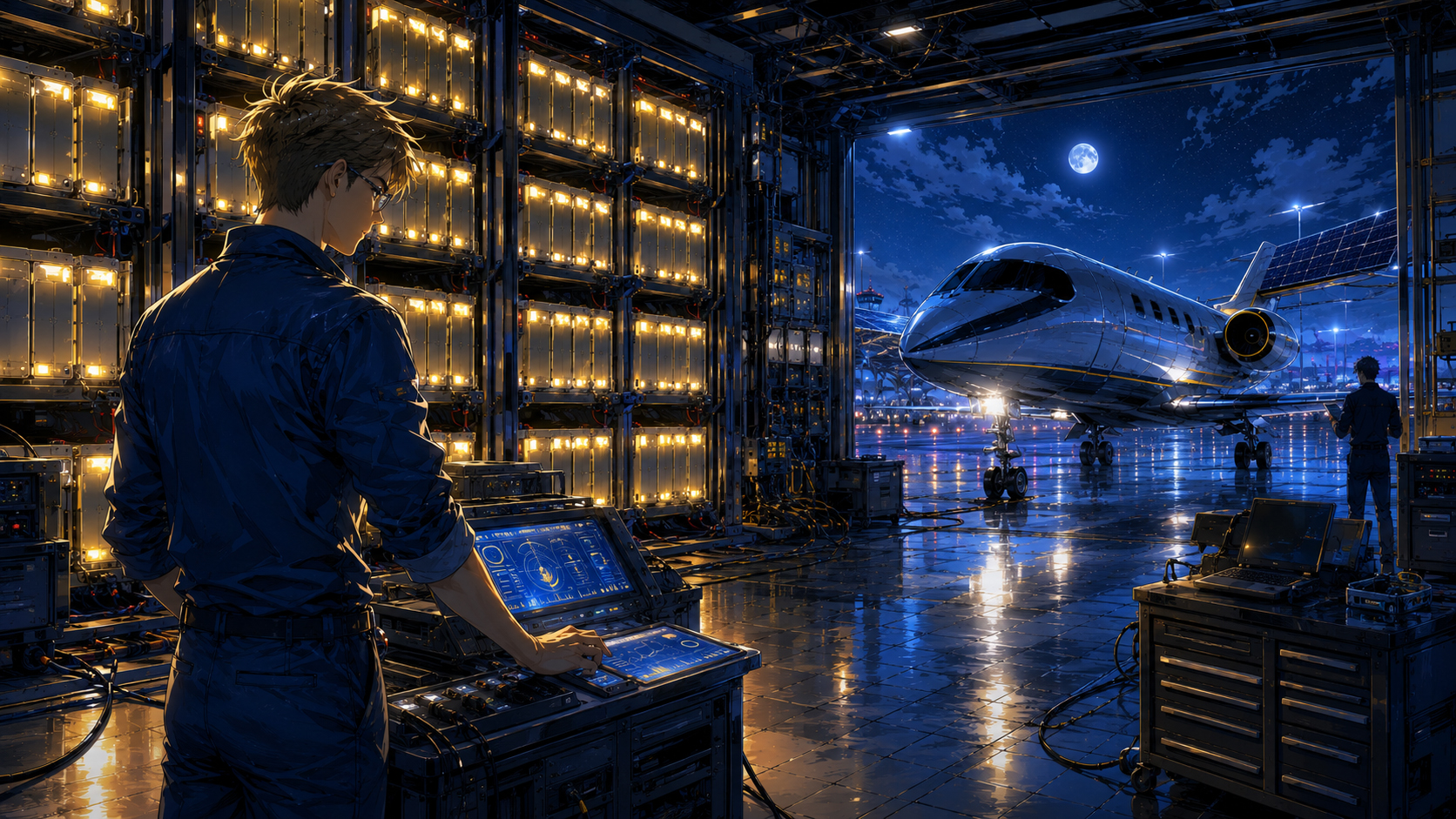
Batteries make the punchline work after sunset, during peak pricing, and when the grid gets weird.
Study the batteries
Solar, batteries, chargers, priority loads, and controls need one calm brain in the control room.
Enter the control room
The landing problem
A solar jet joke becomes serious the moment the wheels come down. Runway lights, communications, security systems, gates, chargers, pumps, tools, controls, and hangar loads all demand reliable power after dark.
That is the clean-energy lesson hiding inside the comedy: solar is strongest when paired with storage, controls, and a load plan.
The cast keeps it moving
Captain SolarJet brings the confidence. Chief Battery brings the math. Runway Ojisan brings coffee. Madame Kilowatt brings pain.

The engineer who says “not without storage” before the theme music starts.

The maintenance veteran who knows the runway is not impressed by slogans.

A tiny paperwork demon with a giant stamp and perfect timing.

Peak-hour pricing wearing a cape and smiling at the meter.

Ground crew reality
The clean aviation future will not arrive only through aircraft. It will arrive through the infrastructure around aircraft: chargers, panels, batteries, controls, construction crews, service teams, and operating discipline.
The SolarJets.com joke is simple: everyone looks up at the sky, but the power solution is often bolted, wired, commissioned, and maintained on the ground.