Solar canopies
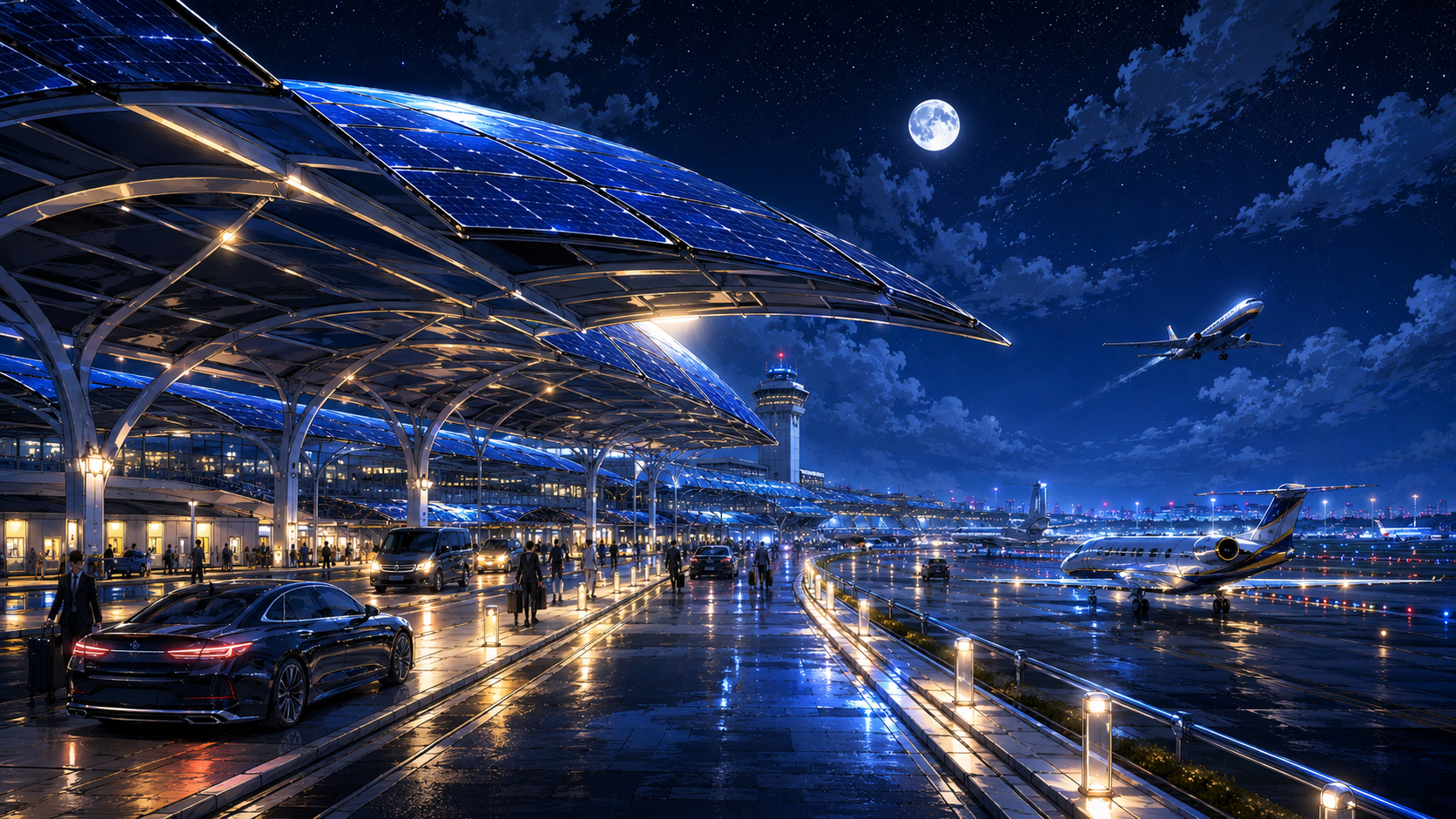
Parking, drop-off, charging, and service zones can become shaded power-generating structures.
Airport solar reality
The solar jet is the joke. The airport is the real opportunity: canopies, rooftops, hangars, chargers, batteries, and microgrid controls working together on the ground.
Do not put all the panels on the jet. Start with the airport.
The useful landing
Captain SolarJet wants solar panels on wings because that looks heroic. Chief Battery looks around the airport and sees something more practical: canopies, terminals, parking areas, hangars, service buildings, maintenance zones, and charging areas that can support a real clean-power strategy.
Airport solar can provide shade, public visibility, local generation, and a foundation for battery storage, charger support, and microgrid planning. The joke flies better when the ground system is strong.
Where solar fits
Airports have the exact ingredients that make solar worth discussing: large surfaces, daytime activity, public visibility, electrification pressure, and critical operations.
Parking, drop-off, charging, and service zones can become shaded power-generating structures.
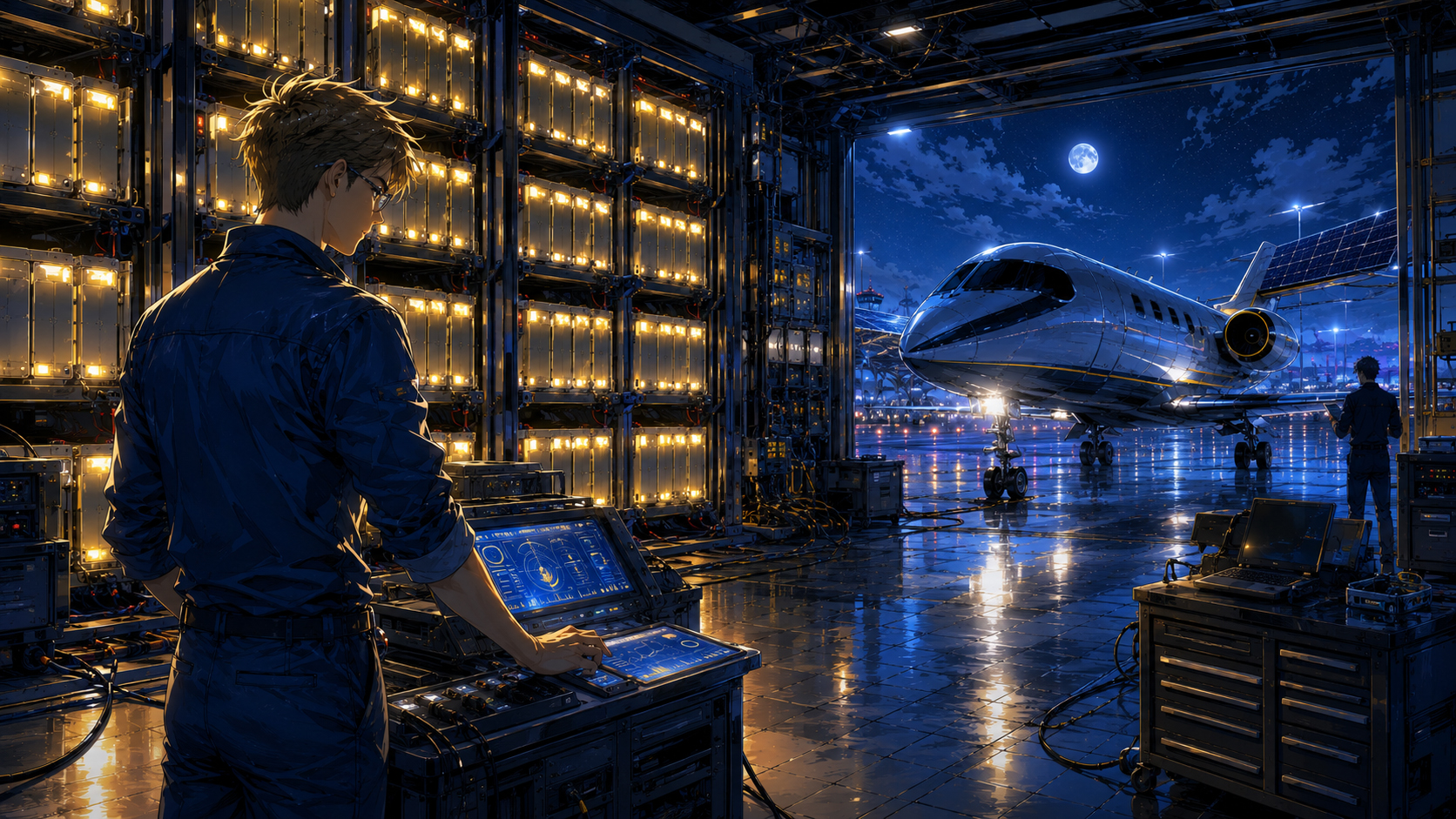
Hangars can support solar discussions when structure, access, roof condition, and electrical routing make sense.
Maintenance, operations, offices, and support buildings may offer practical solar and battery opportunities.
EVs, ground equipment, and future air taxi charging can make local generation and controls more valuable.
Solar plus storage
Solar production is strongest when the sun is available. Airport loads are not always polite enough to show up at the same time. That is why the SolarJets.com story keeps landing in the battery room.
Batteries can help carry useful energy into evening hours, support selected loads, and give the control system options when weather, peak demand, or grid trouble enters the story.
Airport solar checklist
The Permit Goblin loves pretty concepts with missing details. A buildable airport solar plan starts with practical questions.
Review canopies, rooftops, parking areas, service yards, hangars, setbacks, access, shading, structural capacity, and construction phasing.
Separate ordinary facility loads, critical loads, chargers, runway support, security, controls, and backup priorities.
Define solar use, battery charging, battery discharge, utility interaction, priority modes, monitoring, service access, and maintenance responsibilities.

Permit Goblin warning
Airport solar canopies look simple in a poster. In the real world, the project touches structure, electrical design, trenching, traffic, access, safety, utility coordination, operations, phasing, equipment protection, and inspection.
The Permit Goblin appears whenever a page says “solar canopy” but the drawings do not say where the conduits go, how equipment is protected, what gets shut down, or who can still move through the airport during construction.
What airport solar supports
The real story is how generation connects to useful airport work.
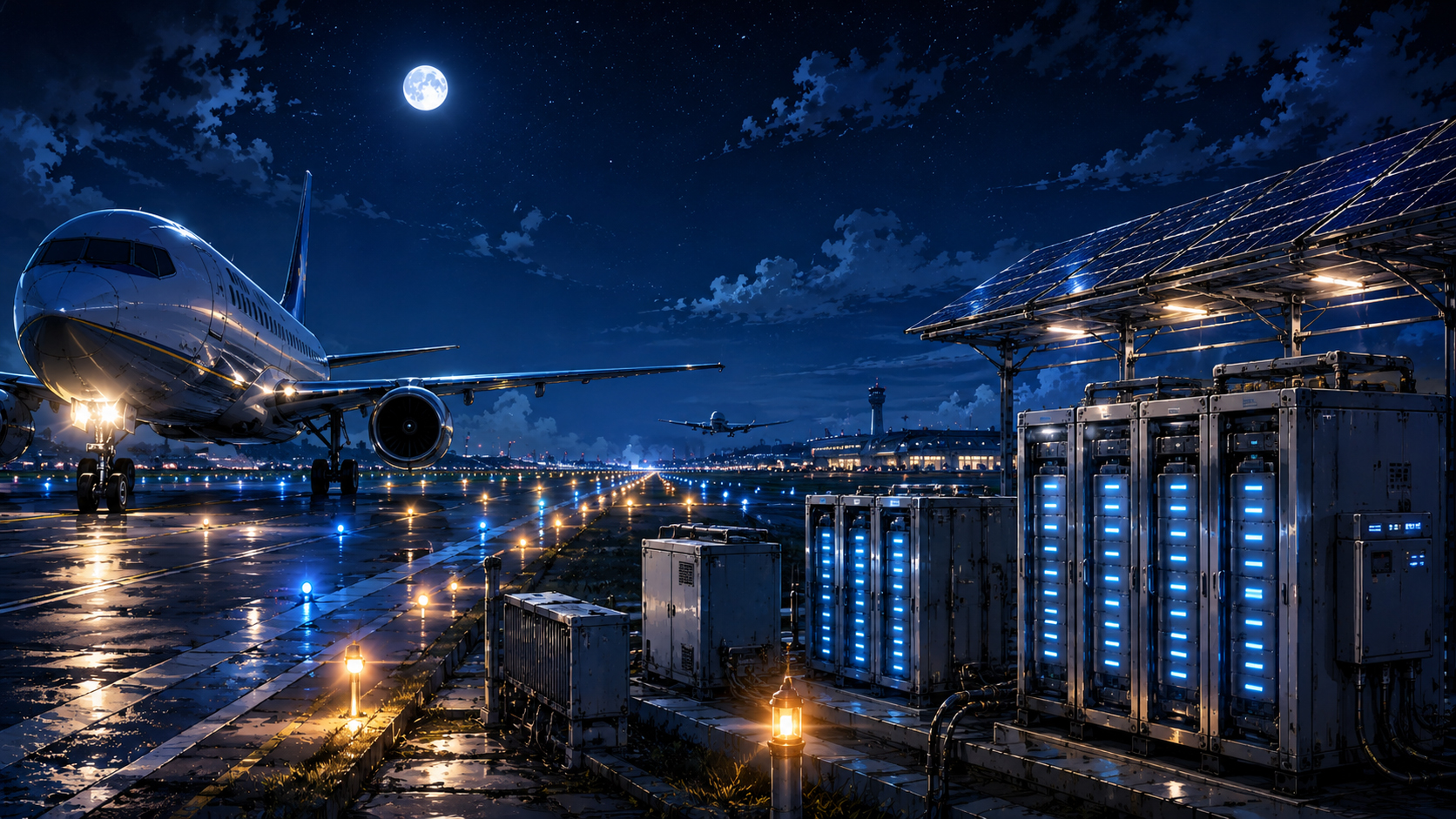
The runway still needs power at night, during bad weather, and when the solar curve is gone.
Explore runway power
The hangar is where panels, batteries, controls, tools, labels, and maintenance reality meet.
Enter the hangar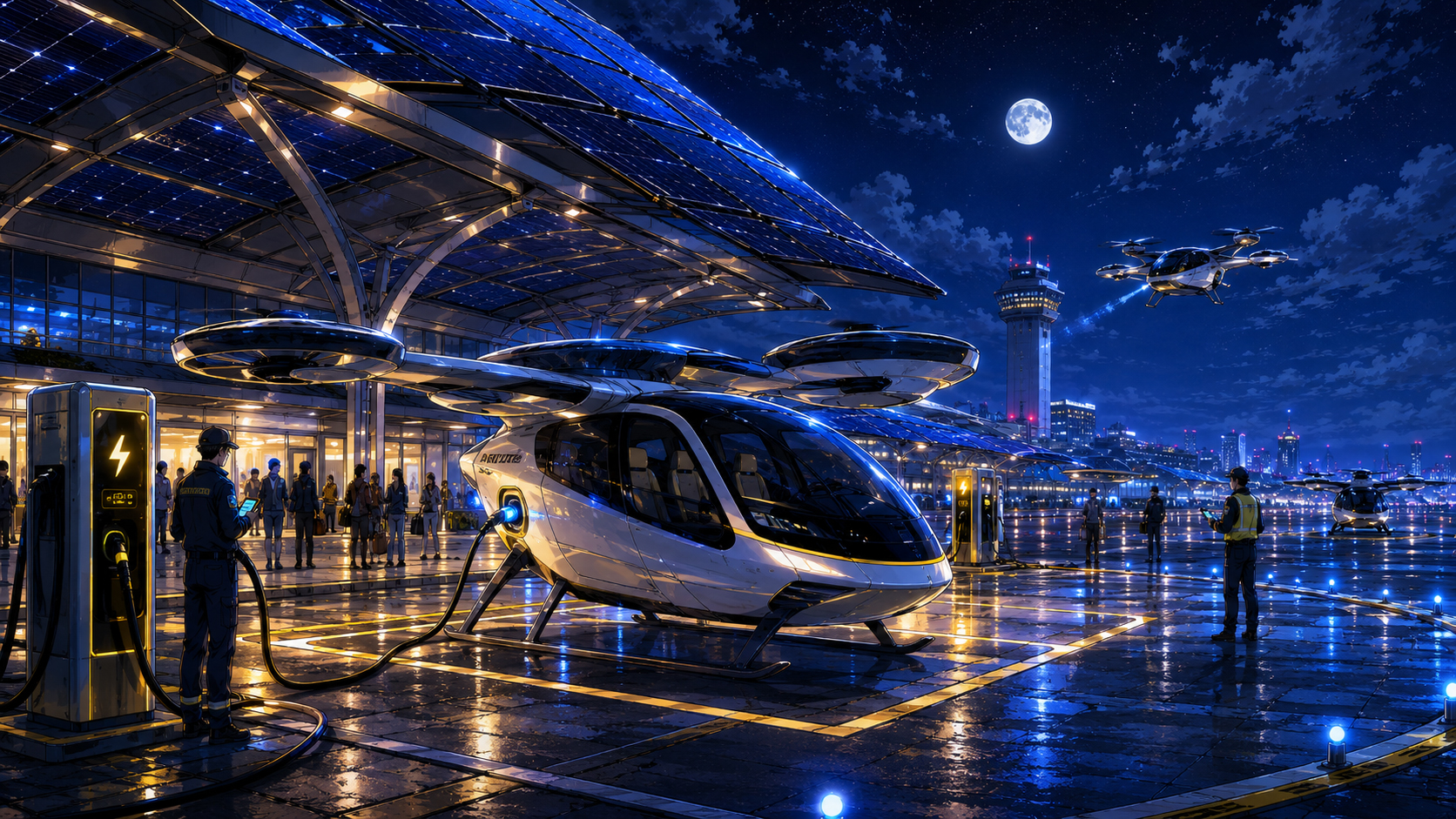
Future flight loads make energy timing, chargers, batteries, and controls more important.
Charge the future
The control layer
Panels, batteries, chargers, and critical loads do not automatically become a strategy. A control layer must watch production, battery state of charge, charger demand, facility loads, utility import, and priority circuits.
That is the difference between a collection of equipment and an airport microgrid. The control room turns solar into something the airport can operate, understand, and maintain.
The manga cast weighs in
That is why the story works. The same project becomes a hero dream, an engineering plan, a maintenance question, a permitting battle, and a rate strategy.



Sees service access, labels, lights, breakers, and what will break at midnight.
Ojisan’s view

Ground crew reality
The clean airport future depends on crews who can turn drawings into hardware: racking, conduits, switchgear, batteries, inverters, labels, trenching, chargers, controls, commissioning, inspections, service, and troubleshooting.
SolarJets.com makes it funny, but the respect goes to the people who make the airport power system real.