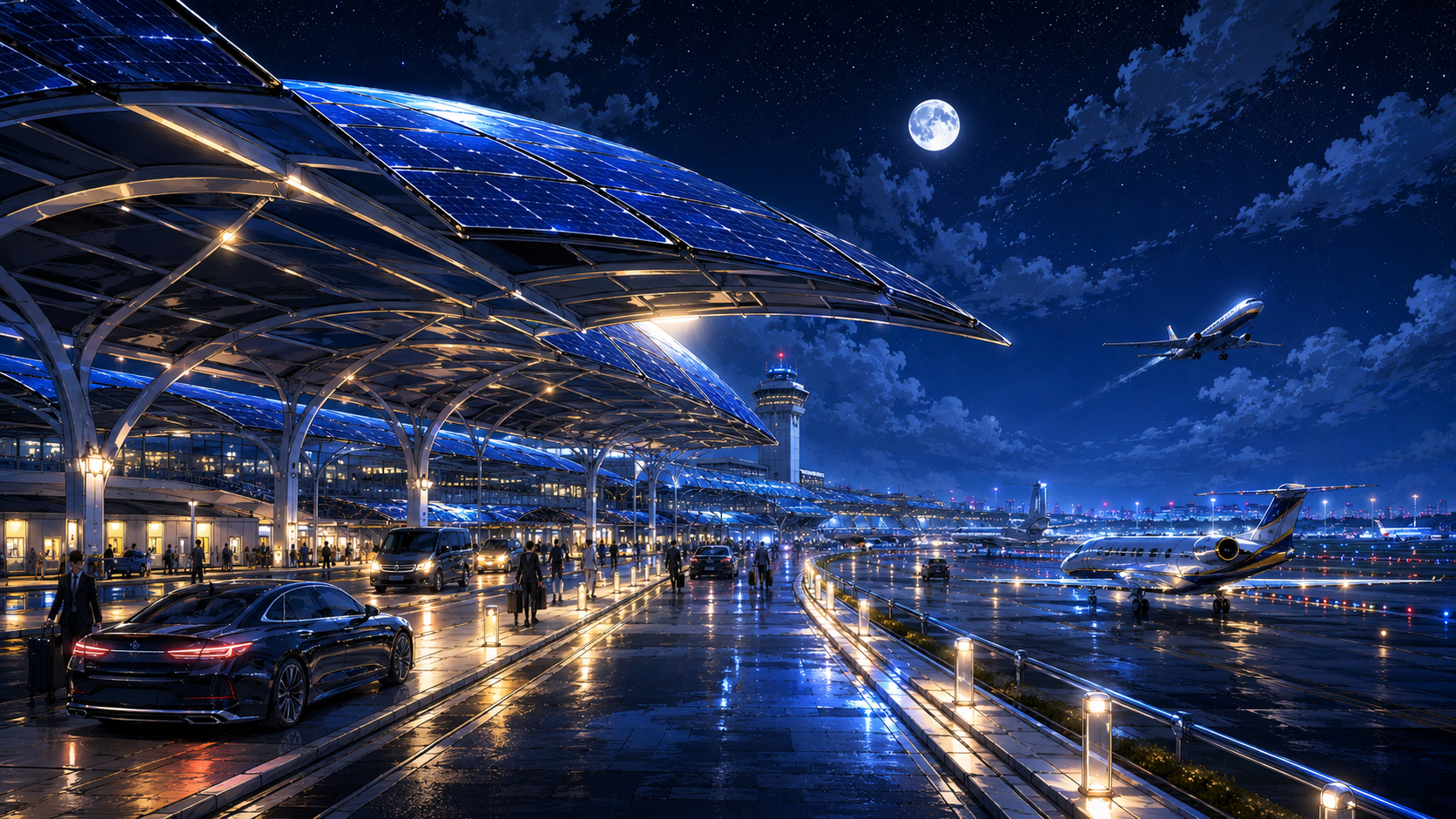
Roof or canopy solar
Hangars and nearby canopies can become solar surfaces when structure, access, and electrical routing make sense.
Airport hangar power
The hangar is where the joke gets wired. Solar can start on the roof or canopy, but the real story is battery backup, controls, service access, and power that works after sunset.
The jet gets the poster. The hangar gets the wiring.
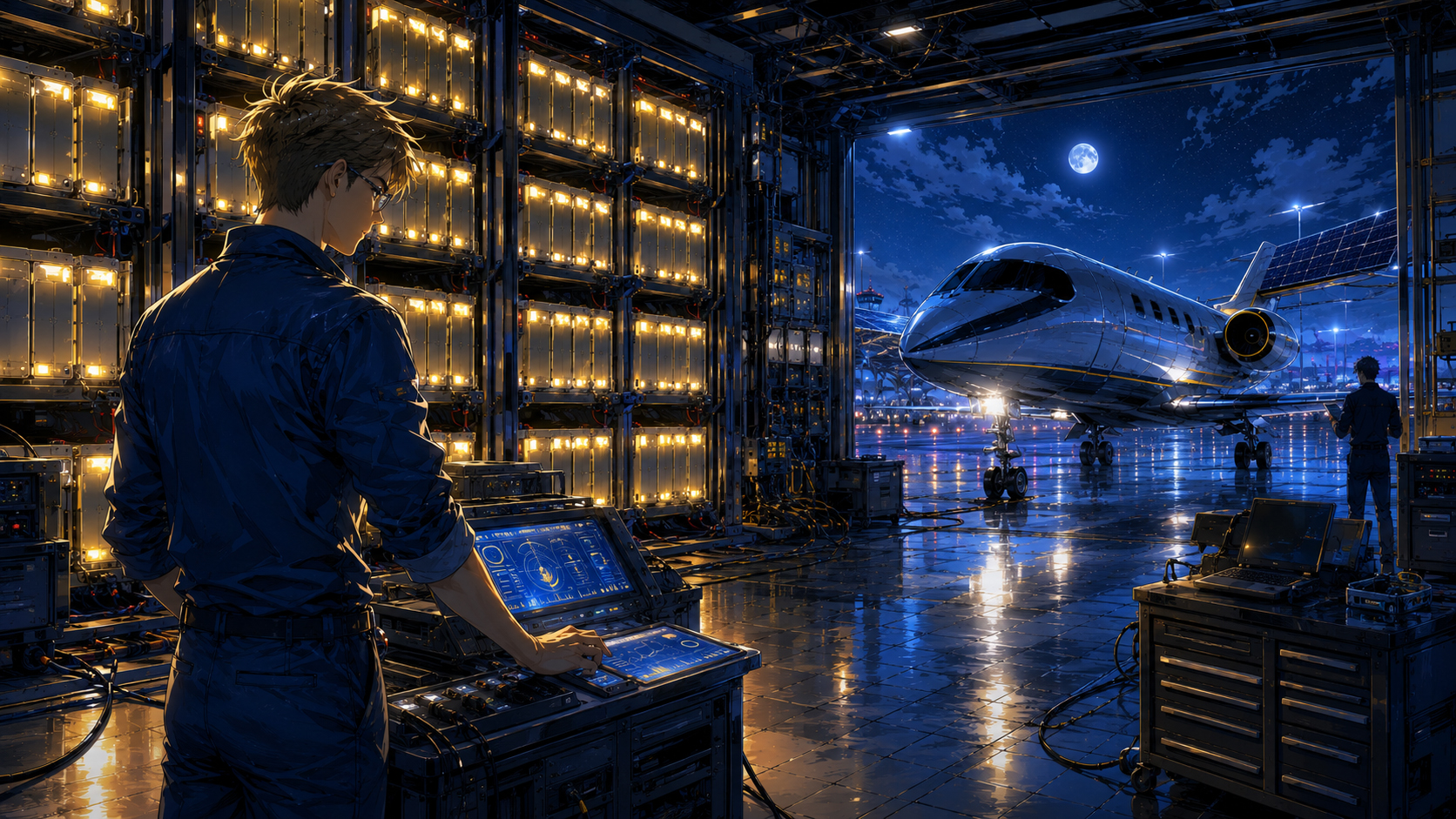
The practical room
Captain SolarJet wants everyone to look at the sky. Chief Battery points to the hangar. That is where the load panels, inverters, batteries, disconnects, chargers, tools, labels, and service clearances decide whether the clean-energy story actually works.
Hangar solar is not just about putting panels somewhere. It is about supporting the place where aircraft are stored, serviced, charged, inspected, and kept ready.
Hangar power logic
The hangar is where solar power meets real equipment, real people, and real maintenance expectations.
Hangars and nearby canopies can become solar surfaces when structure, access, and electrical routing make sense.
Stored power can support selected hangar loads when sunlight is unavailable or utility power is not friendly.
Inverters, disconnects, switchgear, chargers, panels, conduits, and controls need real locations and clear access.
Labels, clearances, safe work areas, training, and monitoring matter long after the hero image is posted.

Chief Battery’s hangar tour
Chief Battery does not begin with a poster. He begins with what the hangar needs to power: lights, doors, tools, chargers, controls, security, communication equipment, pumps, HVAC, and the specific circuits that matter during an outage or peak-price window.
The battery system only makes sense after the mission is clear. What should run? How long? Under what condition? What can wait? What needs manual access? What should the control room see?
Hangar checklist
The Permit Goblin loves vague hangar plans. This checklist starves him.
Decide whether the goal is bill reduction, backup power, peak shaving, charger support, resilience, or a combination of those jobs.
Batteries, inverters, panels, disconnects, conduits, chargers, and controls need safe, protected, serviceable locations.
Define charge windows, discharge logic, priority loads, emergency behavior, monitoring, labeling, and service responsibilities.

Permit Goblin warning
The Permit Goblin appears when someone treats the hangar like a blank room. Hangars have doors, aircraft movement, fire access, structural limits, service pathways, electrical rooms, clearances, lighting, traffic, and people working under pressure.
A buildable hangar solar plan must respect the building and the operations inside it. The more complete the plan, the less power the goblin has.
What can hangar solar support?
The best backup-power conversation is specific. “Everything forever” is not a design.
Hangar lighting, selected exterior lights, and door systems may be important operating loads.
Service equipment and shop loads should be understood before assigning backup priority.
Ground equipment, air taxis, service vehicles, and battery tools can create new electrical demands.
Access, cameras, communications, and control equipment may need a different backup strategy than comfort loads.

Control room connection
A hangar power system should not behave like an isolated mystery box. It should coordinate with the broader airport power plan: solar production, battery state of charge, charger demand, runway priorities, utility import, and backup modes.
The microgrid control room gives operators visibility into what the hangar system is doing, when it is charging, when it is discharging, and which loads are being supported.
The hangar cast
The hangar is where the manga characters stop posing and start asking practical questions.
The engineer who wants a load schedule before anyone orders cabinets.
Meet Chief Battery

The team that turns hangar theory into labeled, wired, serviceable equipment.
Meet the crew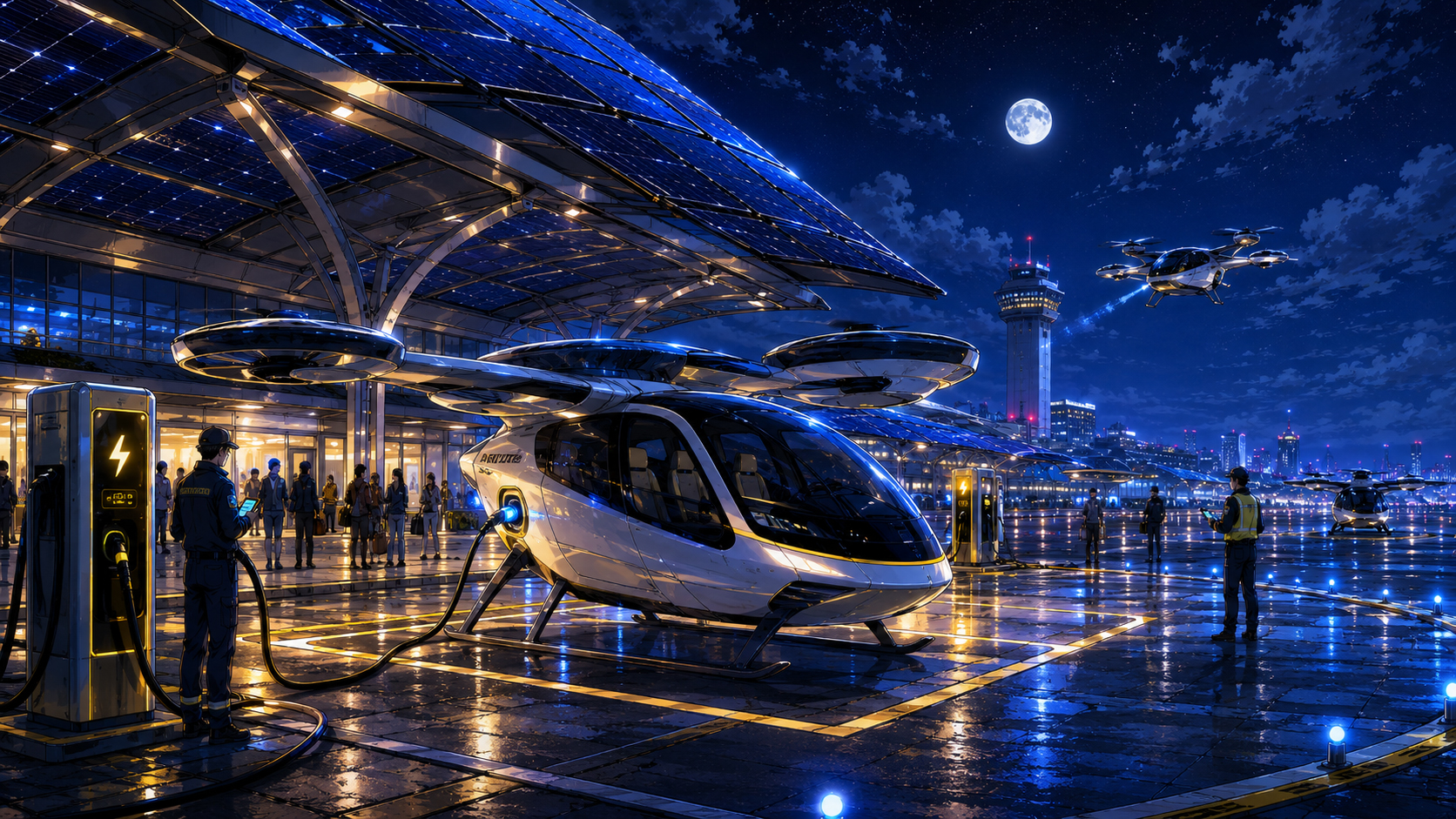
Future hangar loads
Electric aviation support, air taxi charging, ground vehicles, and battery-powered tools can make hangar power more complex. That does not make the future impossible. It makes planning more important.
Hangars may become places where aircraft support, charging, storage, solar, maintenance, and control systems all meet. The design has to respect that complexity.