Call Sign
Old Taxiway Thunder
Runway veteran file
Coffee in one hand. Maintenance wisdom in the other. Runway Ojisan has seen every blackout, brownout, bad idea, ribbon cutting, and heroic slogan that ever rolled across the tarmac.
“Solar panels are brave.” “Batteries are responsible.”

Character profile
Runway Ojisan is the old airport maintenance man who does not need to shout. He has lived through generators that would not start, lights that flickered at the worst moment, equipment rooms nobody cleaned, and brilliant ideas that forgot to include a breaker schedule.
He likes solar. He respects batteries. He distrusts anyone who says “simple” before opening the electrical room. In the SolarJets manga universe, his coffee cup is basically a warning label.
Official stats
He has no patience for fantasy wiring. He has unlimited patience for systems that actually work.
Old Taxiway Thunder
A flashlight, a torque wrench, and one brutally practical question.
Grand openings before commissioning, loose assumptions, and mystery panels.
Can silence an entire meeting by pointing at the load schedule.

The night-shift lesson
Captain SolarJet loves the sunny part of the story. Runway Ojisan waits for the landing. He knows the real test comes after sunset, when the runway lights are on, the equipment is warm, the charger demand is rising, and the grid bill is no longer funny.
That is why Runway Ojisan respects storage. A solar airport has to be more than beautiful in daylight. It has to support the work when the sun is gone.
Ojisan’s checklist
He does not hate ambition. He just wants ambition wired correctly.
Identify the critical loads first: lighting, controls, security, communications, chargers, emergency equipment, pumps, and essential hangar systems.
Backup power is not just a battery cabinet. It is duration, discharge limits, recharge logic, operating priorities, and a realistic outage plan.
A system nobody understands becomes a locked box with blinking lights. Ojisan wants labels, access, training, and service discipline.

Weather report
While Captain SolarJet was polishing his sunglasses, Runway Ojisan was looking at the sky. Fog, marine layer, smoke, clouds, storms, and darkness are not plot twists to airport people. They are normal operating conditions.
That is why his advice is blunt: do not design a power system for the best hour of the best day. Design it for the hour when everyone still expects the airport to work.
Who listens to Ojisan?
The comic relief is also the institutional memory. Every clean-energy project needs someone who remembers what breaks first.
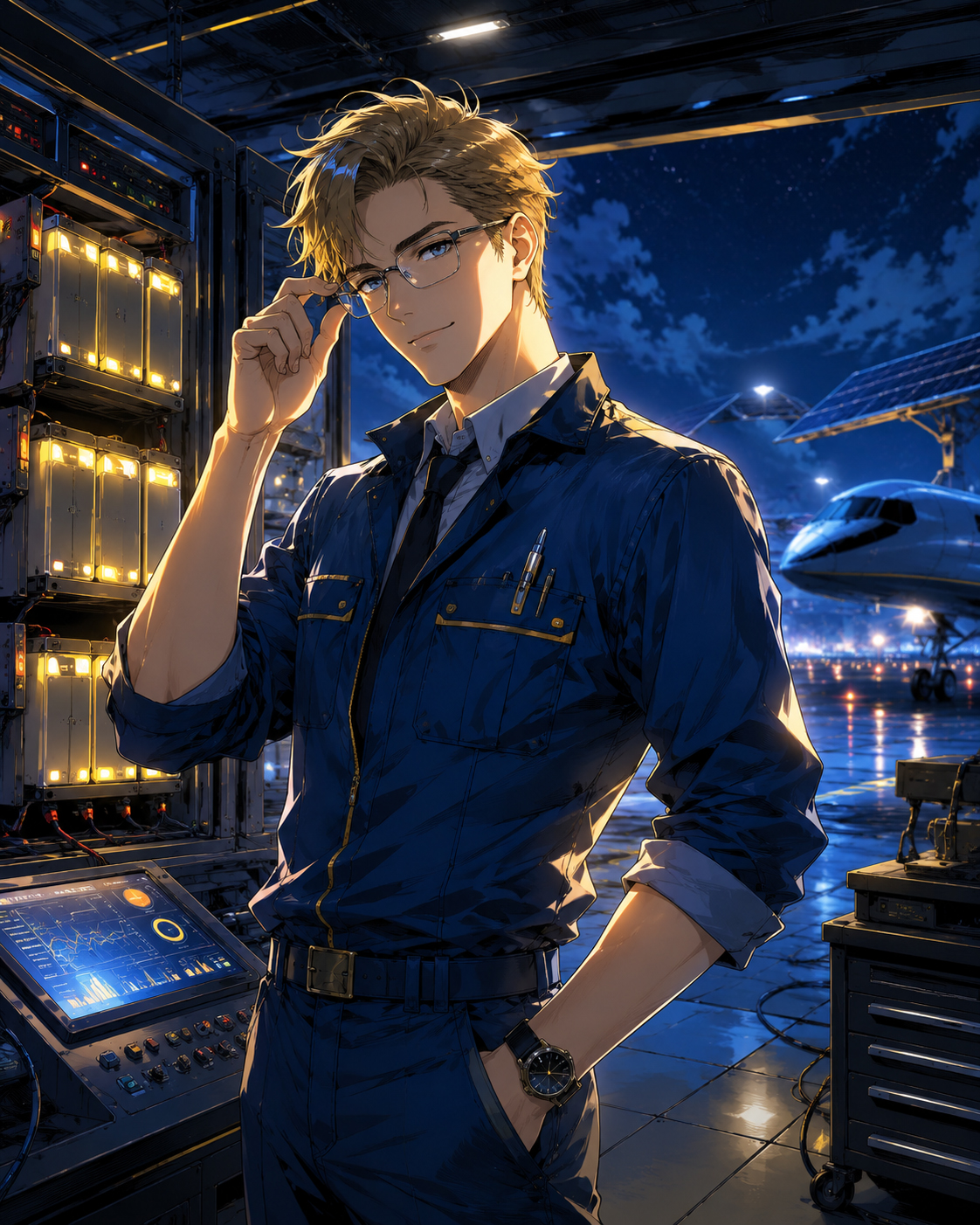
The engineer who translates Ojisan’s grumbling into a real battery and control strategy.
Meet Chief Battery
The hero who keeps learning that confidence is not a backup power source.
Meet Captain SolarJet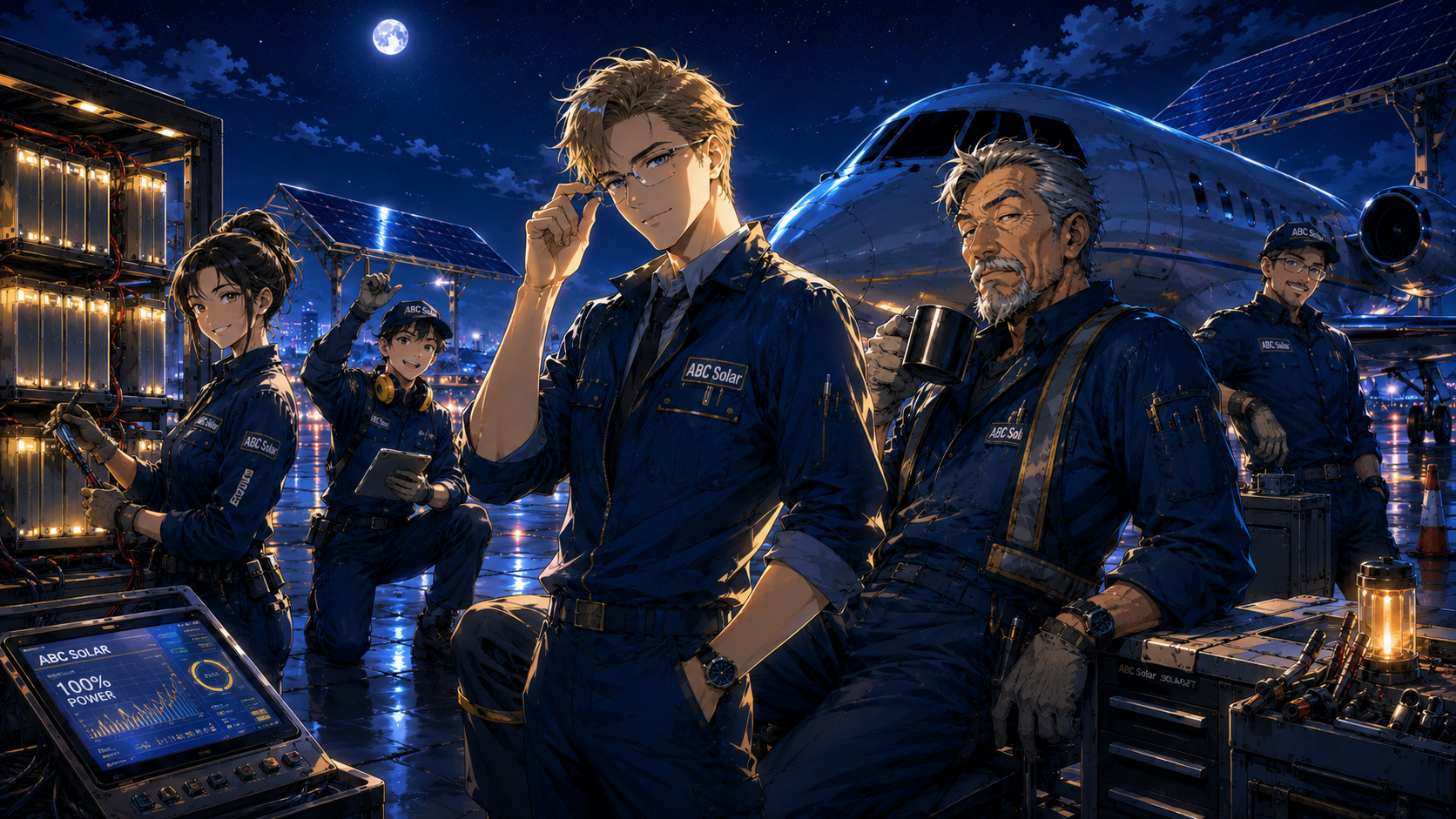
The team that knows Ojisan’s complaints are usually the punch list before the punch list.
Meet the crew
Ground crew reality
Posters are useful. Speeches are fun. But Runway Ojisan knows the airport is protected by people who show up with meters, labels, torque specs, spare parts, drawings, access plans, and the humility to test everything.
In the SolarJets.com universe, he is funny because he is right: the clean-power future still needs maintenance men, electricians, engineers, installers, and crews who can land the idea on the ground.