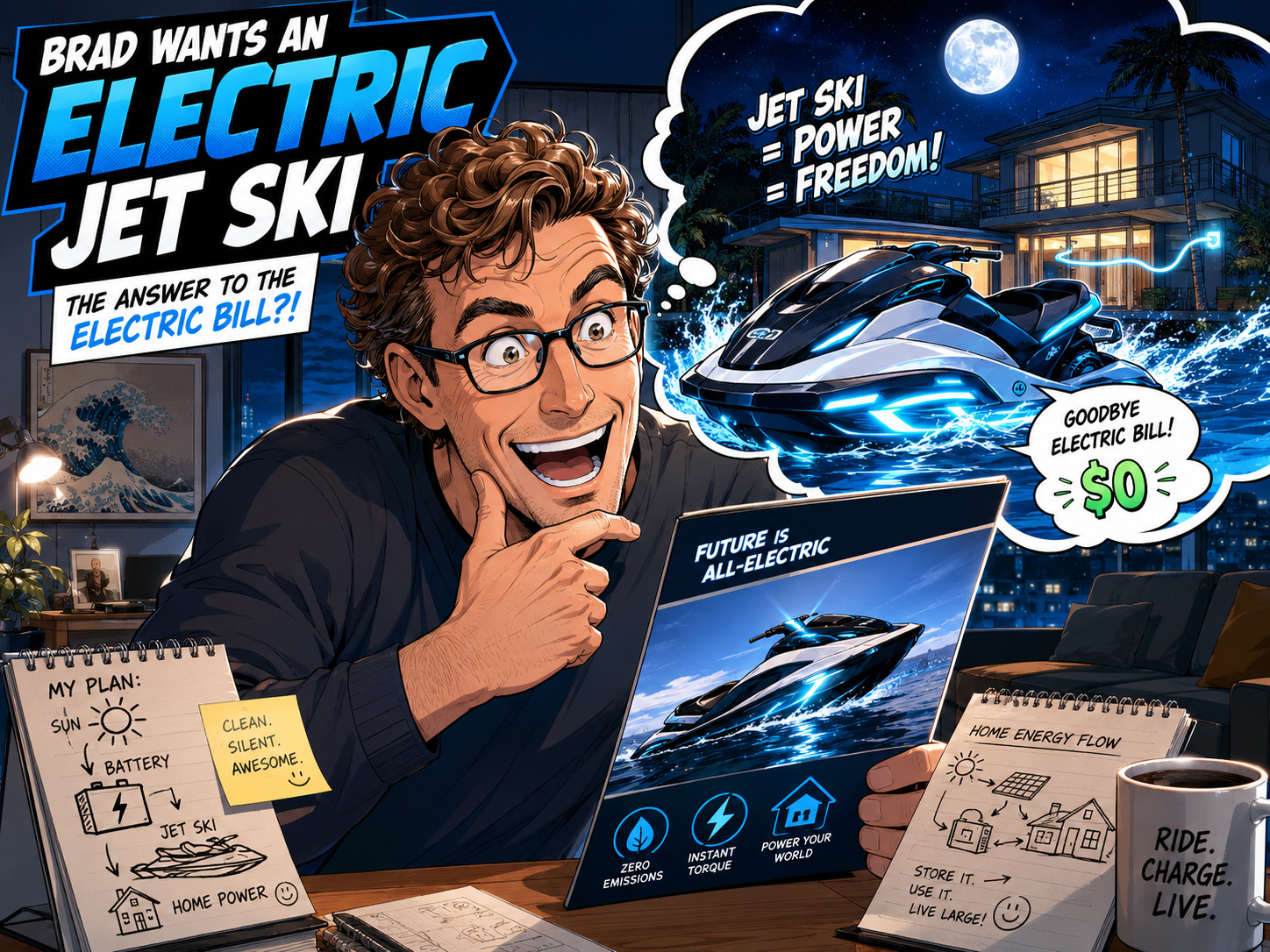
Episode 1: The Solar Jet Ski
Brad wants an electric Jet Ski to power the house. Tomoko checks the bill. Chief Battery bans the extension cord. Dock Ojisan wants no drama.
Open Jet Ski episodeSolarJets.com FAQ
Two manga worlds, one clean-power joke: electric Jet Skis as floating batteries, and solar jets in the sky. The comedy is absurd. The battery and safety lessons are not.
Solar is the takeoff. Batteries, controls, and common sense are the landing gear.
Start here
SolarJets.com is a manga comedy site by ABC Solar Incorporated about absurd clean-power ideas that reveal practical truths about solar, batteries, microgrids, rate timing, safety, and backup power.
Brad wants an electric Jet Ski to power the house. Tomoko checks the bill. Chief Battery bans the extension cord. Dock Ojisan wants no drama.
Open Jet Ski episode
Captain SolarJet wants to fly on sunshine alone. Cloudzilla blocks the sun. Chief Battery explains airport storage, runway power, and microgrids.
Open solar jets episodeMain FAQ
These answers keep the tone funny while keeping the safety message clean.
Both. The solar-powered jet and electric Jet Ski stories are manga comedy. The underlying lessons are practical: solar needs storage, batteries need controls, critical loads need planning, and power systems need proper equipment.
No. The solar jet is the joke. The practical story is airport power: solar canopies, hangars, battery backup, electric air taxi charging, runway power, and microgrid controls on the ground.
It means solar alone is not enough when loads happen at night, during clouds, in fog, during outages, or during peak-rate windows. Batteries and controls help clean power work when the sun is not available.
In the manga, Brad wants that badly. In real life, any vehicle-to-home concept would require manufacturer-supported power export, proper transfer equipment, marine-rated interfaces, isolation, protection, monitoring, approved drawings, and professional installation. It is not done with a cord.
That is not the right teaching message. The SolarJets version focuses on selected critical loads: refrigerator, essential lights, Wi-Fi/router, phone charging, and limited protected circuits. Brad does not get to power everything forever.
Tomoko represents the reality check. Brad sees a floating battery. Tomoko sees the electric bill, the budget, the charging cost, and the question Brad skipped: does this actually help?
Chief Battery is the engineer character who keeps the story safe. He explains storage, controls, critical loads, transfer equipment, and why “just plug it in” is not an engineering plan.
Dock Ojisan is the marina wisdom character. He likes quiet docks, full batteries, strong coffee, marine-rated equipment, clear labels, and no drama.
Cloudzilla is the weather monster who blocks the sun at the worst possible time. He teaches the solar jet episode’s main lesson: solar production changes, so useful systems need storage and planning.
Madame Kilowatt is peak-rate timing in villain form. She appears when loads stack up at expensive hours: airport chargers, dock lights, café loads, Jet Ski charging, runway power, or anything unmanaged.
The Permit Goblin is the paperwork creature who asks annoying but necessary questions: approved drawings, transfer switches, interlocks, emergency shutoffs, marine-rated connectors, and equipment locations.
No. SolarJets.com is manga comedy and public education. It is not a how-to wiring guide. Real solar, battery, marina, home, airport, and transfer systems require qualified professionals, approved equipment, permits, inspections, and code-compliant design.
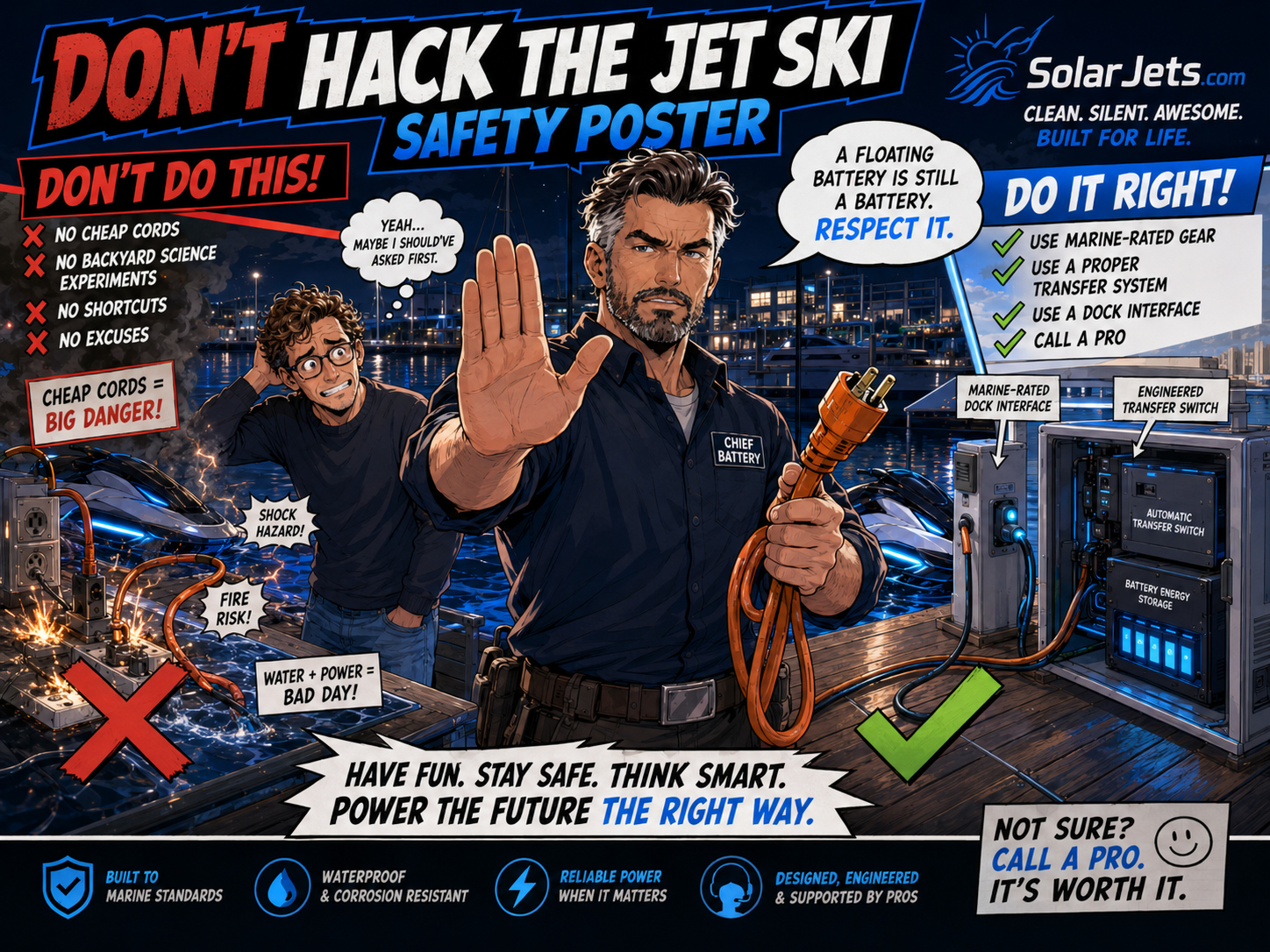
Safety FAQ
Because the Jet Ski episode is funny only if it stays responsible. A high-voltage battery near water, dock power, home wiring, boats, shore power, and people is not a place for shortcuts.
The public message is simple: no cheap cords, no backfeeding, no wet-dock experiments, no mystery equipment, and no pretending that a comic diagram is an approved installation.
Explore by topic
Each SolarJets.com topic turns a joke into a practical clean-power lesson.
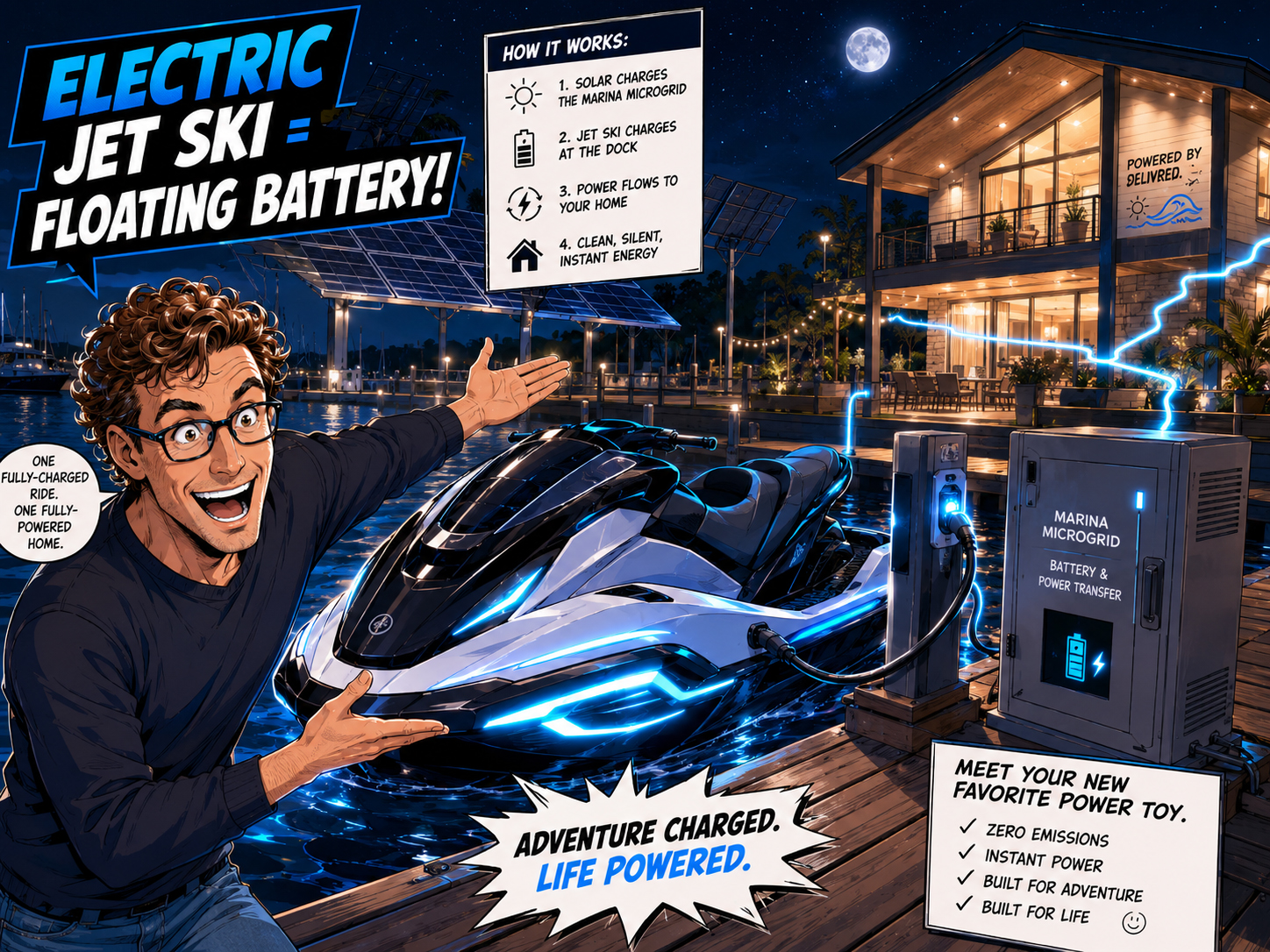
The Jet Ski battery idea becomes useful only when connected through proper systems.
Open page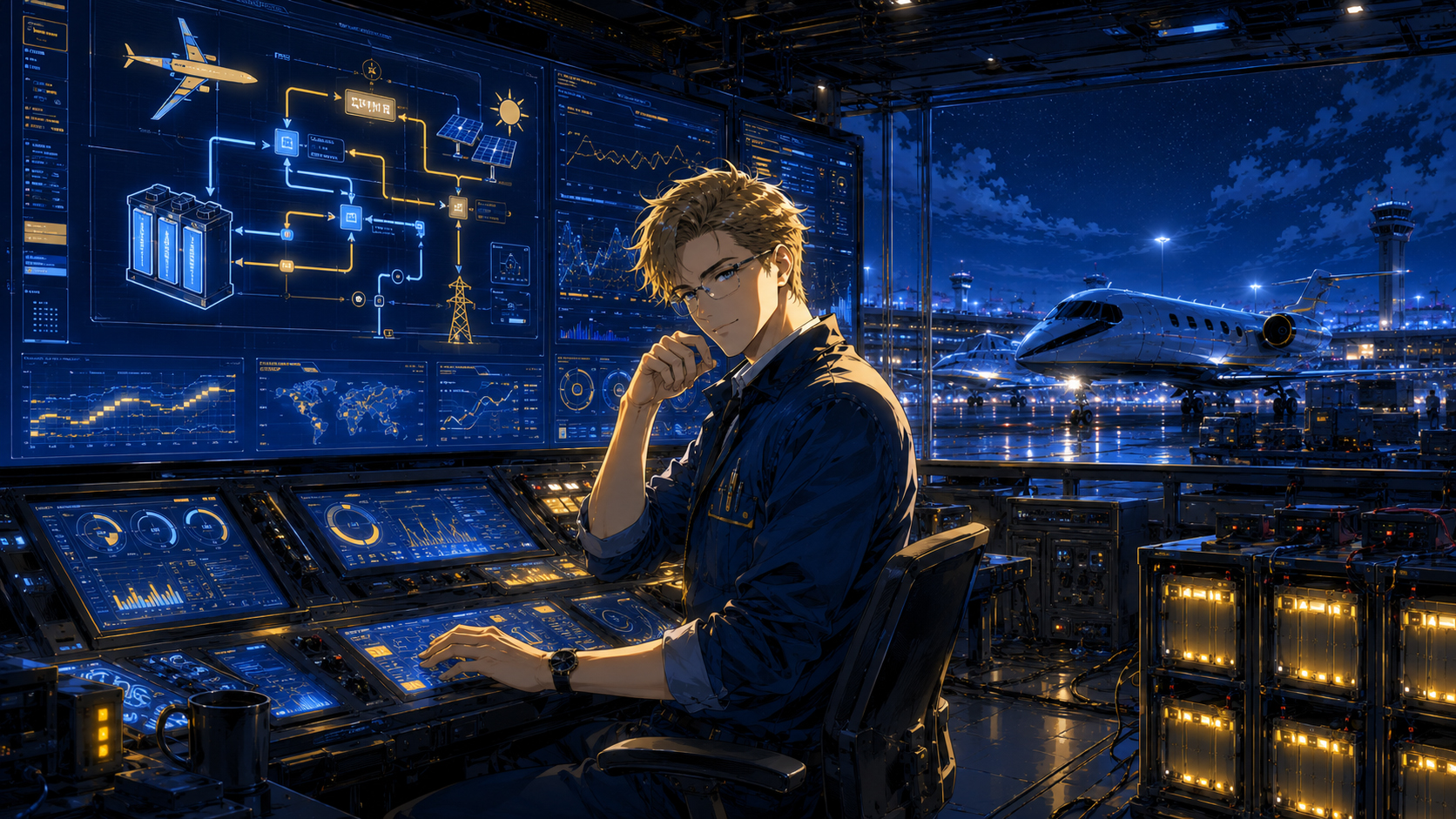
Solar, batteries, chargers, runway power, and priority loads need one control-room brain.
Open page
Stored power makes solar useful after sunset, during peak rates, and when the grid gets strange.
Open page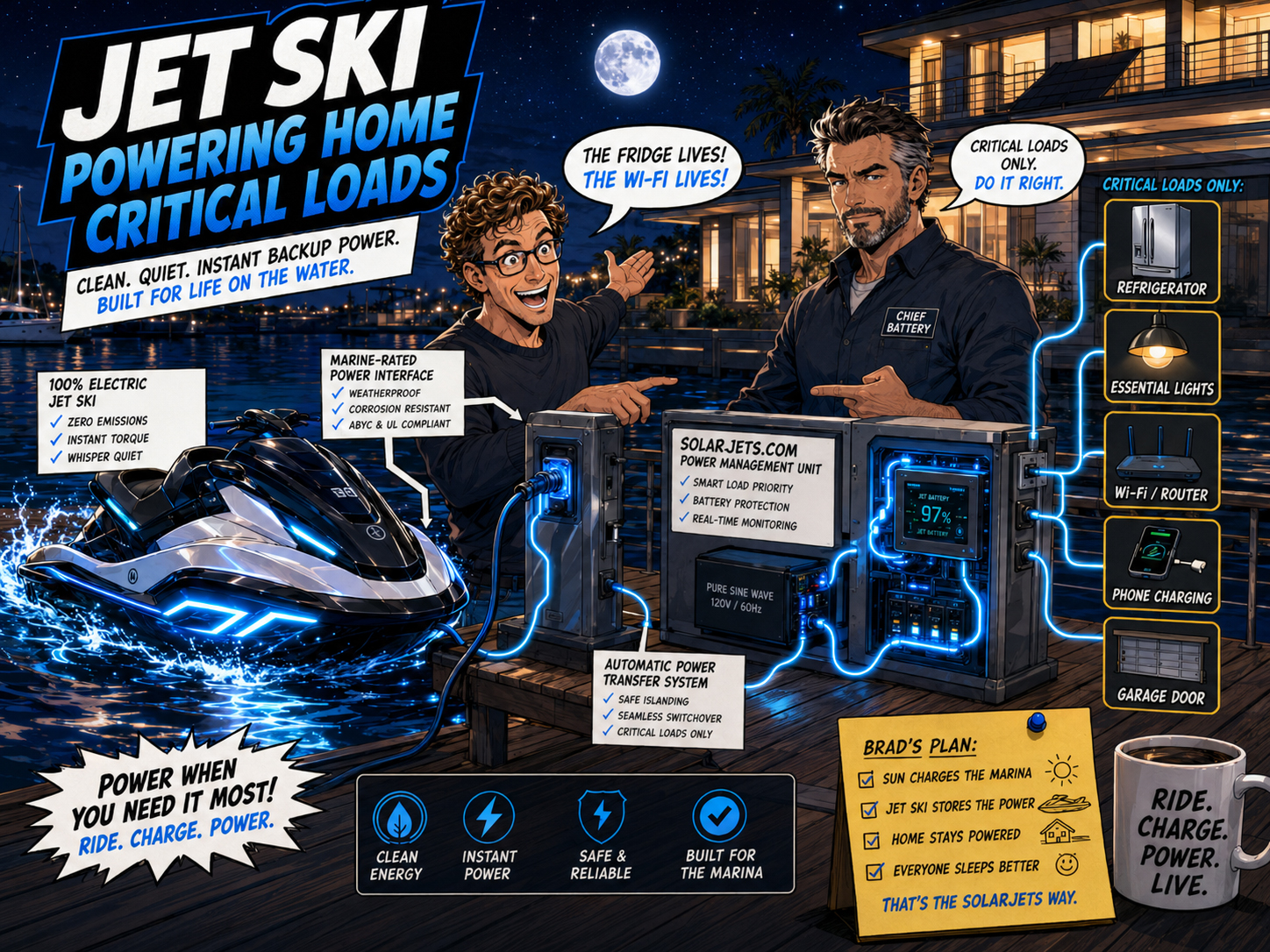
Refrigerator, lights, Wi-Fi, phone charging — not Brad’s whole fantasy life.
Open page
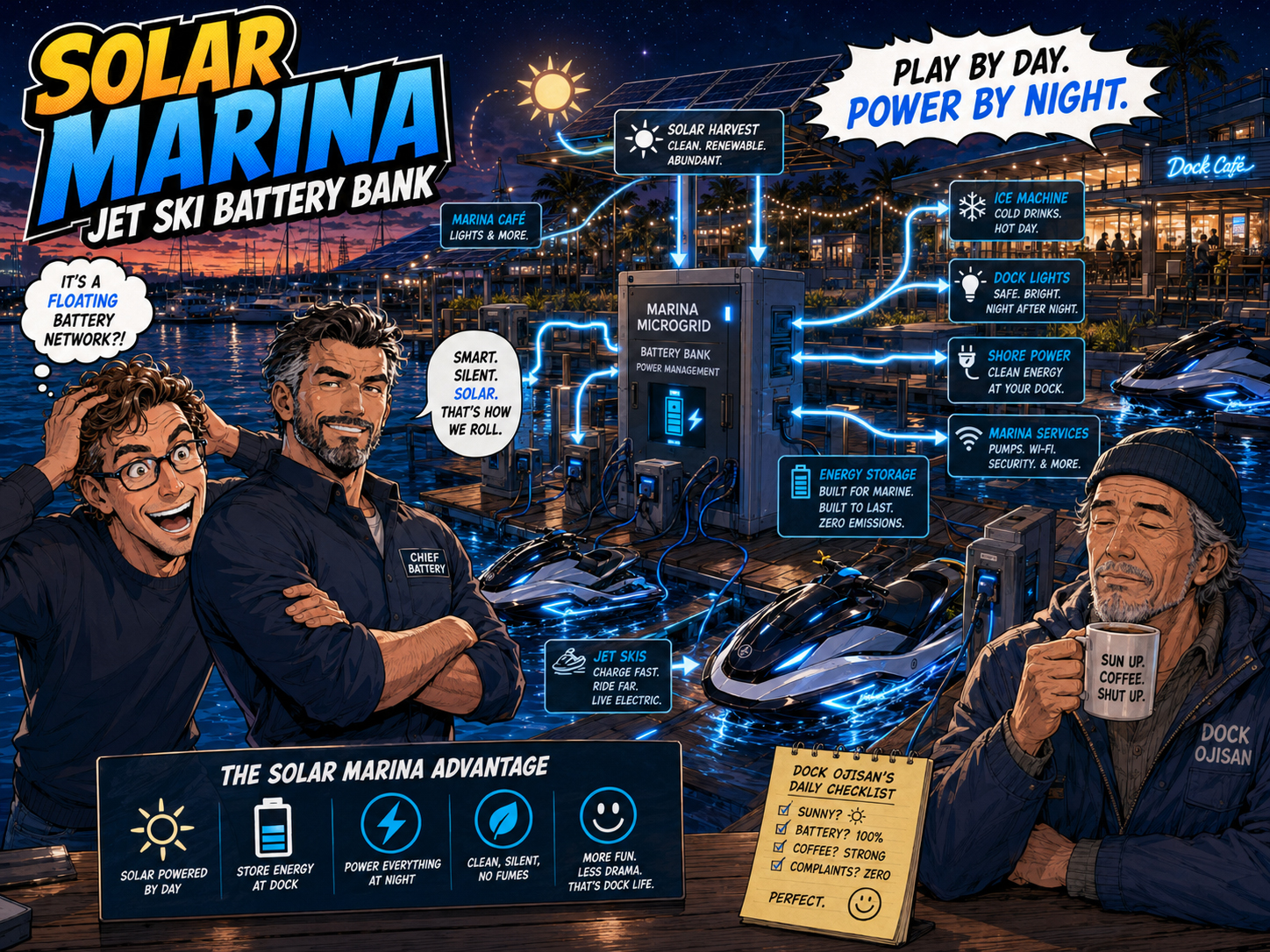

One master idea
The solar jet cannot run on wishful sunlight. The electric Jet Ski cannot power a home through a cheap cord. The marina cannot charge everything whenever it wants. The airport cannot land at night on noon production.
The same practical answer keeps showing up: solar plus storage, controls, load planning, proper equipment, and people who know what they are doing.