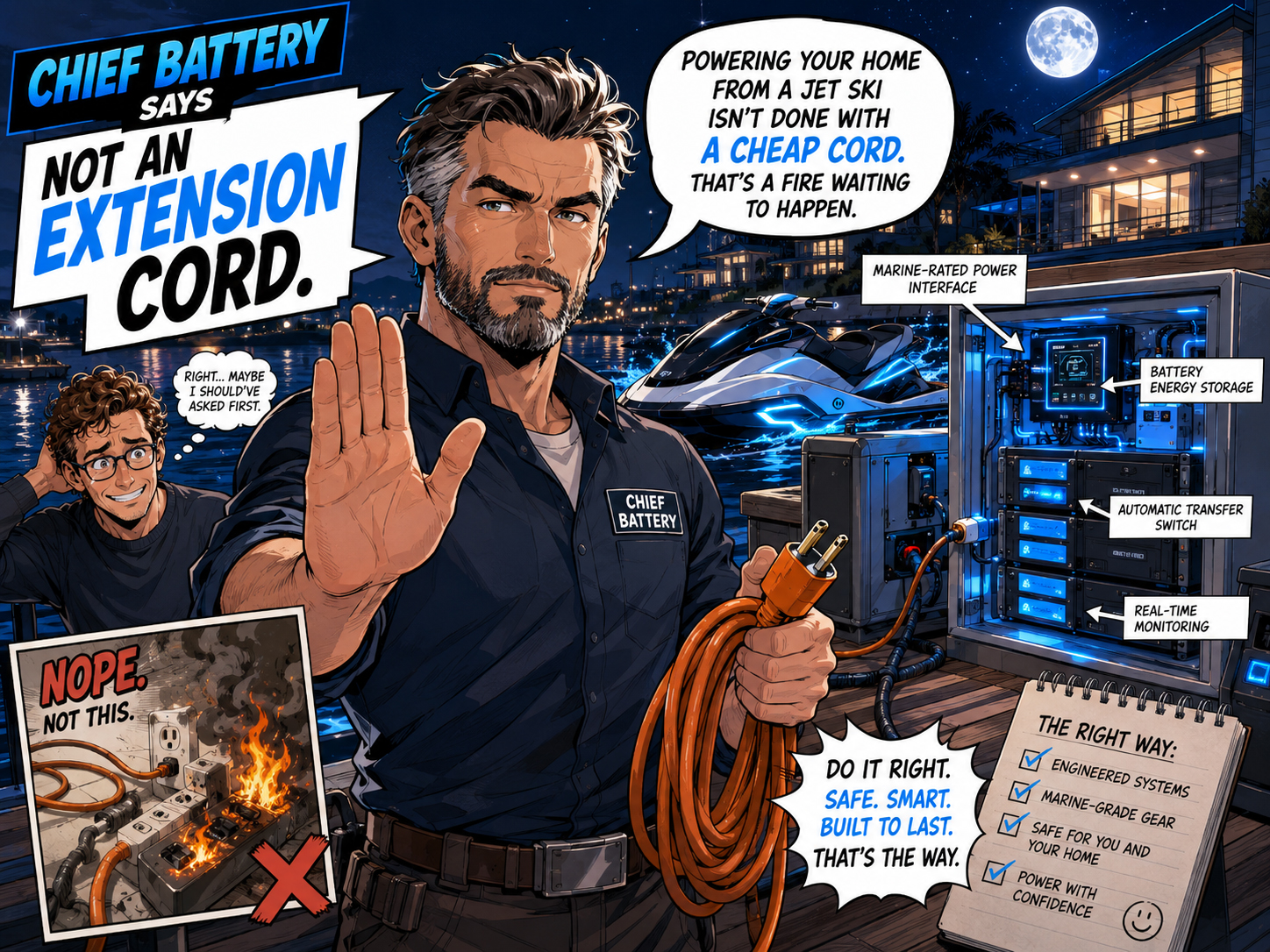
1. No improvised wiring
No extension cords, no backfeeding, no wet-dock experiments, and no “probably fine” electrical work.
Electric Jet Ski power FAQ
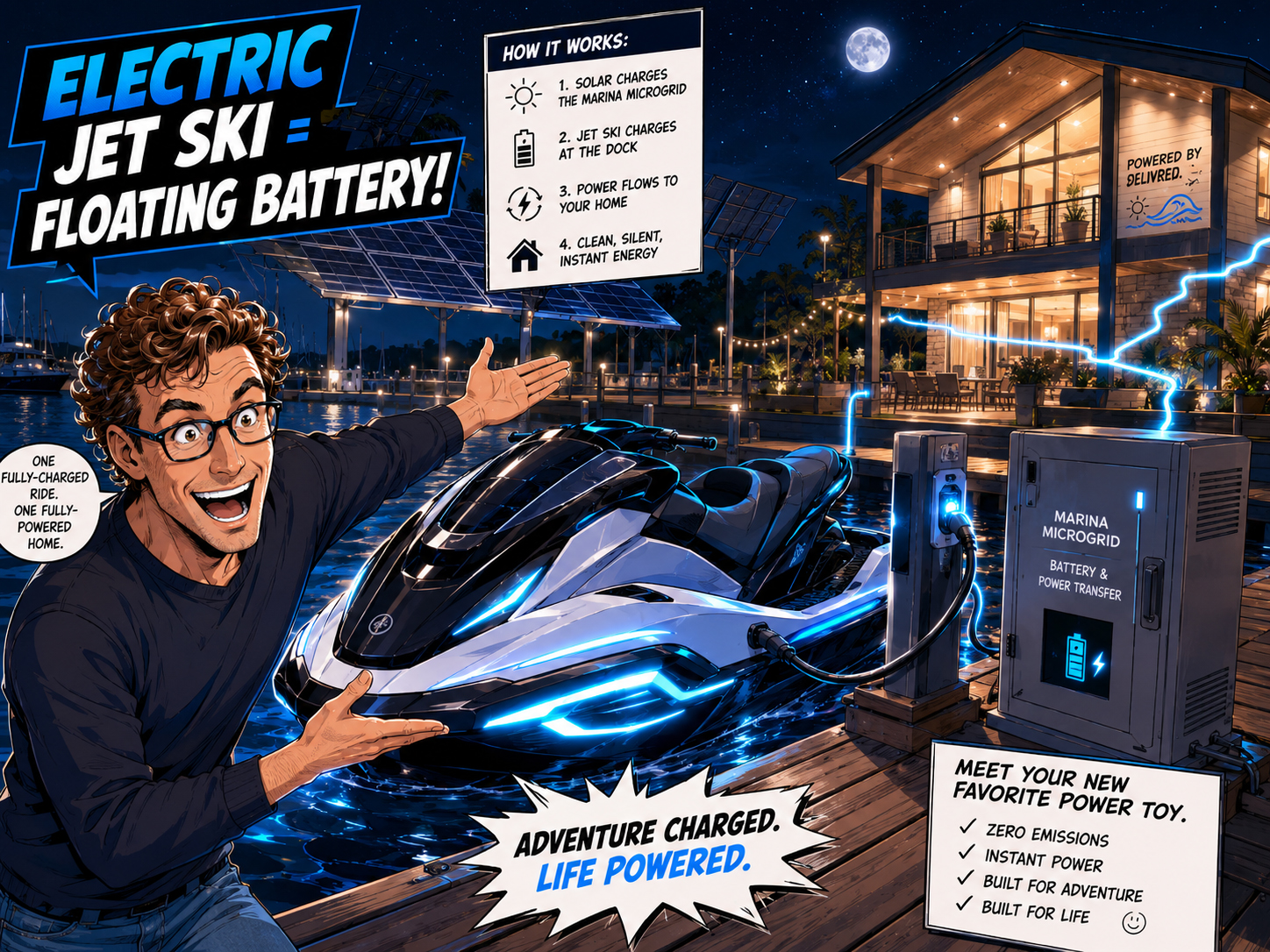
Can a Jet Ski become a floating battery? In manga comedy: yes, loudly. In real life: only with proper engineering, rated equipment, critical-load planning, and no hacks.
The answer is not “just plug it in.” The answer is: design it properly.
Start here
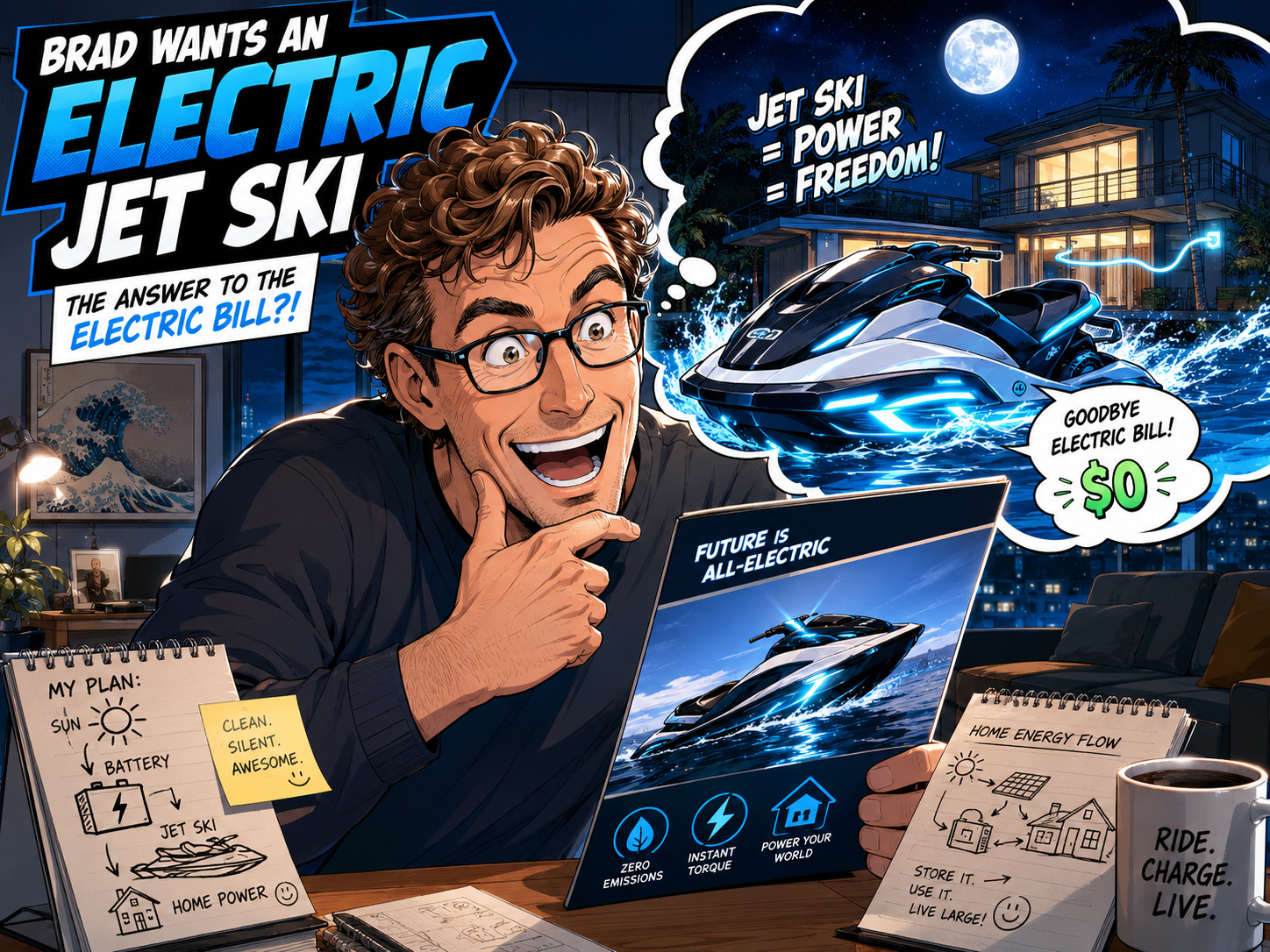
Brad wants the electric Jet Ski to be a toy, a battery, a bill solution, a marina business, and a victory in the same afternoon. This FAQ slows the episode down and answers the practical questions.
The short version: the floating battery idea is funny and interesting, but high-voltage batteries, water, homes, boats, shore power, and utility systems demand real engineering.
Fast answers
The answers keep the comedy alive while preventing the page from sounding like a how-to guide for dangerous shortcuts.
As a manga idea, it can become a funny “floating battery” concept. In real life, any vehicle-to-home version would need manufacturer-supported power export, rated equipment, a proper transfer system, critical-load planning, isolation, protection, monitoring, approvals, and professional installation. It is not done with a cord.
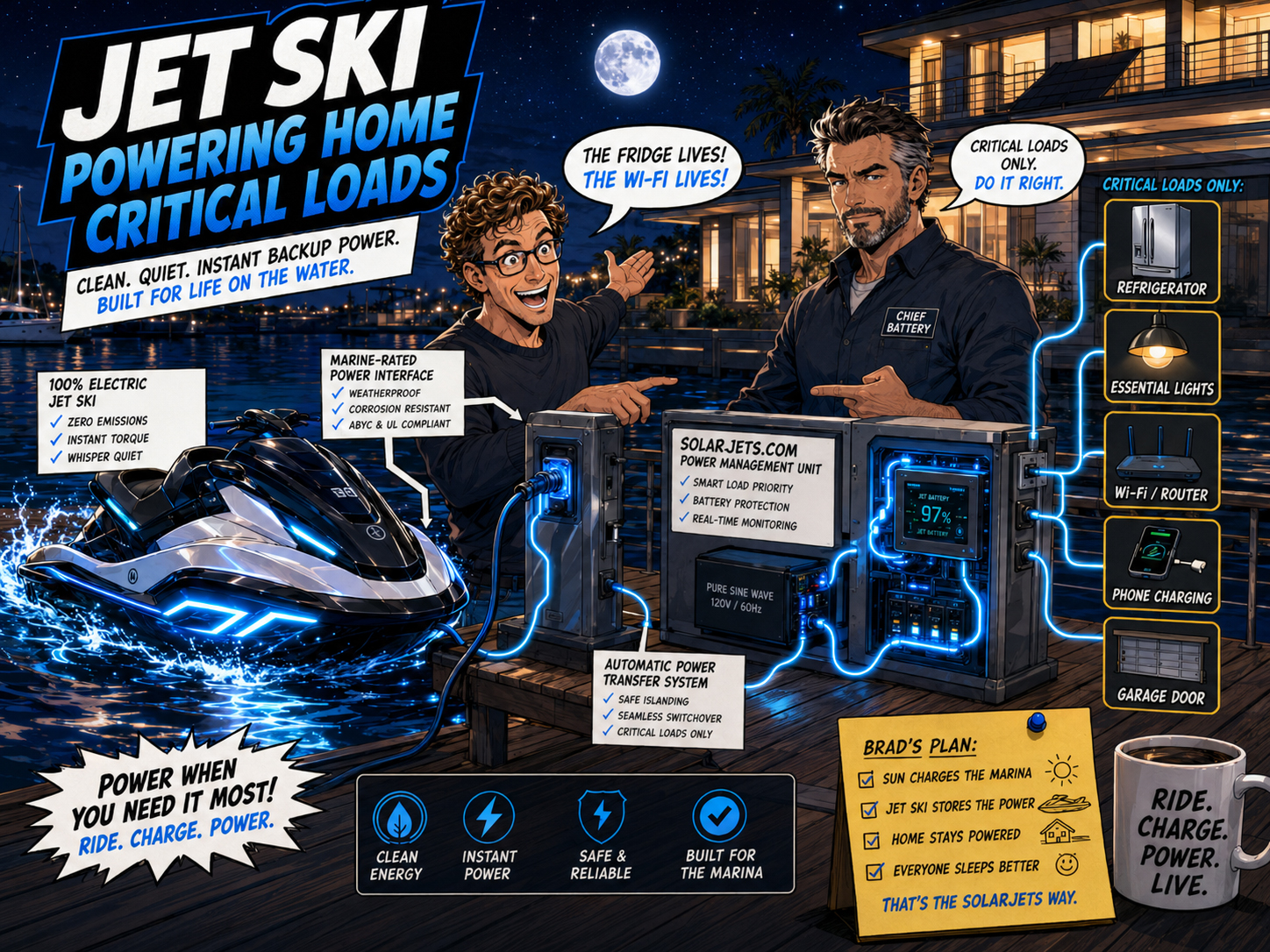
That is the wrong starting point. A serious backup plan begins with selected critical loads: refrigerator, essential lights, communications, phone charging, and maybe a limited protected outlet. “Everything forever” is Brad’s fantasy, not Chief Battery’s design.
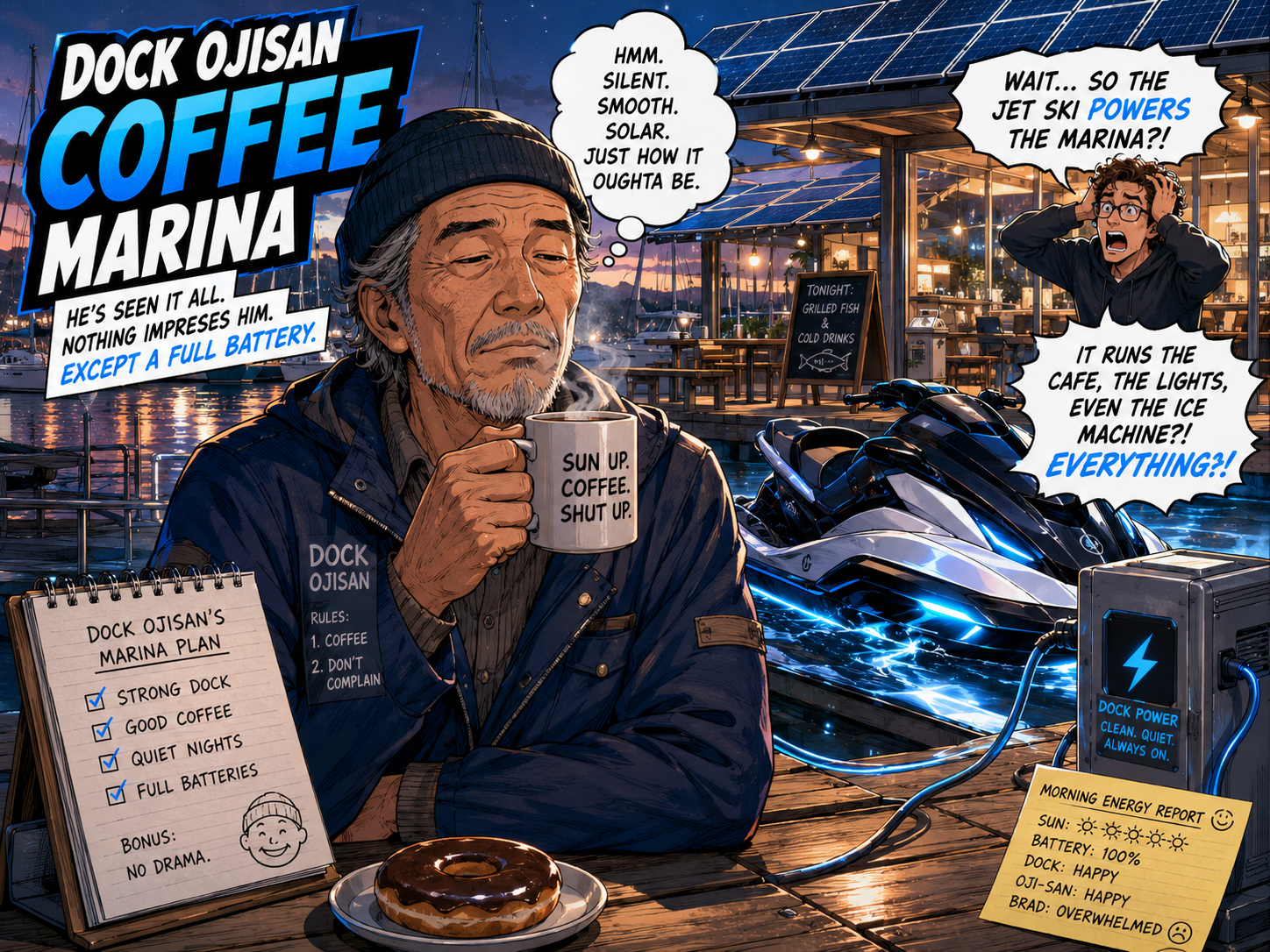
The marina version is more naturally tied to dock power and shore-power thinking, but it still needs engineered marine-rated equipment, proper transfer and isolation behavior, load priorities, emergency shutoff, and operators who understand the system.
No. That is the entire point of the safety poster. A cheap cord is not a marine-rated interface, not a transfer system, not protection, not monitoring, and not a safe electrical design.
It means powering selected circuits that matter most during an outage or high-cost period. The page uses examples like a refrigerator, essential lights, Wi-Fi/router, phone charging, and selected small loads. It does not mean running every appliance in the home or marina.
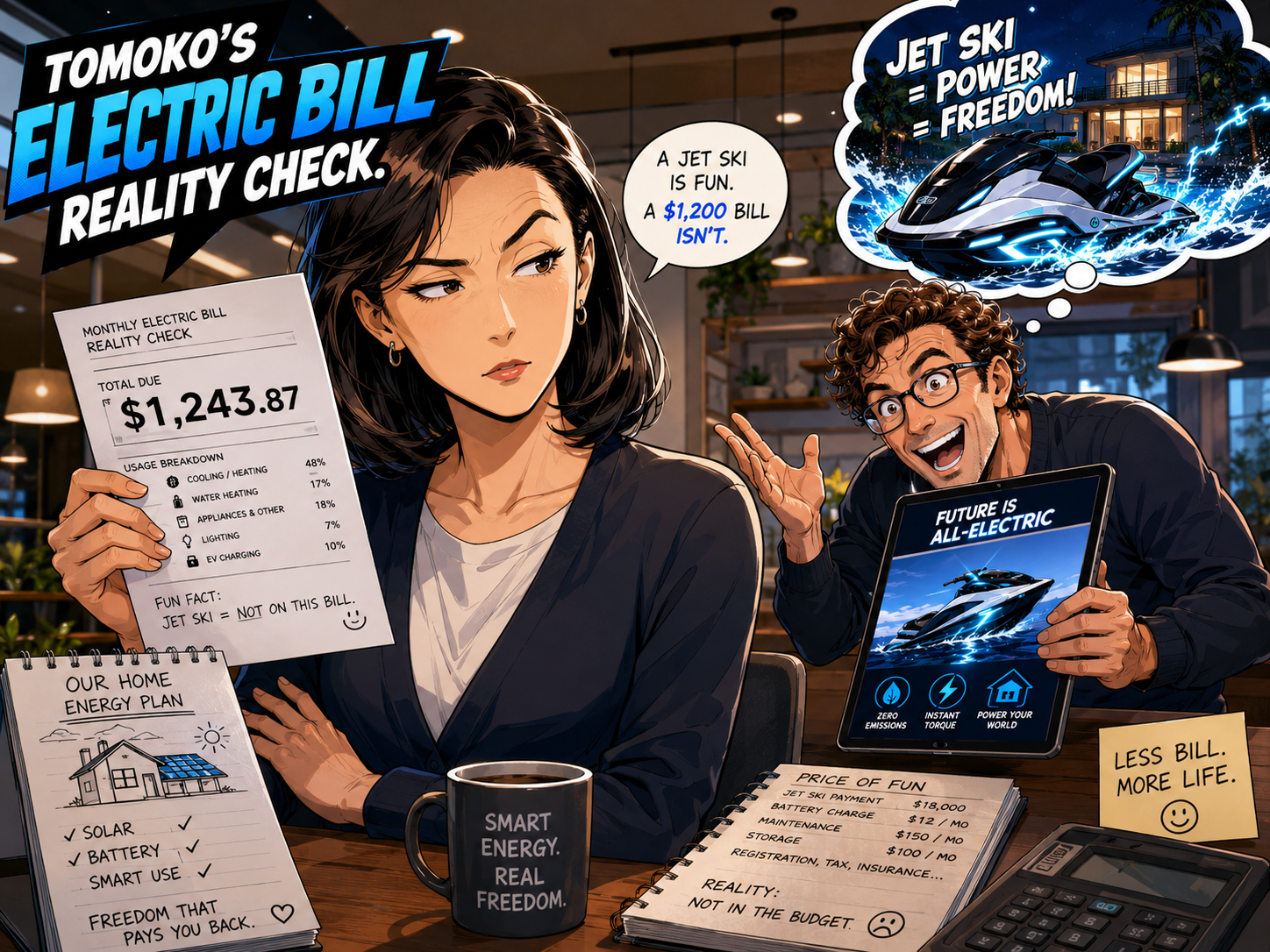
Because a new electric toy can add cost if it is charged at the wrong time or bought without a real savings plan. Tomoko forces Brad to answer the budget question before calling the Jet Ski an “energy asset.”
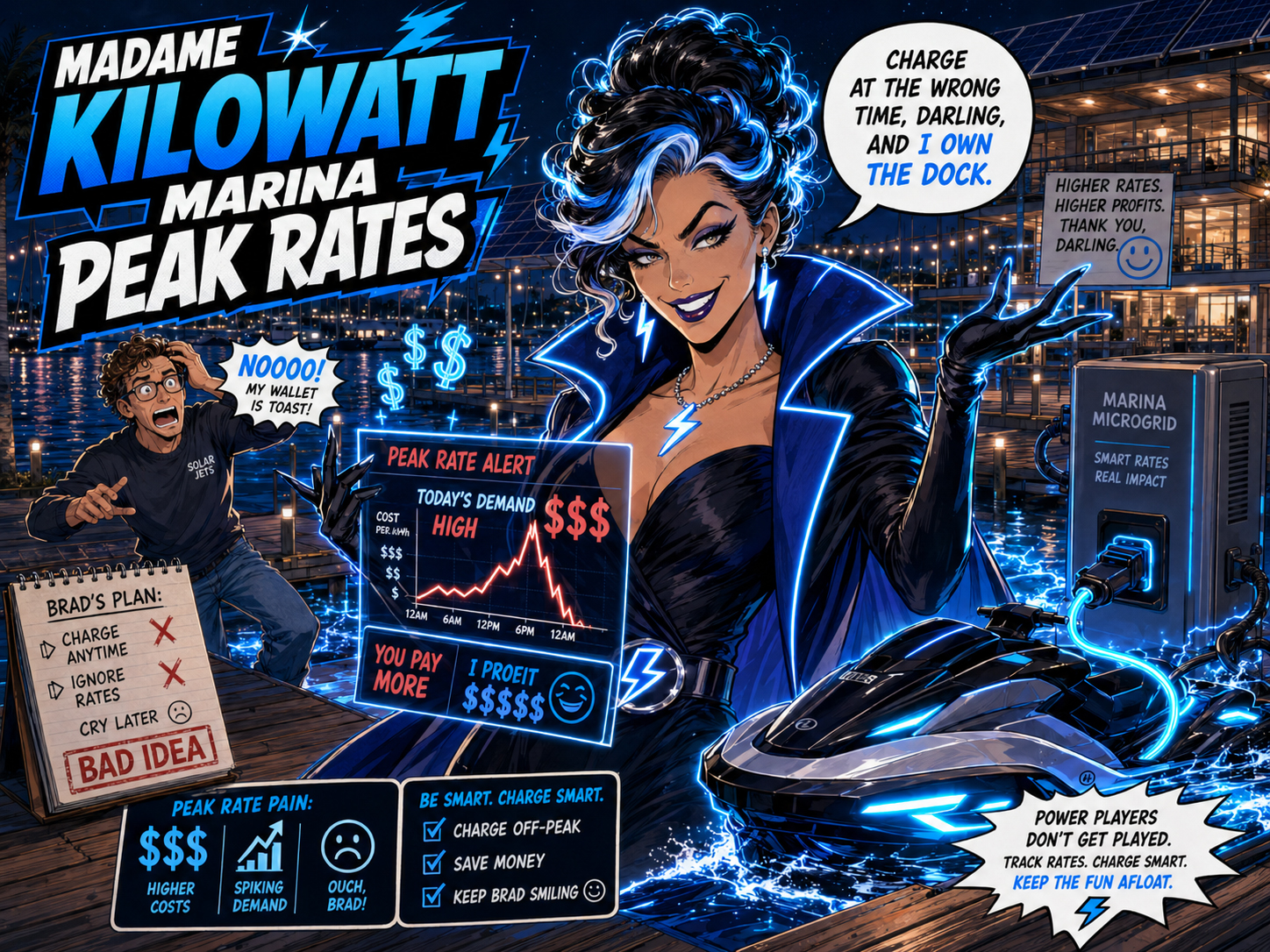
She represents peak-rate timing and unmanaged demand. If electric Jet Skis, dock loads, café loads, pumps, lights, and shore power all stack up at the wrong time, the marina bill becomes the villain.
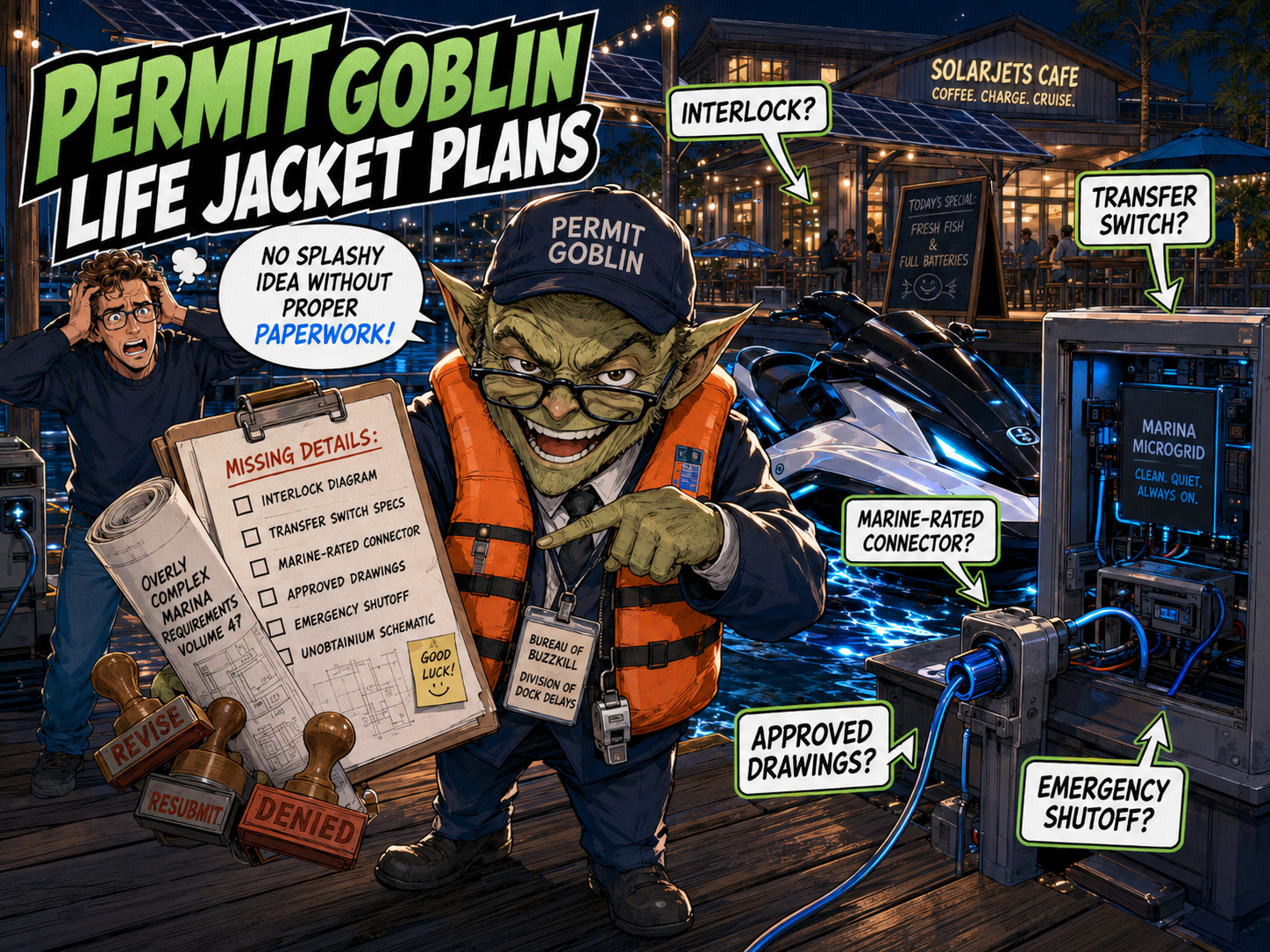
Because the idea moved from the airport to the marina. The goblin now asks dock-specific questions: interlock, transfer switch, marine-rated connector, approved drawings, emergency shutoff, and service access.
Have fun. Stay safe. Think smart. Do not hack the Jet Ski. Use marine-rated equipment, proper transfer systems, professional design, and qualified installation.
Critical loads explained
Brad wants the electric Jet Ski to power the entire house because that makes the purchase easier to justify. Chief Battery starts with the load list.
A small, selected critical-load panel is the right teaching device for this manga episode. It lets the page explain energy storage without pretending one watercraft battery should carry every load in the home.
Safety checklist
Every Jet Ski power page should reinforce these points.
No extension cords, no backfeeding, no wet-dock experiments, and no “probably fine” electrical work.
Marine-rated interfaces, transfer systems, interlocks, emergency shutoff, monitoring, and approved devices matter.
Design, installation, inspection, testing, labeling, and operation belong to trained people using approved methods.
Floating battery concept
A battery on water is not automatically a backup power system. But as a story and possible future concept, the electric Jet Ski is a great way to explain mobile storage, marina charging, dock power, and critical-load planning.
The useful version is always the engineered version: solar canopies, dock power gear, battery bank, transfer equipment, monitoring, and selected loads.
Character guide
Use the characters to keep the FAQ funny and clear.
Rate timing FAQ
Not automatically. Savings depend on equipment cost, charging time, rate structure, solar production, battery behavior, load selection, and usage. Madame Kilowatt appears when Brad ignores timing.
The safe public statement is to avoid promising savings. Present it as an educational manga concept: rate-aware charging and load management matter.
Related FAQ paths
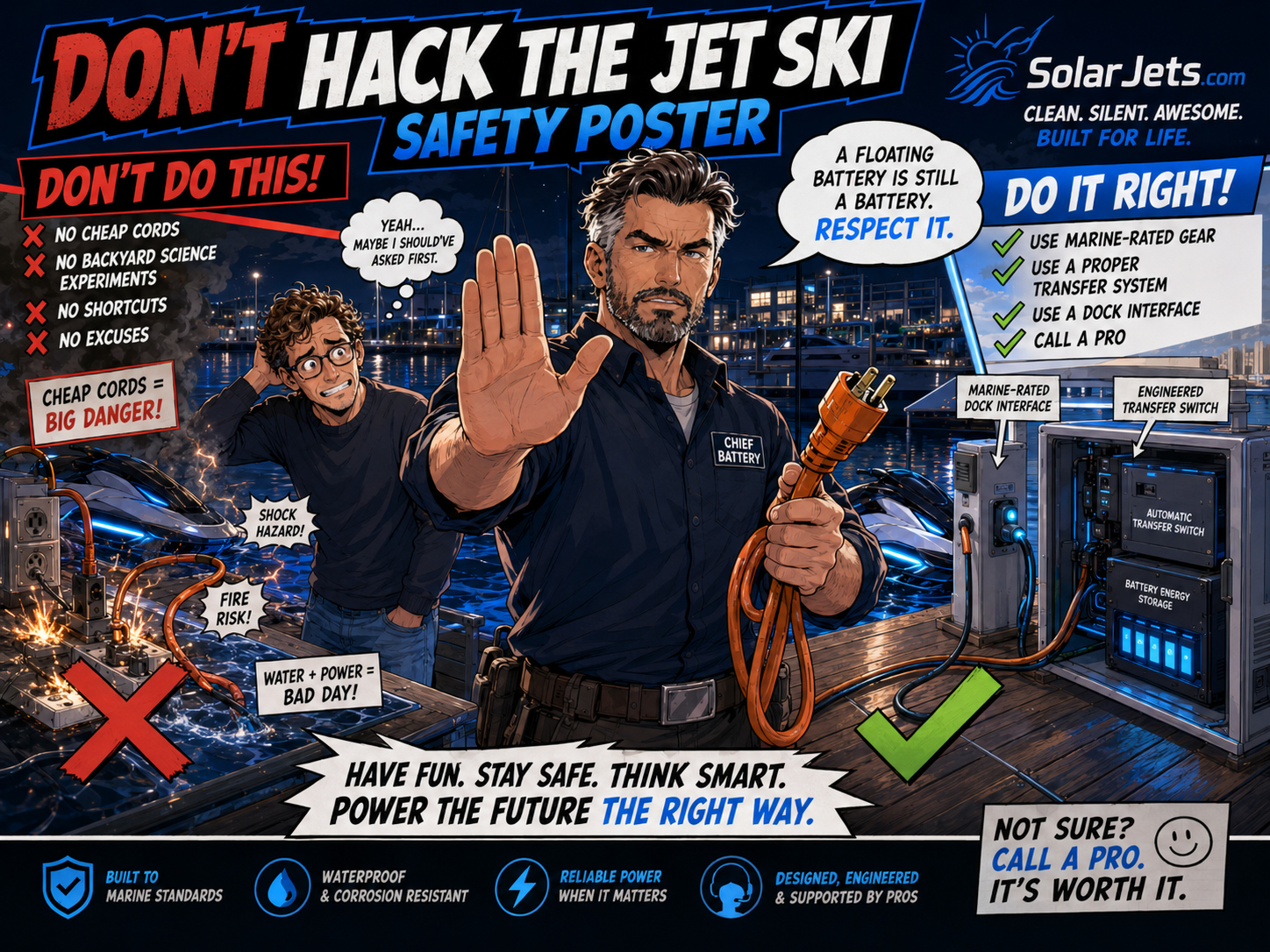
The safety poster page that stops the shortcut before the spark.
Open safety page
The home version: selected loads, transfer equipment, and no shortcuts.
Open V2H page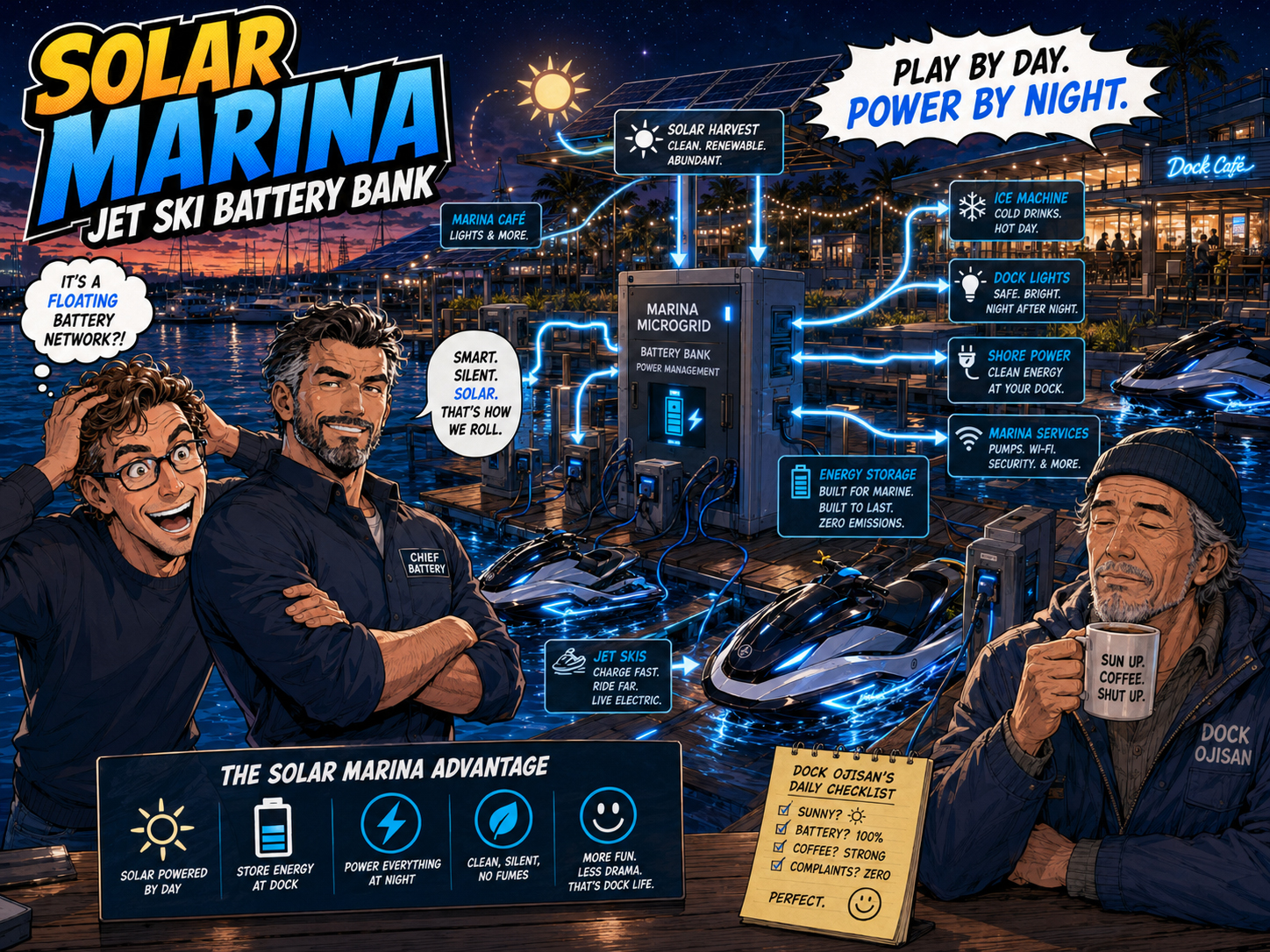
The marina version: dock power, shore power, selected loads, and managed charging.
Open V2B page
Final answer
Tomoko says: after the bill model. Chief Battery says: after the safety plan. Permit Goblin says: after the drawings. Dock Ojisan says: after coffee.
SolarJets.com says: make it funny, make it safe, and never tell people to hack a high-voltage battery near water.