Battery source
The electric Jet Ski may store useful energy, but stored energy alone does not make a home-power system.
Vehicle-to-home manga
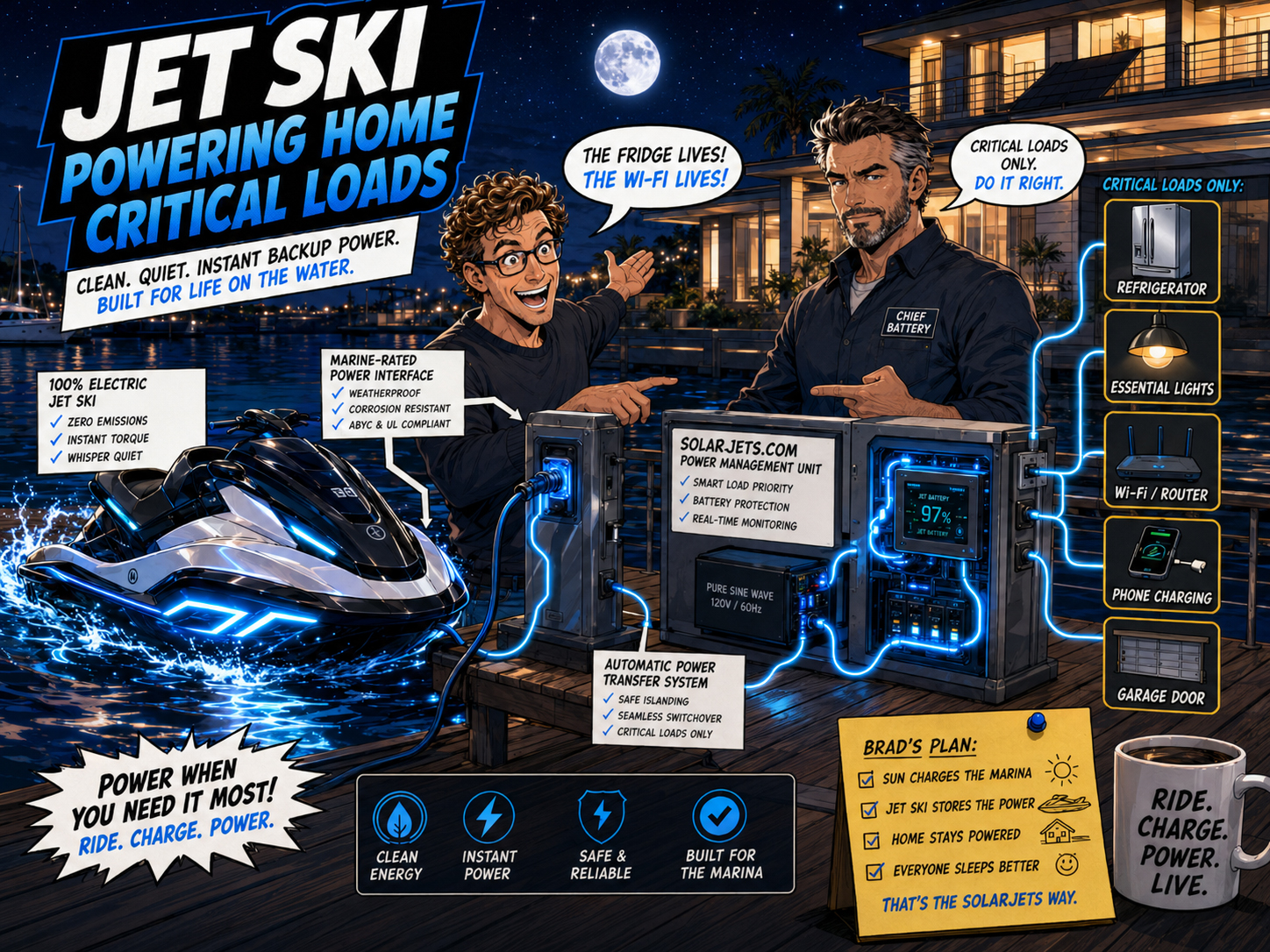
Brad wants the electric Jet Ski to power the house. Chief Battery says the only acceptable words are: critical loads, proper transfer equipment, marine-rated gear, and professional installation.
Power the fridge. Not Brad’s entire fantasy life.
The useful version
The vehicle-to-home Jet Ski idea becomes useful only after Brad stops saying “just plug it in.” A home-power concept needs a safe path from the electric watercraft battery to a properly isolated, properly transferred, properly protected set of selected home loads.
The manga joke is Brad trying to power everything. The engineering answer is smaller and smarter: refrigerator, essential lights, Wi-Fi, phone charging, and carefully chosen critical circuits.
What V2H means here
The actual system is the connection, protection, transfer equipment, monitoring, and critical-load panel.
The electric Jet Ski may store useful energy, but stored energy alone does not make a home-power system.
A marine-rated dock interface must handle environment, connectors, isolation, and safe power transfer.
The home must be safely separated from utility power before any backup source supports selected loads.
The useful loads must be identified, separated, protected, and understood before the outage happens.
Chief Battery stops Brad
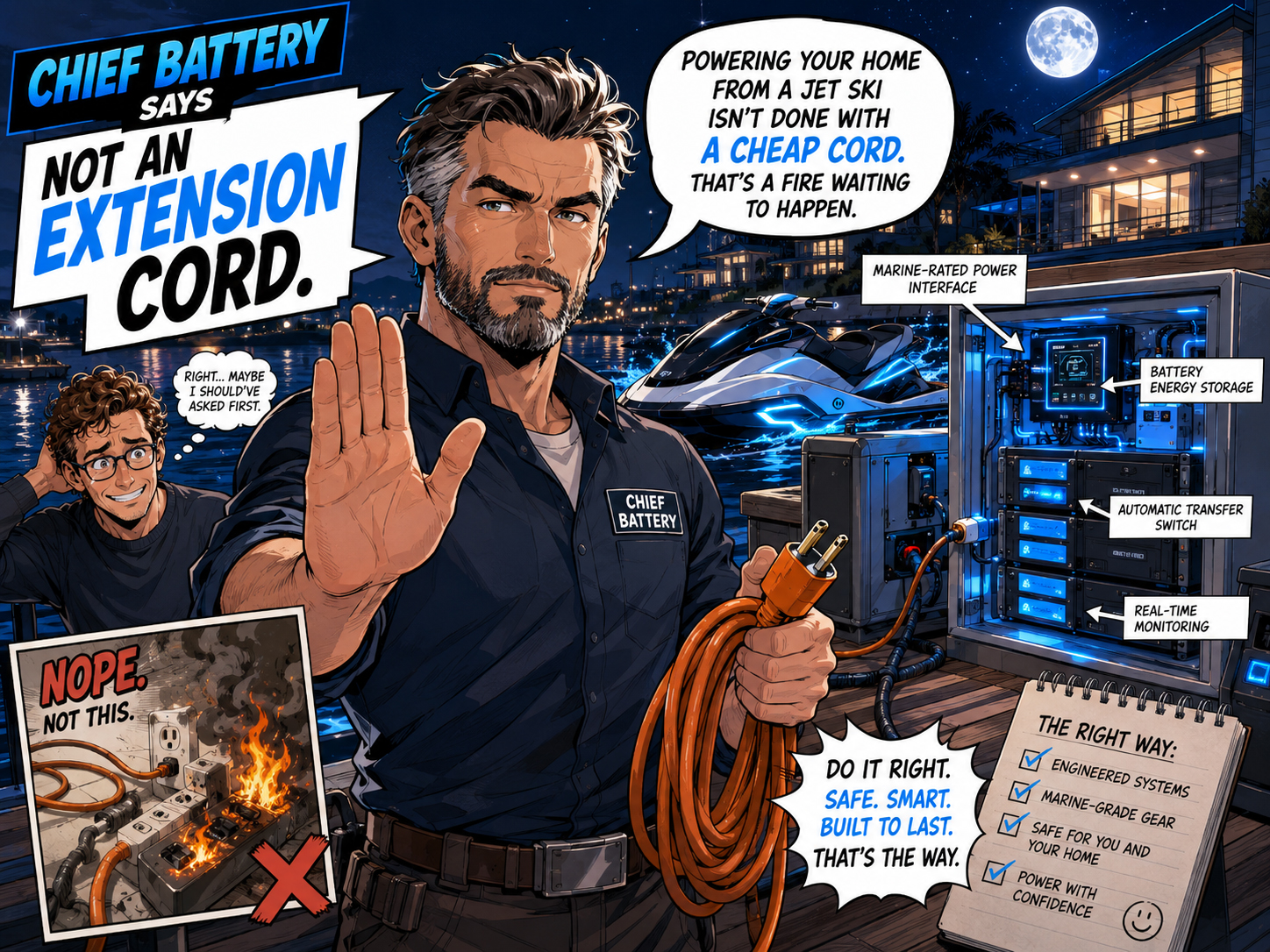
Brad’s first sketch always has one line that should not exist. Chief Battery removes it. A Jet Ski battery near water, a dock, and a home panel is not the place for casual improvisation.
If the concept is ever implemented, it needs engineered hardware designed for the application: marine-rated connectors, transfer equipment, proper grounding and isolation strategy, emergency shutoff, monitoring, and a qualified installation.
Vehicle-to-home sequence
This is how the page should explain the concept without encouraging dangerous shortcuts.
The Jet Ski charges through the proper dock system, ideally with solar and battery strategy in the background.
The watercraft connects through marine-rated hardware that is designed for the environment and the power level.
A proper transfer system prevents unsafe backfeed and separates backup operation from utility service.
Only selected circuits receive support: refrigerator, essential lights, communications, and limited outlets.
Operators can see battery state, power flow, supported loads, alarms, and when the system should stop.
The system is designed, permitted, installed, tested, labeled, and maintained by qualified people.
Tomoko’s filter
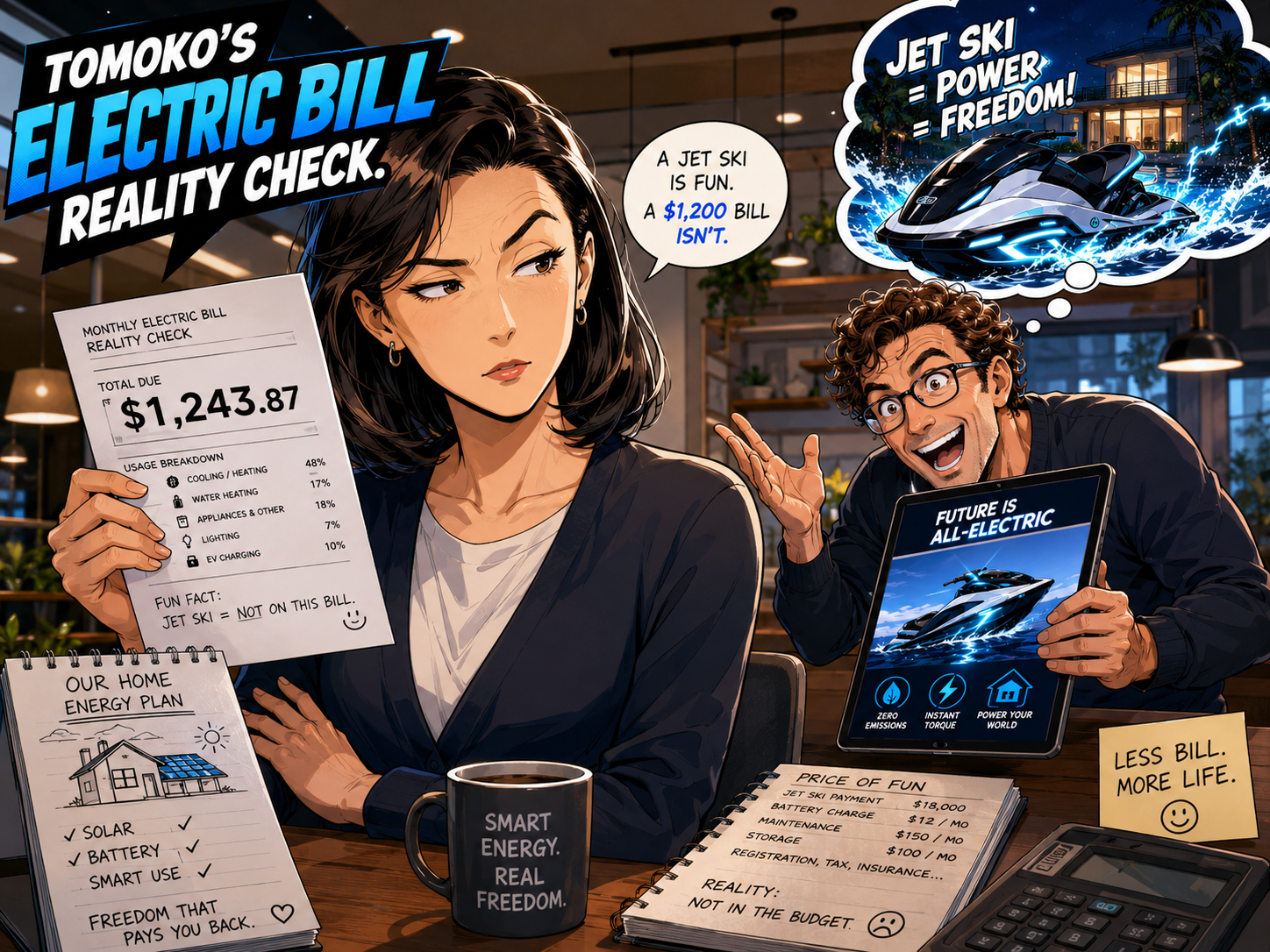
Tomoko is not impressed by words like “bidirectional,” “floating battery,” or “future-ready” until the system answers practical questions. How much does it cost? What does it power? When does it charge? Is it safe? Does it reduce the bill or add another one?
Her role is to keep the V2H Jet Ski from becoming a purchase excuse. If the idea is real, it must pass the budget, safety, and usefulness tests.
Critical loads
Brad wants the whole house. Chief Battery gives him a list.
Food preservation is a reasonable critical-load discussion.
Limited lighting can help the home function safely during an outage.
Communications can be important when the grid is down or the household needs updates.
A limited critical-load outlet is different from powering every appliance Brad can name.
Permit Goblin approves nothing quickly
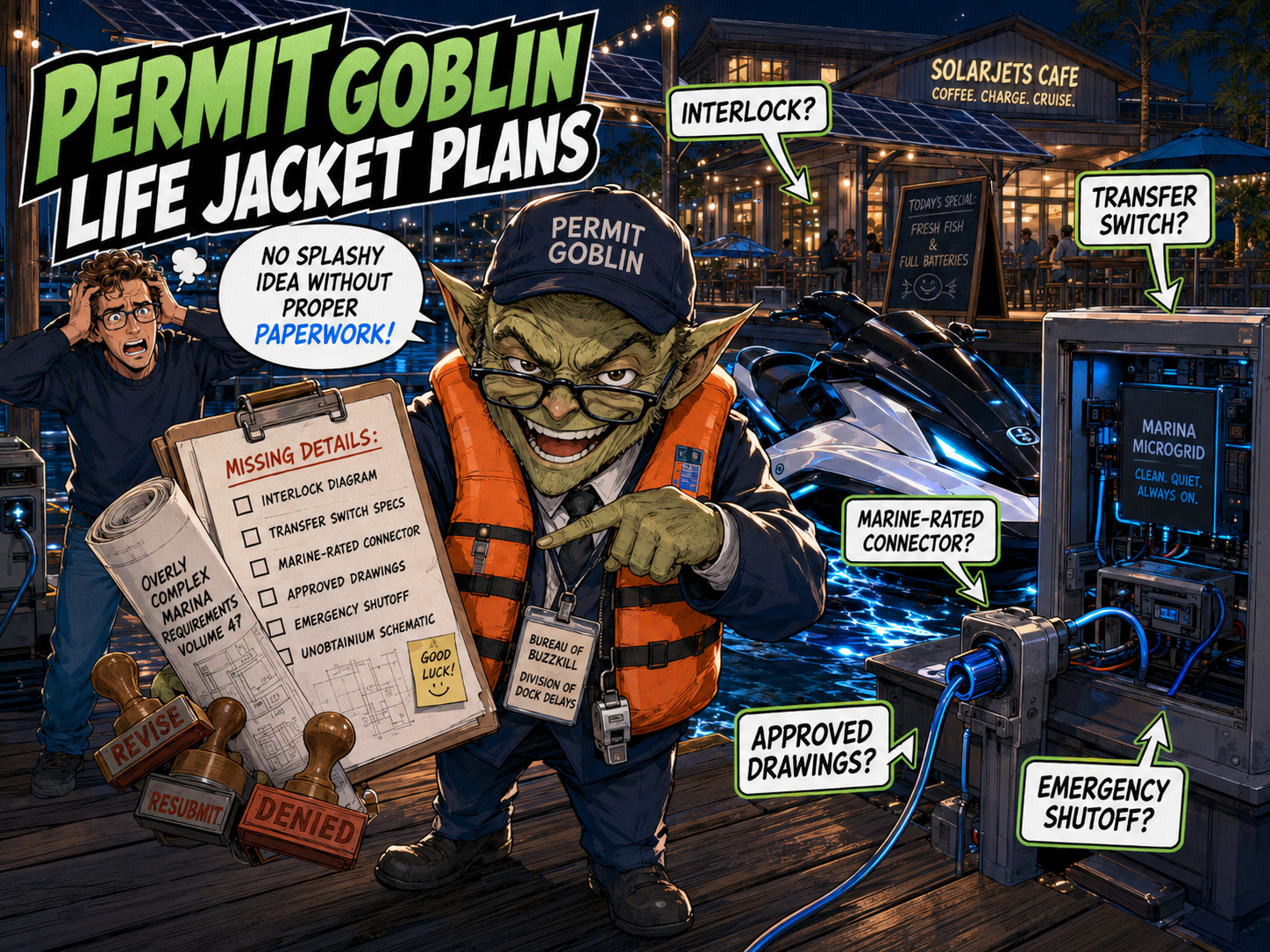
The Permit Goblin is funny because he is annoying and correct. A vehicle-to-home Jet Ski concept touches electrical safety, marine equipment, transfer equipment, home wiring, and utility interaction.
The goblin asks the questions Brad hoped were optional: interlock? approved drawings? transfer switch specs? emergency shutoff? connector ratings? load schedule?
Marina version
Vehicle-to-home becomes more believable when the whole marina power ecosystem is designed around it.
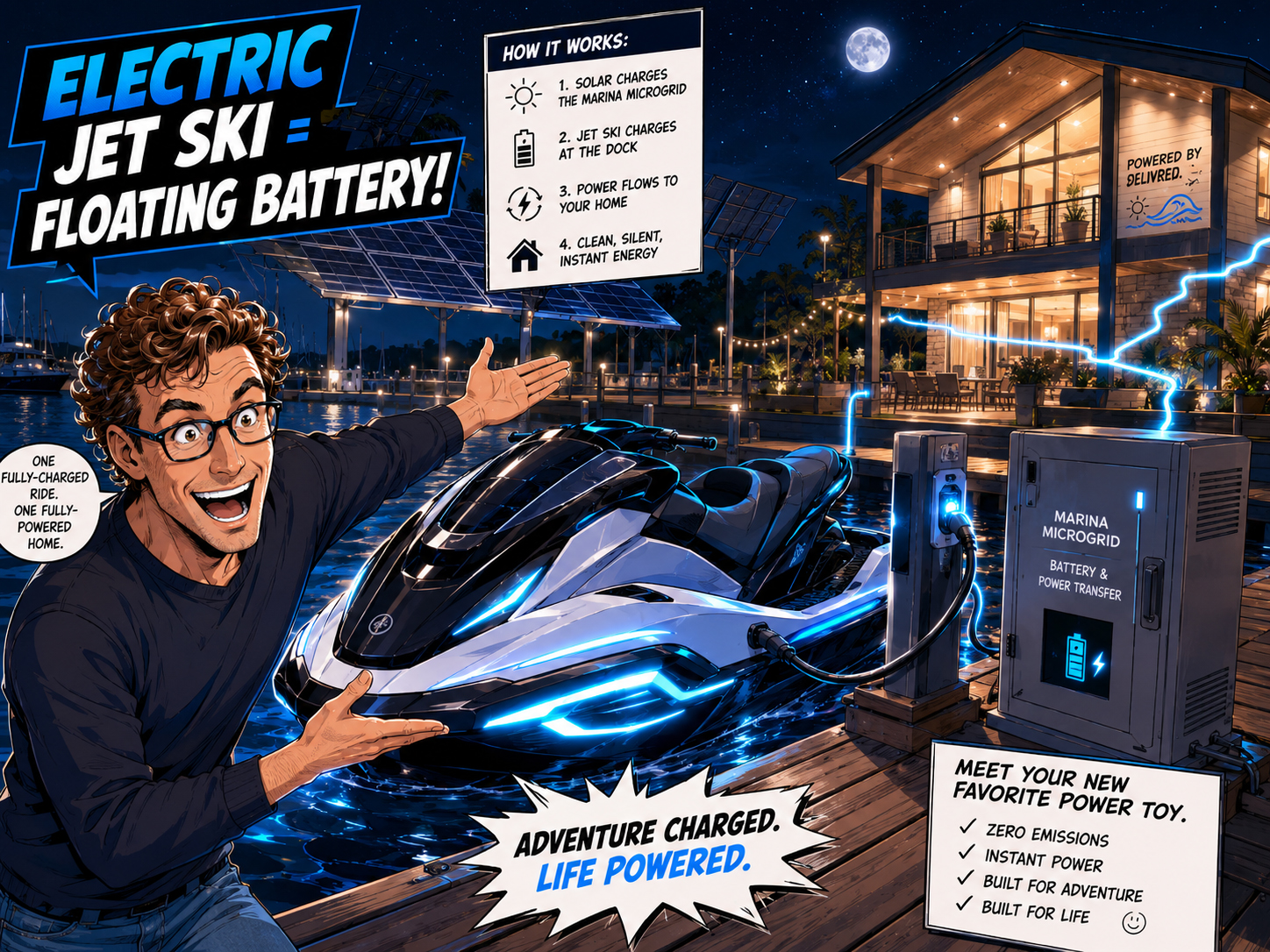
The broad concept: the Jet Ski battery becomes part of a safe, engineered power story.
Open page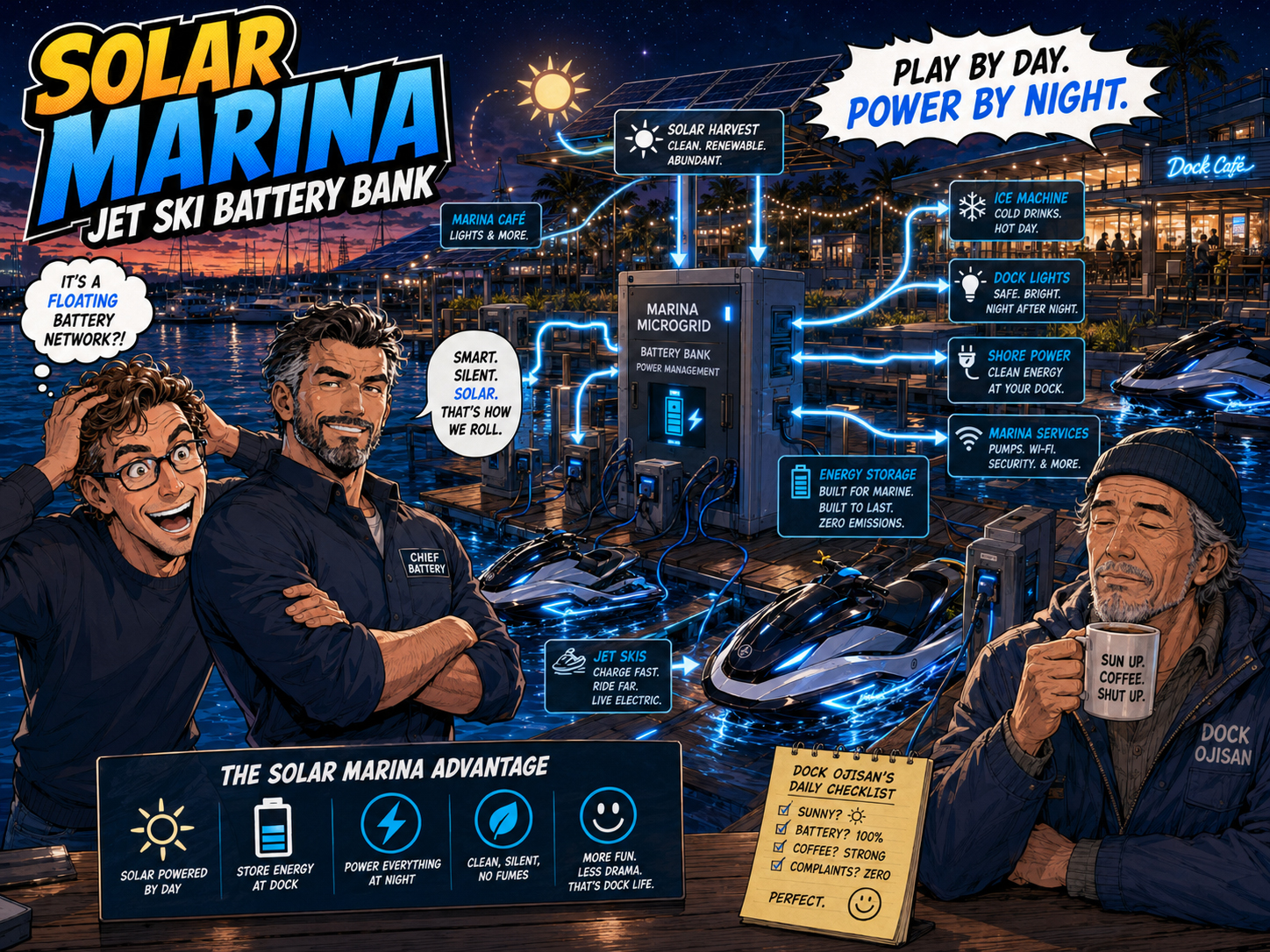
A managed marina system with solar canopies, dock power, Jet Skis, and battery storage.
Open page
The marina/boat version: shore power, dock loads, café lights, pumps, Wi-Fi, and managed energy.
Open page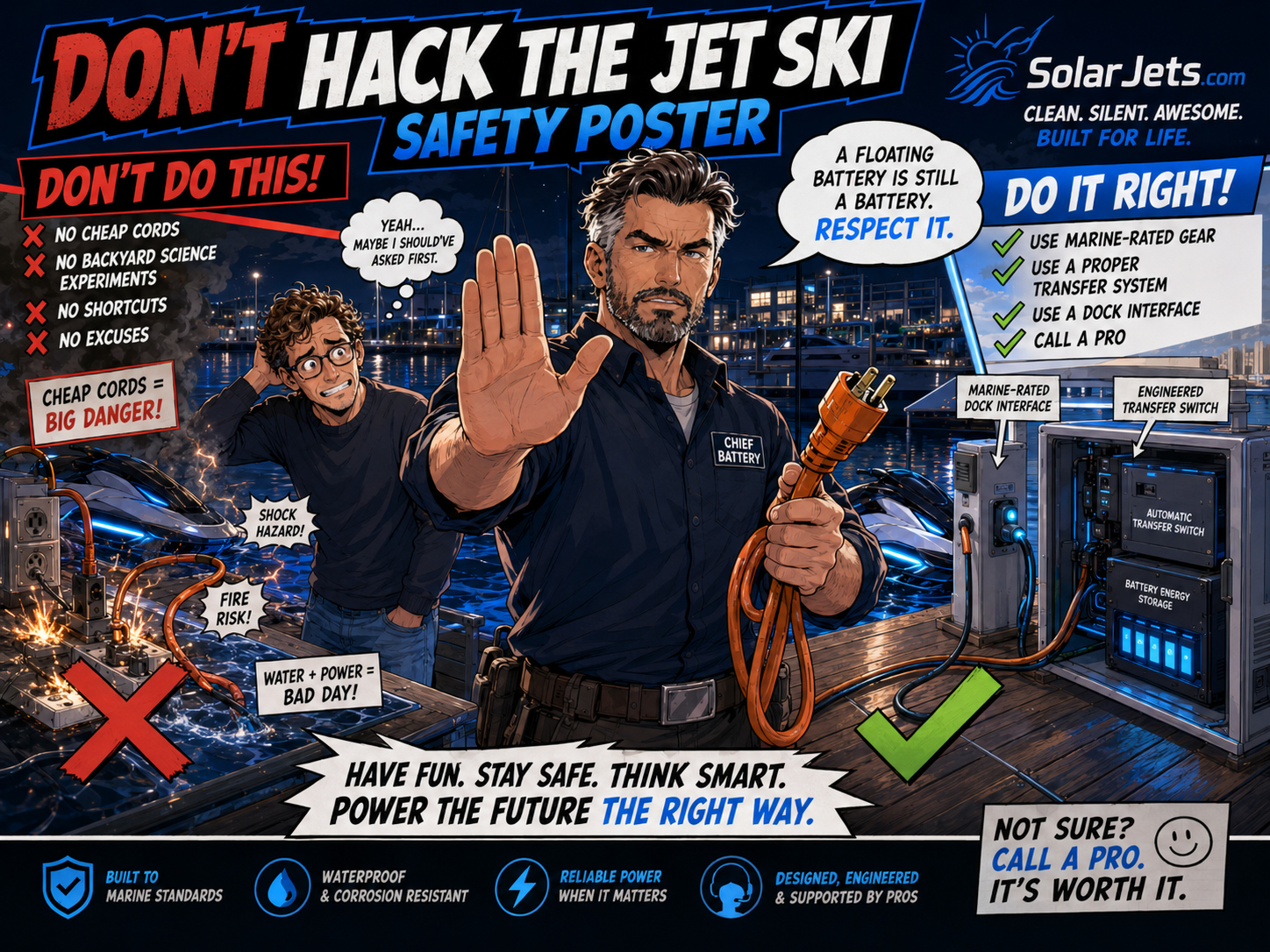
Safety ending
Vehicle-to-home power is not a comedy prop. The joke is Brad’s enthusiasm. The responsible message is that any Jet Ski-to-home power concept needs a real design and professionals who know what they are doing.
The closing line stays simple: play by day, power by night, engineer it properly.