Solar canopies
Shade the dock, charge the marina, and make clean power visible before the Jet Skis even move.
Solar marina manga
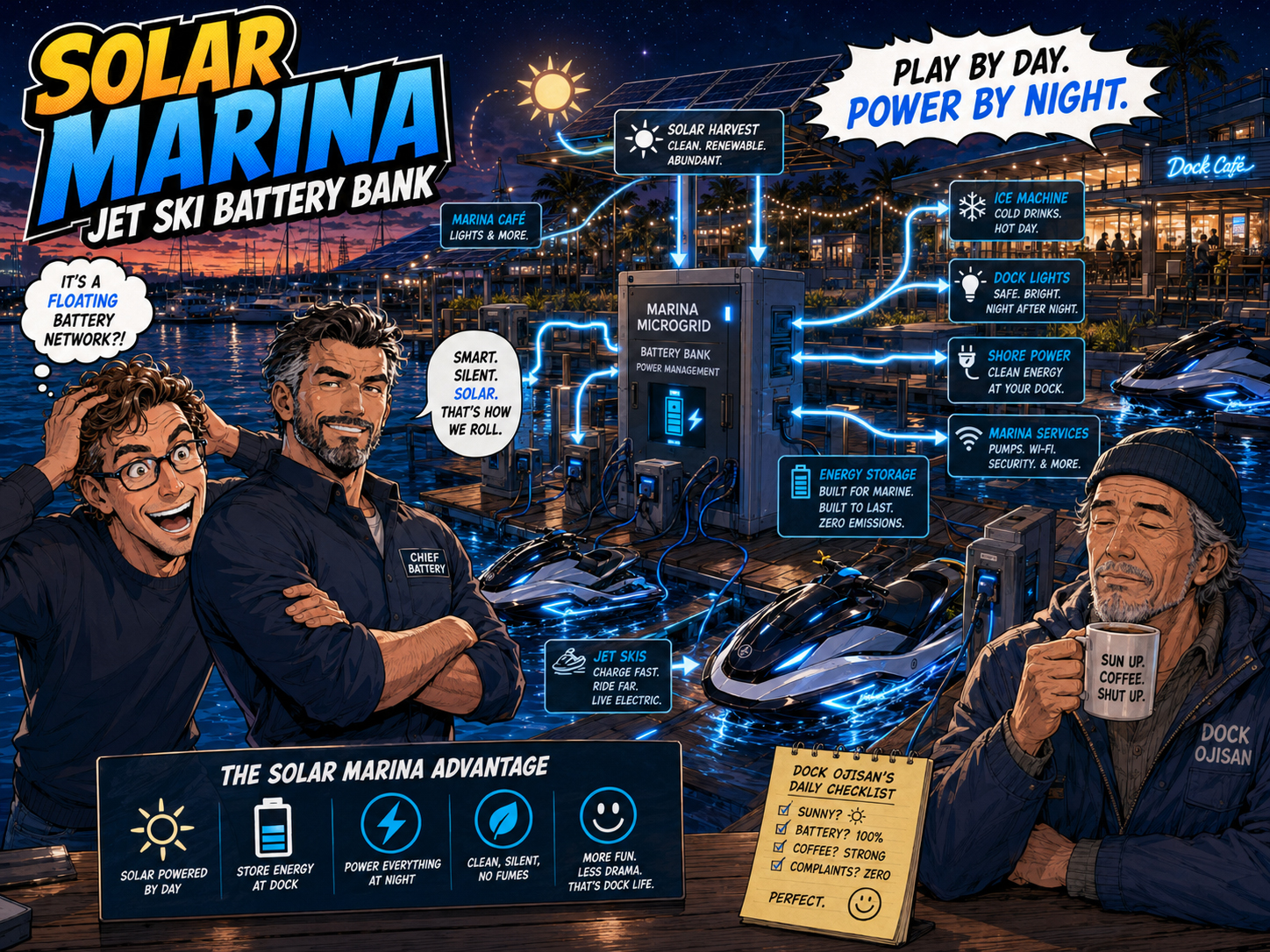
Play by day. Power by night. The marina becomes the energy character: solar canopies, electric Jet Skis, dock loads, shore power, battery storage, and one calm Dock Ojisan.
Play by day. Power by night. No drama at the dock.
The bigger vision
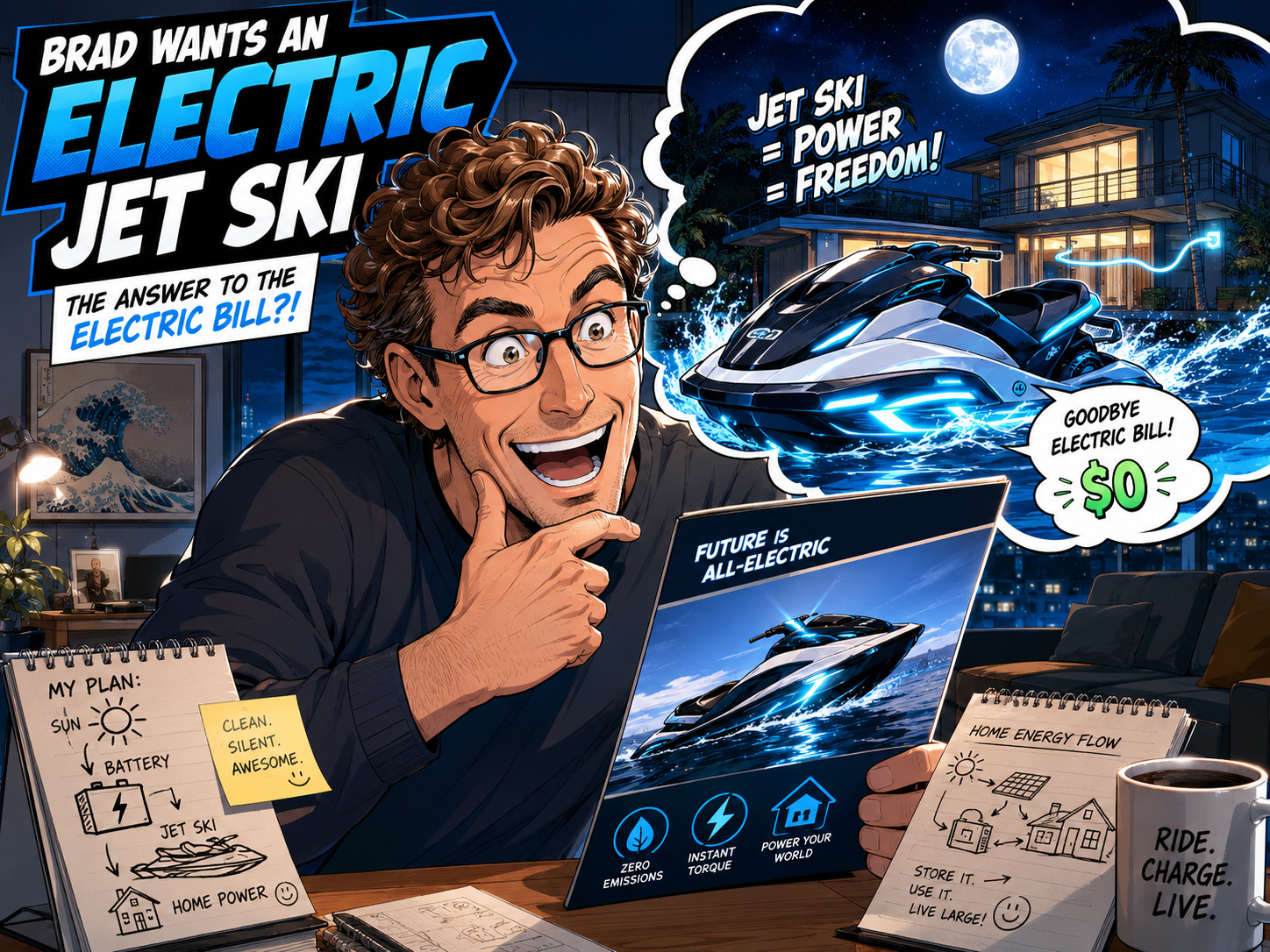
Brad starts with one electric Jet Ski and a very optimistic drawing. The better manga episode zooms out: the whole marina can become a managed energy ecosystem.
Solar canopies collect power during the day. Electric Jet Skis charge at the dock. A marina battery bank stores useful energy. Dock lights, café loads, shore power, pumps, Wi-Fi, and selected services get managed instead of improvised.
System pieces
The solar marina page should feel like a comic systems map: every glowing line has a purpose.
Shade the dock, charge the marina, and make clean power visible before the Jet Skis even move.
Floating storage that can become useful only through proper dock interfaces and controls.
A central storage system that can support selected dock loads and smooth operating timing.
Dock lights, shore power, café loads, pumps, Wi-Fi, and services get priorities instead of chaos.
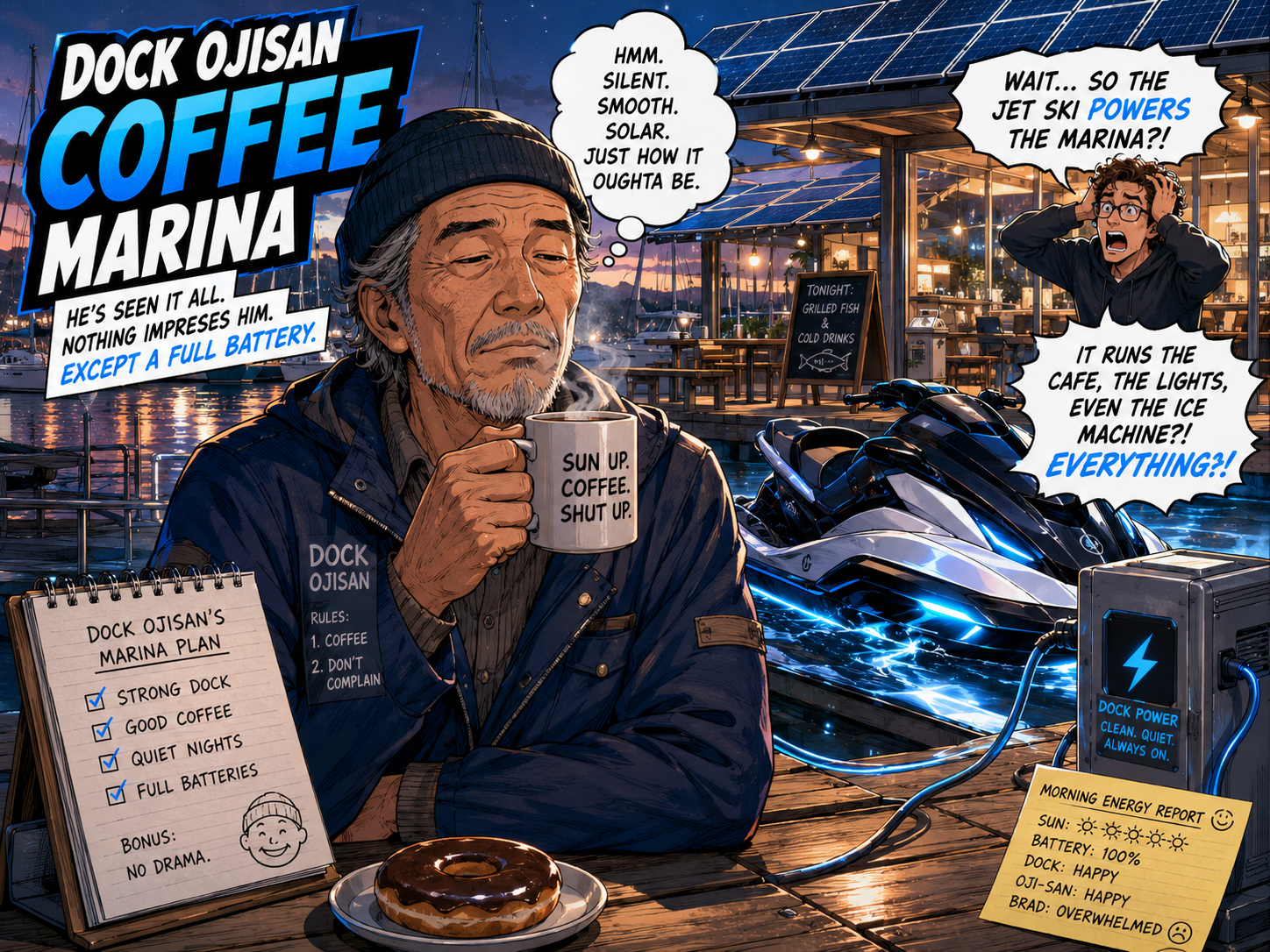
Dock Ojisan approved
Dock Ojisan does not need the marina to be flashy. He needs it to be quiet, labeled, serviceable, safe, and boring in the best possible way. He likes lights that stay on, batteries that are full, and equipment that does not require yelling.
The solar marina idea works because it respects the dock. Power is collected, stored, routed, and monitored through equipment that belongs near water.
Solar marina sequence
This should read like an exciting manga chapter and a clean-energy operating diagram.
Solar canopies glow over the dock. Electric Jet Skis line up like tiny floating batteries.
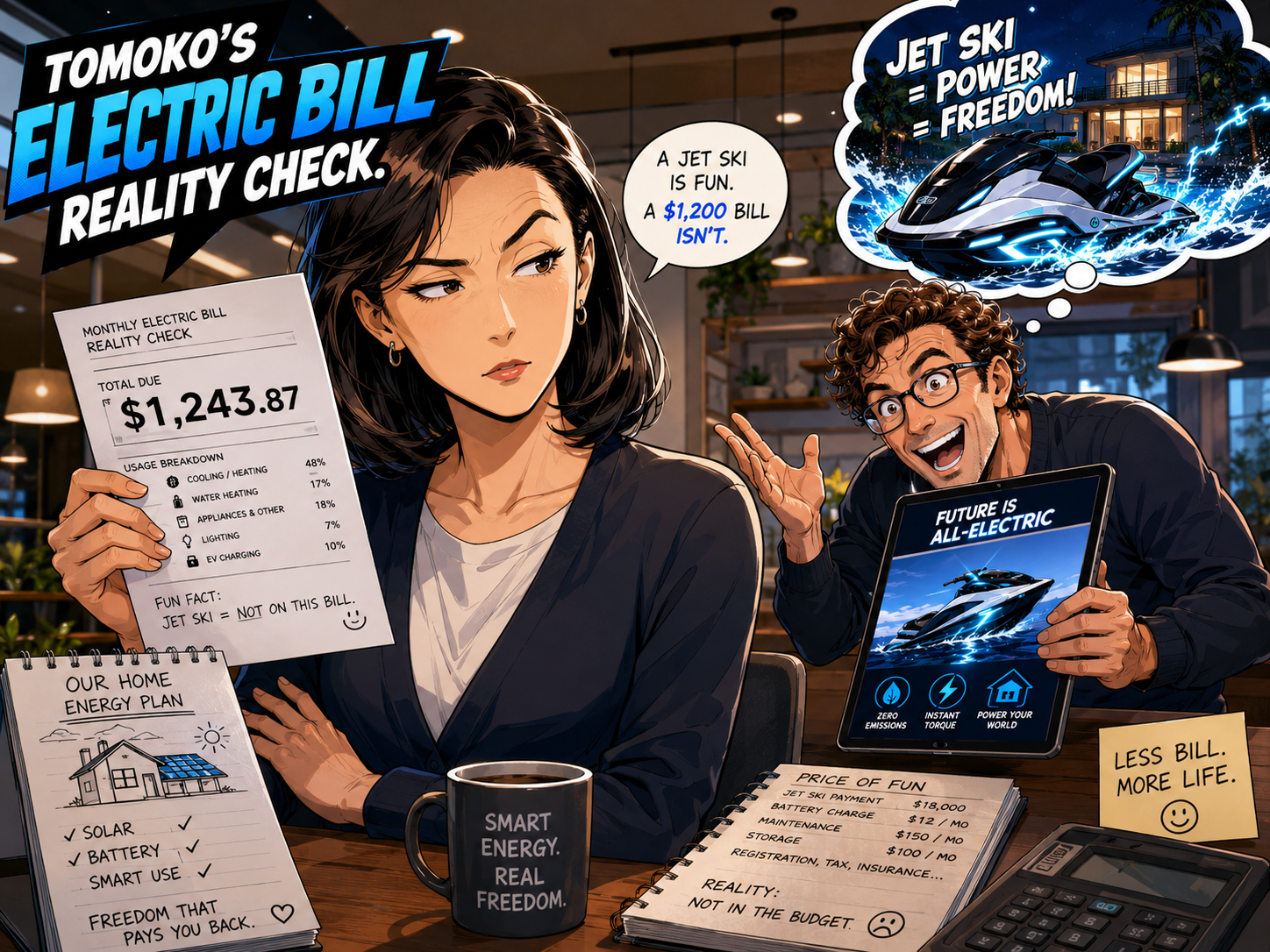
“It is not one Jet Ski. It is a floating battery network!” Tomoko reaches for the calculator.
Solar to battery bank. Battery bank to dock loads. Jet Skis to proper charging interface.
“Charge wrong, darling, and I own the dock.” The rate chart sparkles ominously.
The system supports lights, Wi-Fi, café essentials, and dock services without drama.
“So I can still ride it?” Tomoko says, “After the bill model.”
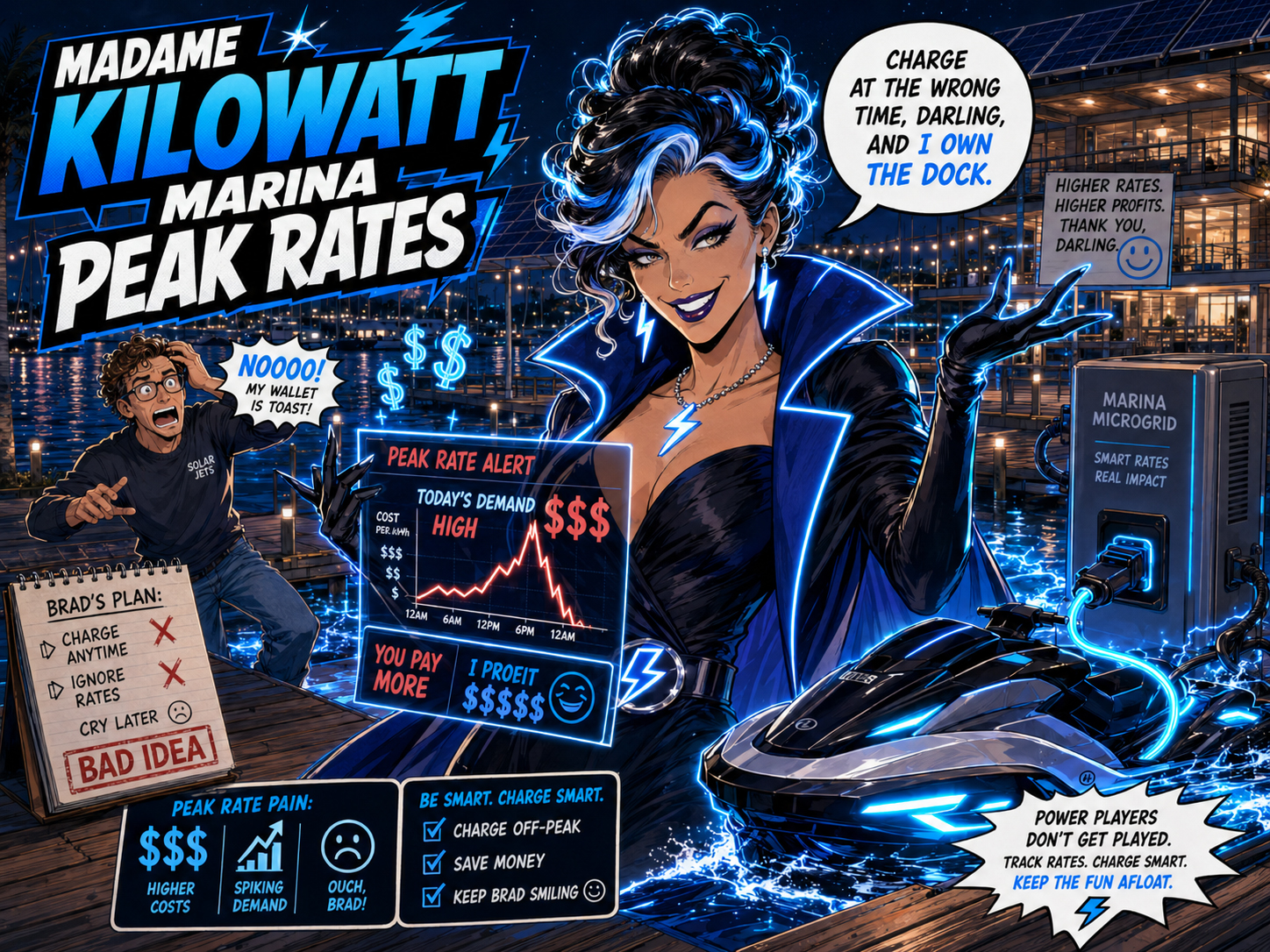
Peak-rate villain
A solar marina can still make bad choices. If every Jet Ski, café load, dock light, shore-power outlet, pump, and charger demands power at the wrong time, Madame Kilowatt gets a waterfront table.
The battery bank helps only if it is used with a strategy: rate-aware charging, defined load priorities, visible state of charge, and smart dispatch.
What the marina can support
The battery bank becomes useful when the system knows what matters first.
Safety and usability after dark, especially when powered through a managed storage system.
Communications, cameras, and monitoring can be high-value, low-drama loads.
Selected marina support loads should be evaluated by power draw and operating importance.
Fun loads are allowed, but the battery bank still has a budget and a priority list.
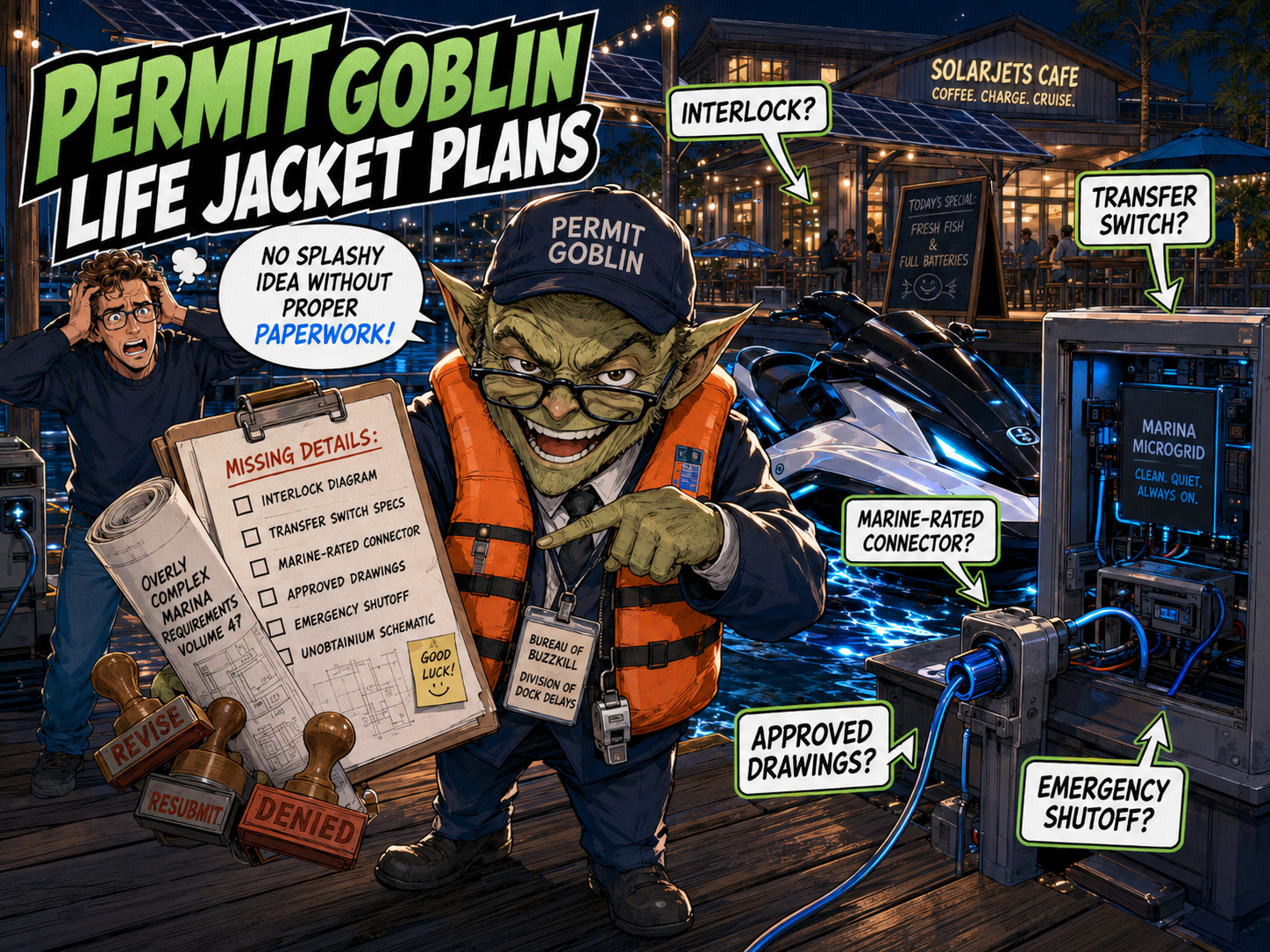
Permit Goblin in the water
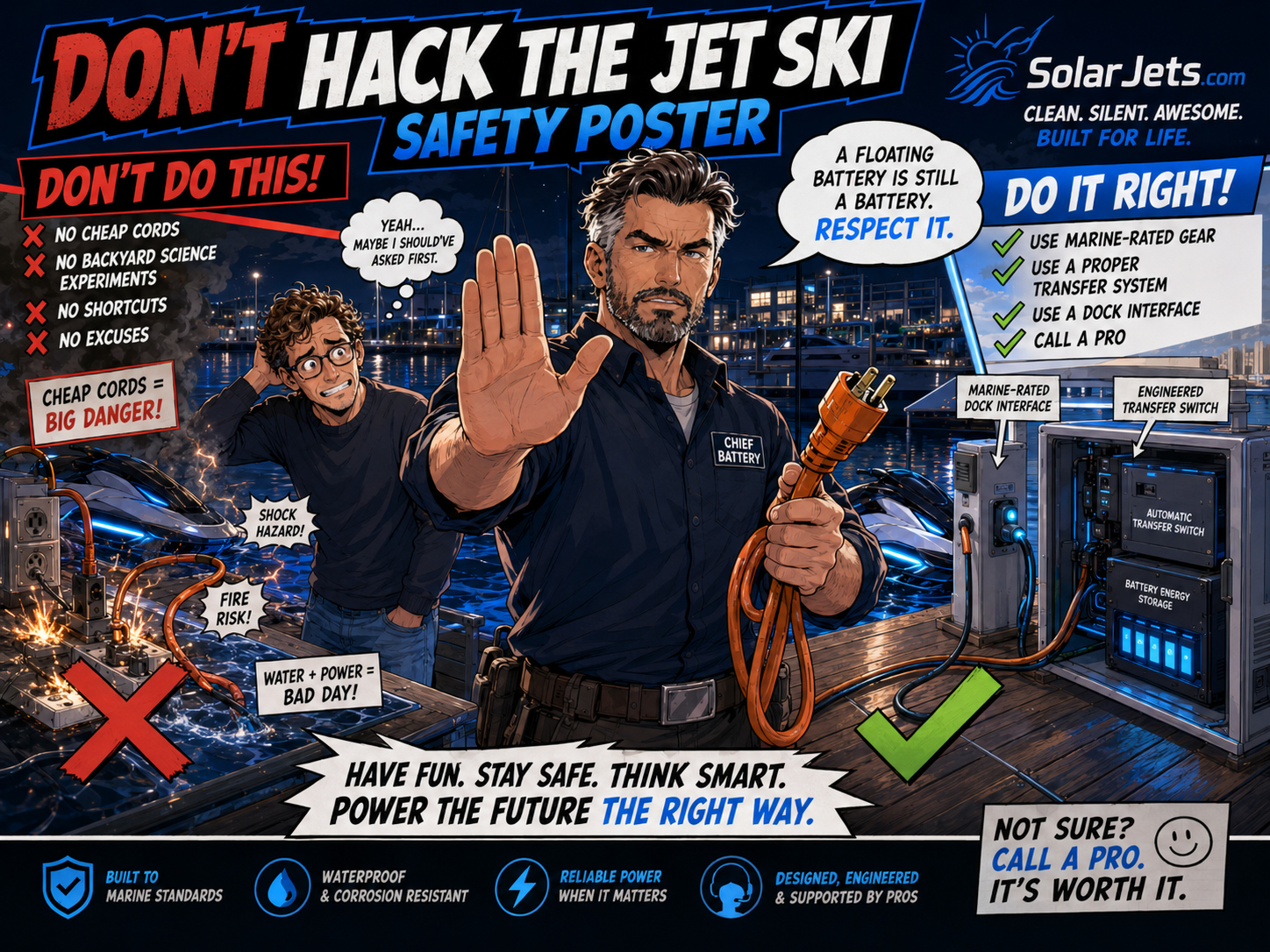
The Permit Goblin does not care how cool the solar marina looks. He wants the details: marine-rated connectors, emergency shutoff, interlocks, transfer behavior, approved drawings, equipment locations, and service access.
In this episode, the goblin is not just the villain. He is the paperwork creature that keeps Brad from turning the dock into a science fair.
The cast at the marina
The solar marina works because each character forces a different part of the plan to be real.
Safety ending
The solar marina should feel fun, futuristic, and comic-book bright. But the safety ending stays serious: water, batteries, boats, shore power, homes, and people require engineered systems.
The best SolarJets ending is the simplest one: have fun, stay safe, think smart.