Refrigerator
Food preservation is a reasonable critical-load target when backup duration and power limits are understood.
Critical-load manga
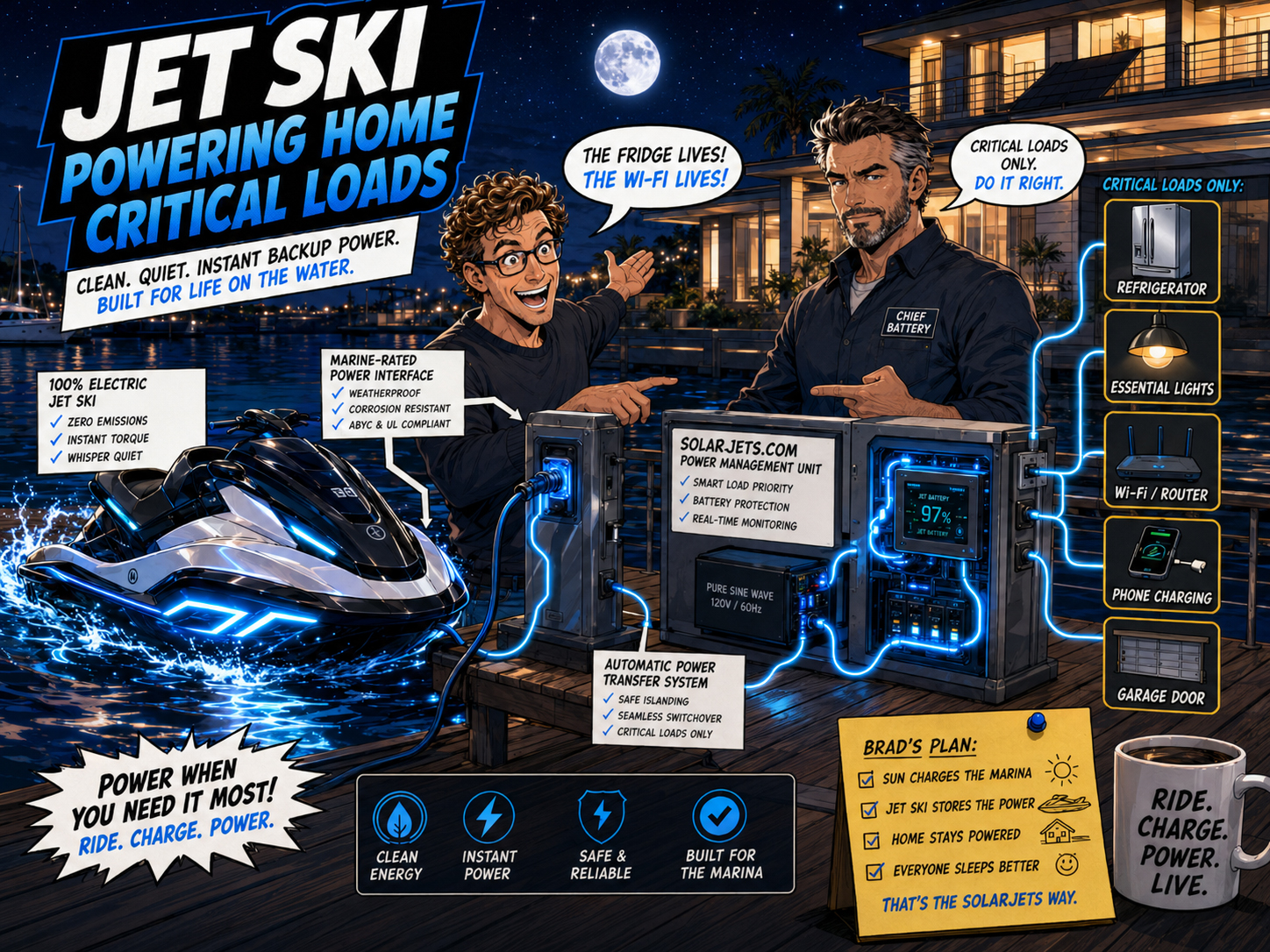
The fridge lives. The Wi-Fi lives. The essential lights live. Brad does not get to power the whole house, the hot tub, the espresso machine, and his dreams forever.
Critical loads only. Brad, the hot tub is not critical.
The serious rule
Brad wants the electric Jet Ski to power the whole house because that sounds heroic. Chief Battery starts smaller: what actually needs to stay on when the grid is down or the rate window gets ugly?
A floating battery concept only becomes useful when the loads are selected, separated, protected, transferred safely, and monitored. The point is not “everything forever.” The point is the right loads for the right amount of time.
Approved by common sense
The page should make it clear that a Jet Ski battery, if ever used this way, would support selected loads through proper equipment.
Food preservation is a reasonable critical-load target when backup duration and power limits are understood.
A few selected lights can keep the home usable and safer during an outage.
Communications can matter, especially when the household needs outage updates or emergency information.
Small loads can be high value. Keeping phones charged can matter more than running a large appliance.

Tomoko’s budget test
Tomoko cuts through the fantasy. If the electric Jet Ski is supposed to help the home, the plan must say what it powers, what it costs, when it charges, how long it lasts, and whether the bill actually improves.
“Critical loads only” is where the idea starts to sound less like Brad shopping and more like a serious power plan.
Critical-load panel logic
The manga should show the Jet Ski connected through proper gear to a limited critical-load panel, not directly to the whole house.
The electric Jet Ski may provide stored energy, but it is only the source, not the entire system.
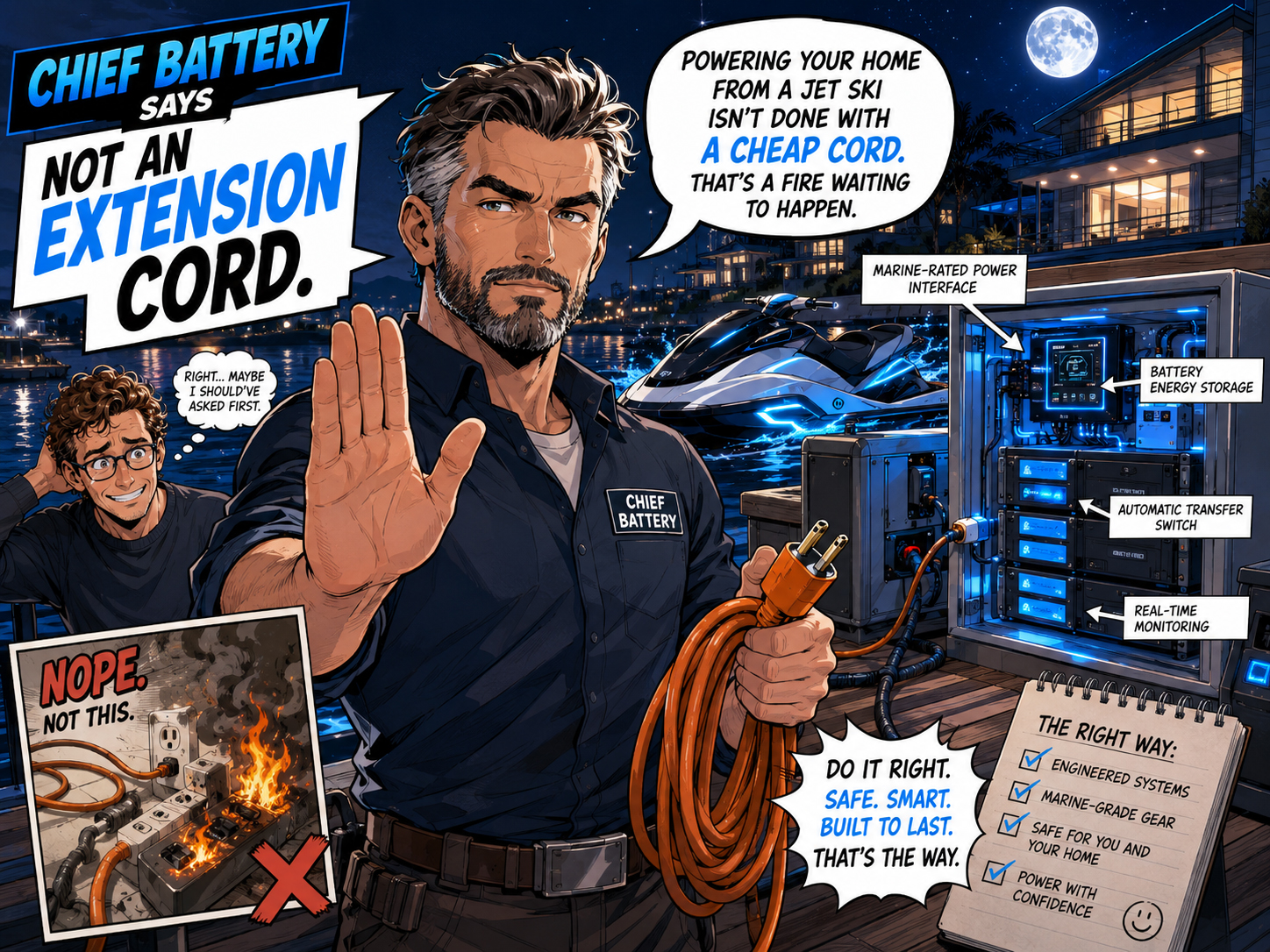
Power leaves the dock only through marine-rated, engineered hardware designed for the environment.
A proper transfer system prevents unsafe backfeed and separates backup power from utility power.
Selected circuits receive support. The rest of the house waits its turn like an adult.
The homeowner sees battery level, active loads, warnings, and when backup operation should end.
The system is documented, installed, tested, labeled, and maintained by qualified people.
Chief Battery says no
A smaller load list does not make the safety requirements disappear. Refrigerator, lights, and Wi-Fi still need to be powered through correct transfer equipment and protective systems.
Chief Battery’s message stays blunt: a floating battery is still a battery, and a home panel is not a toy.
Brad’s denied list
The page needs a funny list of what does not belong on the critical-load panel.
Brad says morale. Tomoko says no.
Maybe in a real designed system, but not in Brad’s napkin fantasy.
Coffee is important. Dock Ojisan agrees. Still not first on the emergency list.
The most dangerous phrase in backup power, right after “just plug it in.”
Permit Goblin’s load question
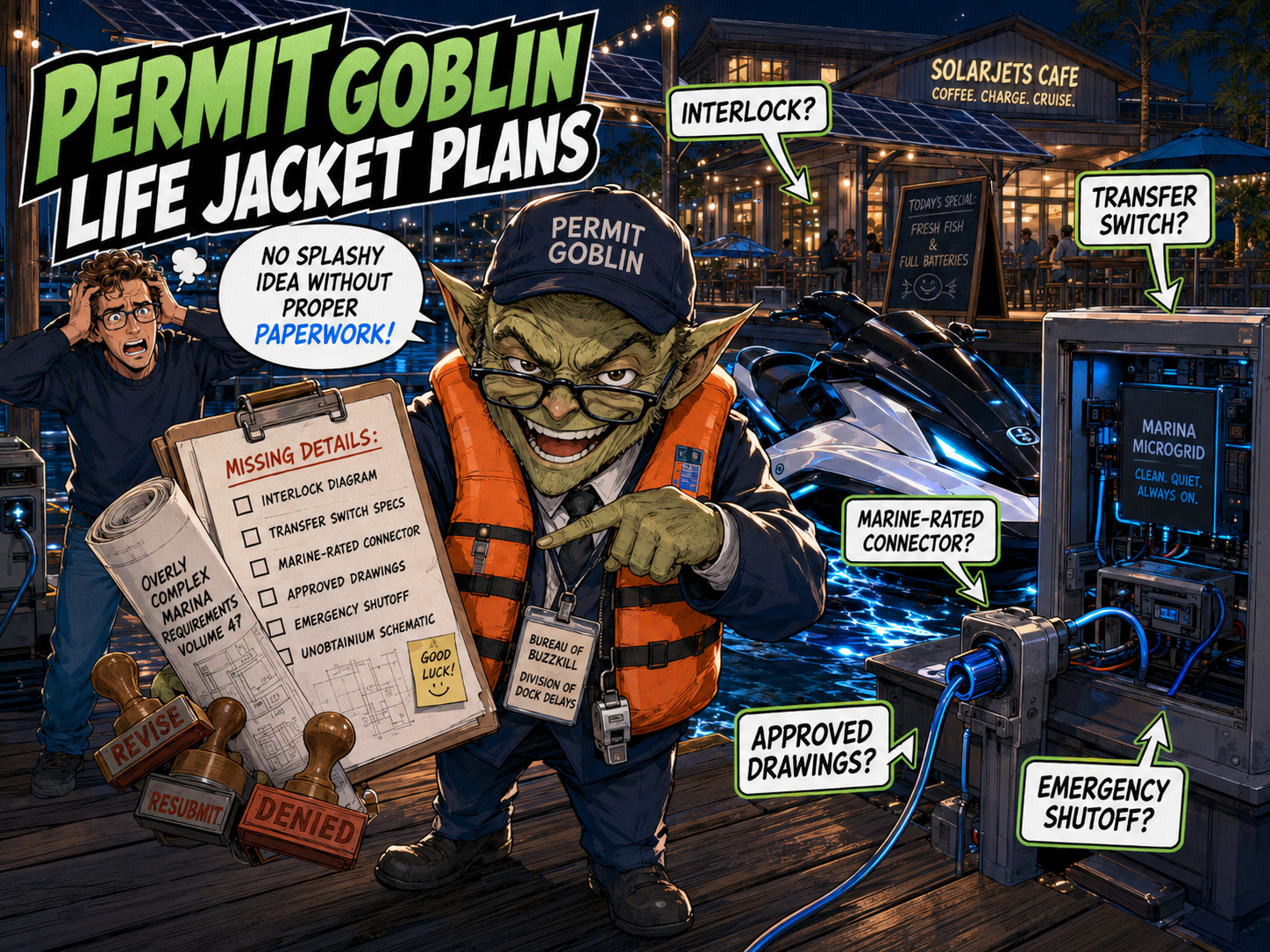
The Permit Goblin loves vague promises. “Power the house” is vague. “Power a refrigerator, essential lights, Wi-Fi/router, phone chargers, and one selected outlet through a proper critical-load panel” is something he can stamp slowly.
The goblin is annoying because he forces the page to say what is actually connected.
Marina and home versions
Critical-load thinking applies whether the floating battery supports a home, a boat, or marina services.
The home version: selected circuits, transfer equipment, and no whole-house fantasy.
Open page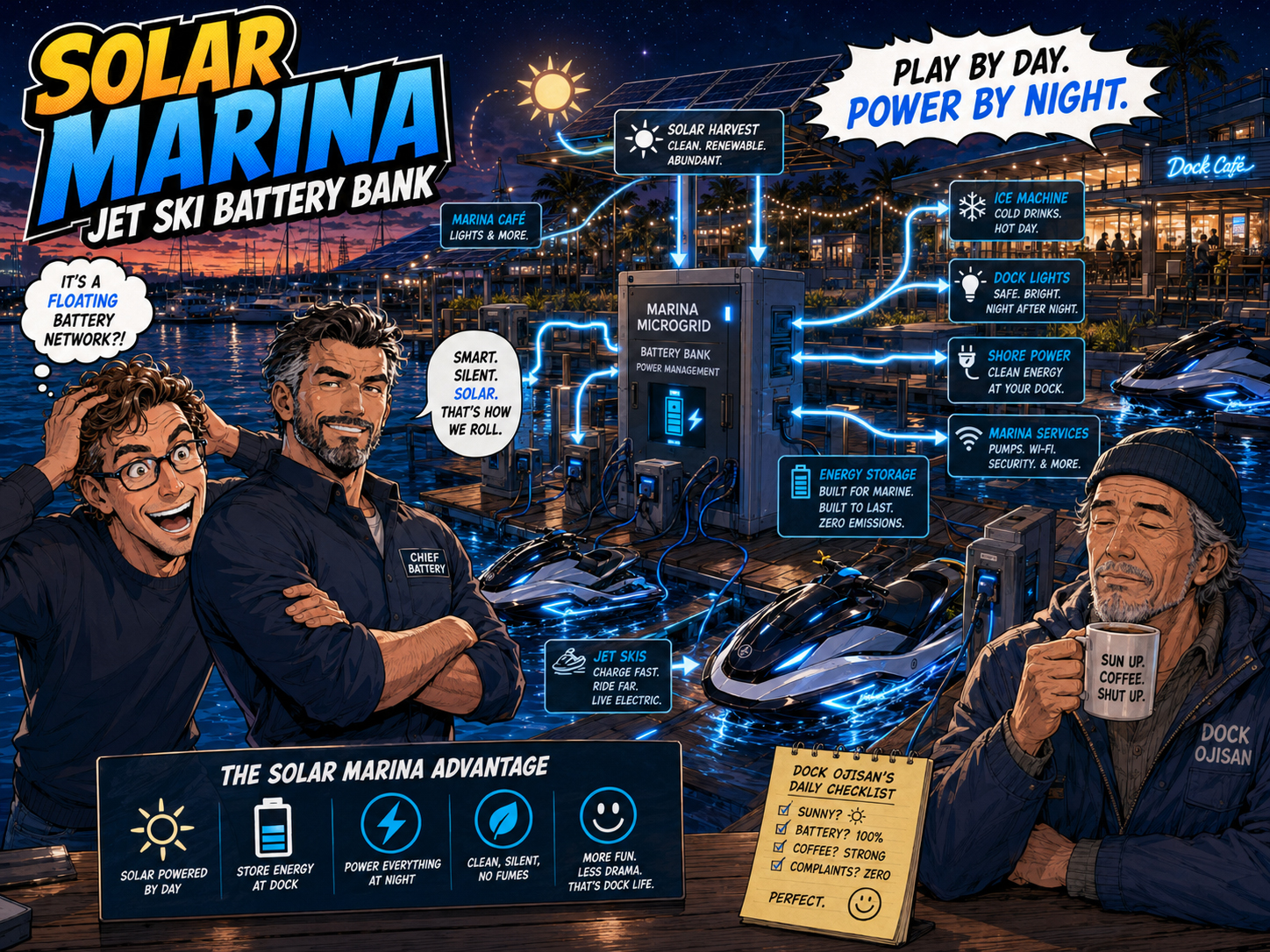
The marina version: shore power, dock lights, pumps, Wi-Fi, café loads, and load priority.
Open page
The broader system: solar canopies, dock power, battery storage, and managed loads.
Open page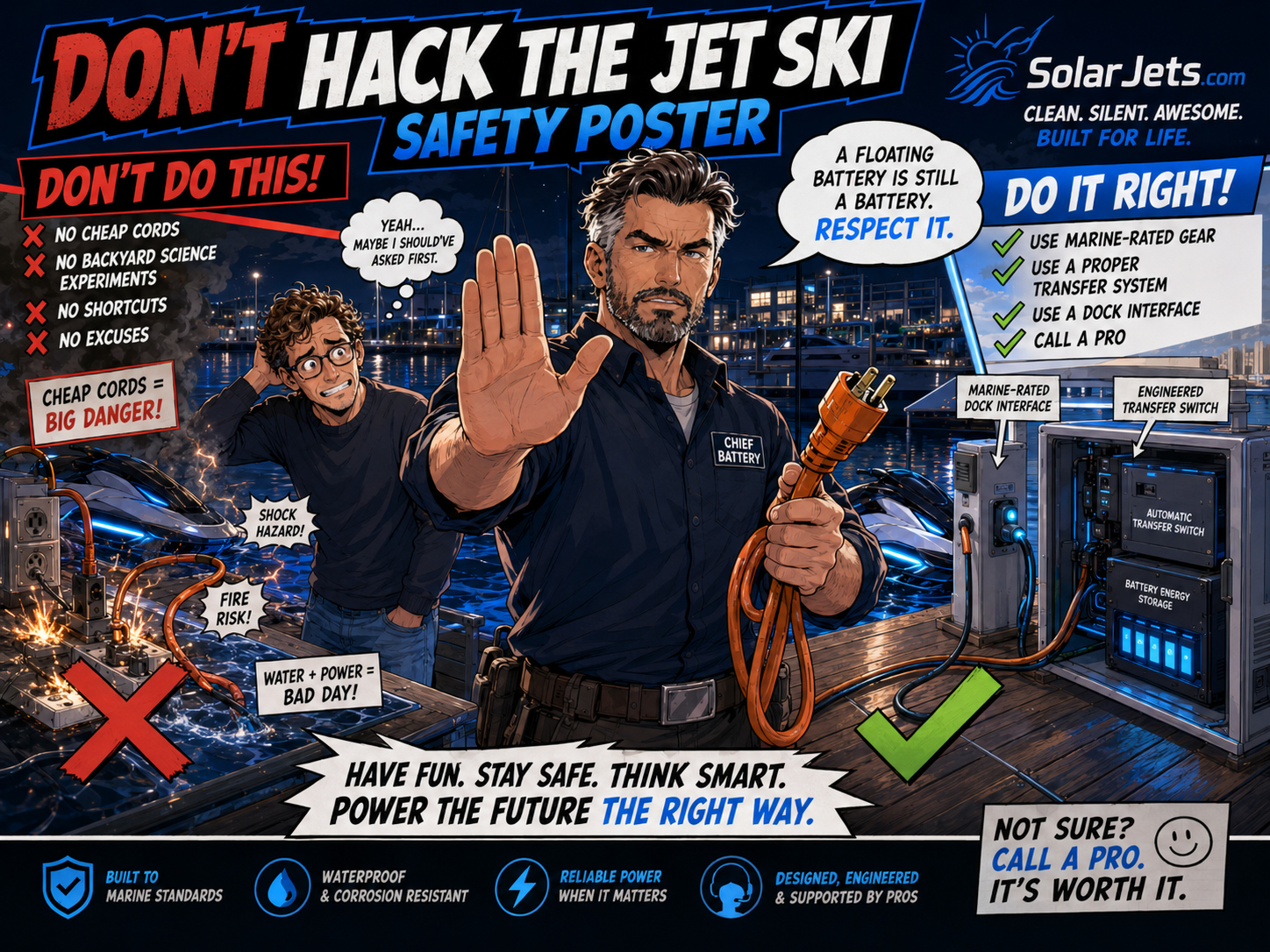
Safety ending
This page should make the critical-load idea easy to understand and impossible to misuse. A smaller power target is still a real electrical system and still needs proper equipment.
Brad gets the fridge, the Wi-Fi, the phone chargers, and a lesson. Tomoko gets a plan that finally sounds less ridiculous.