No cheap cords
An ordinary extension cord is not a home-transfer system, a dock interface, or a safety plan.
Safety poster episode
A floating battery is still a battery. Respect it. No cheap cords, no backyard science experiments, no wet-dock shortcuts, and no Brad-powered improvisation.
Have fun. Stay safe. Think smart before you plug anything in.
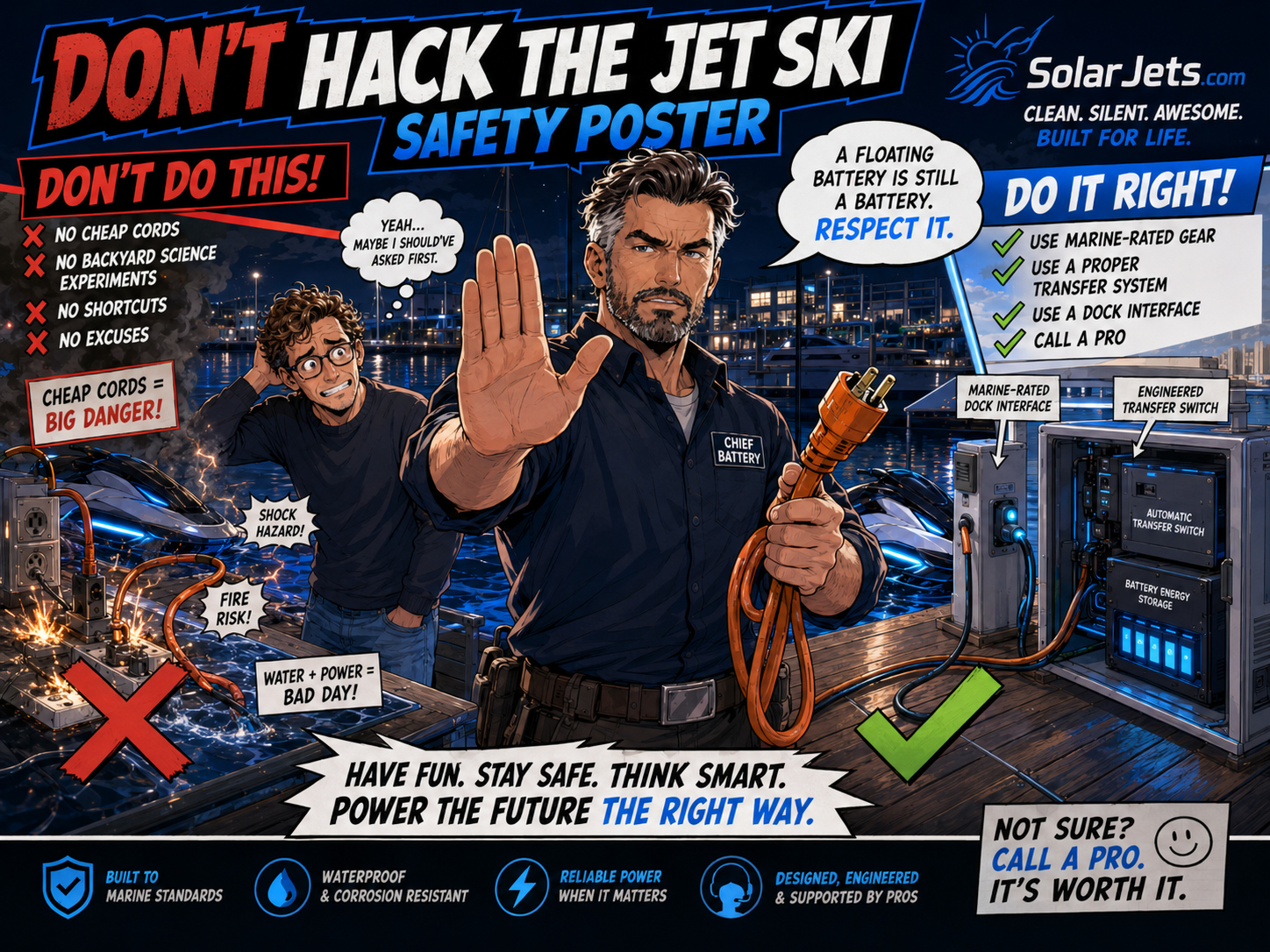
The big warning
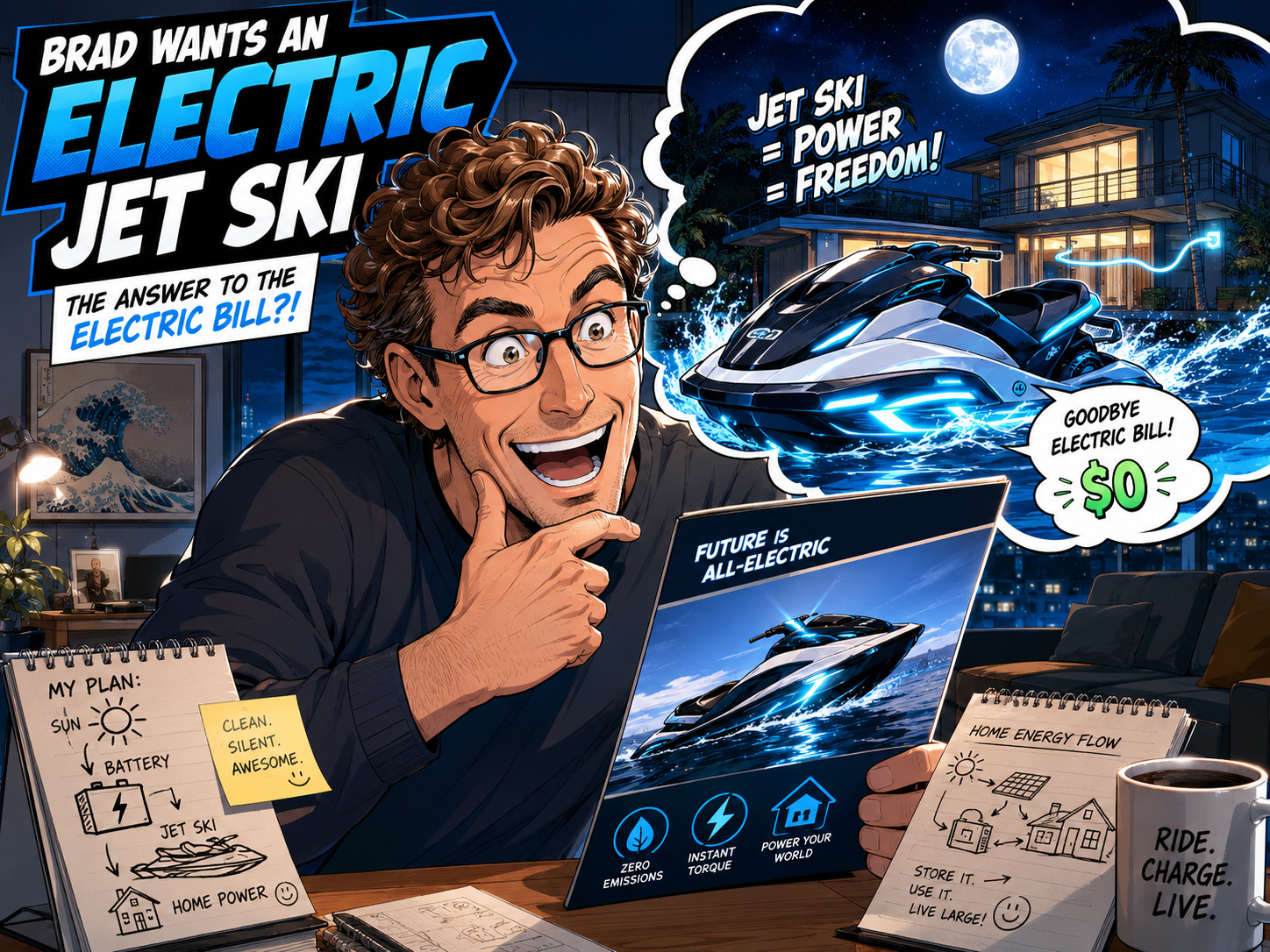
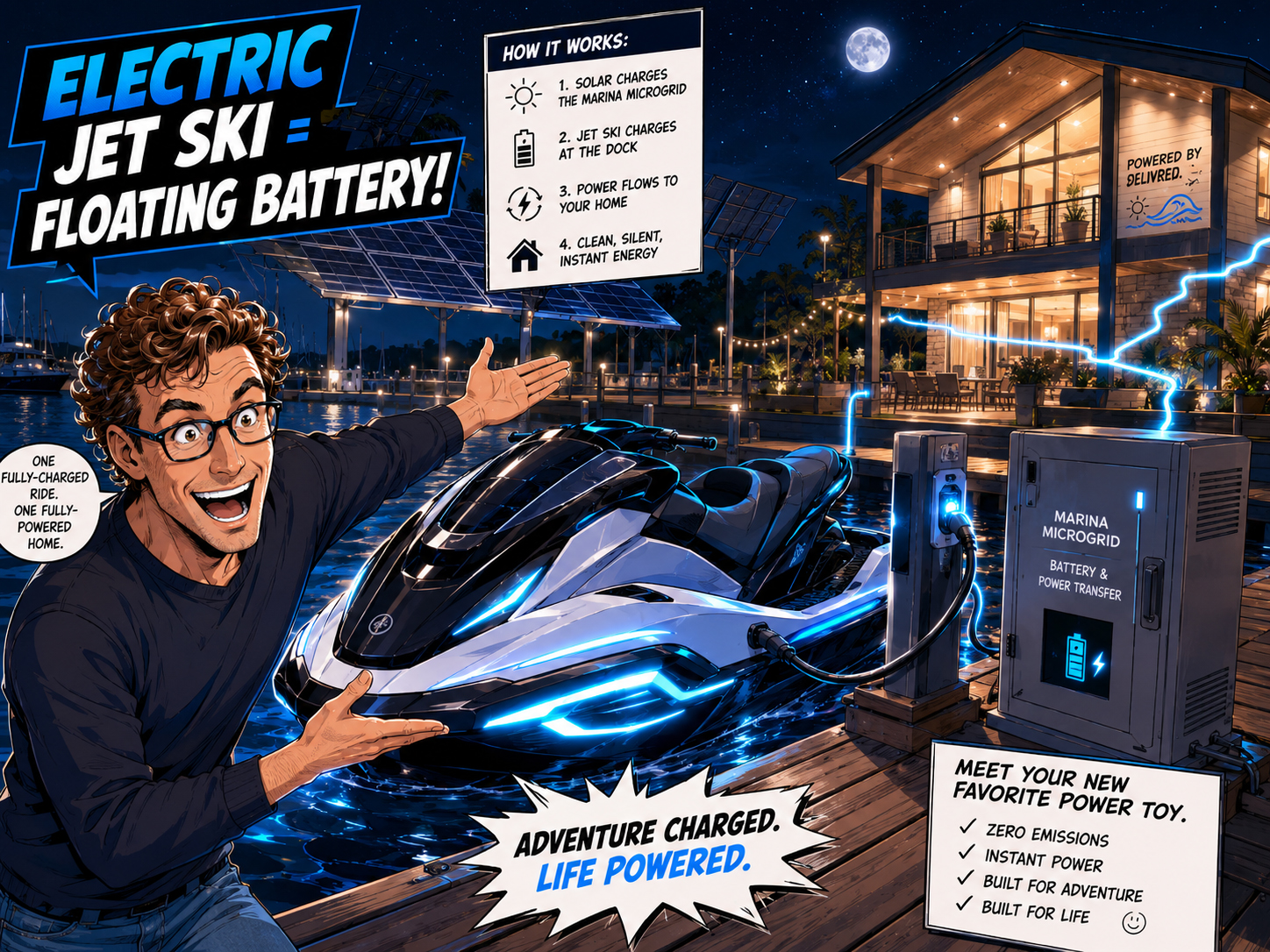
Brad can dream. Brad can sketch. Brad can point at the electric Jet Ski and call it a floating battery. But the moment he reaches for a cheap extension cord, Chief Battery takes over the page.
Electric watercraft batteries, dock power, home panels, shore power, transfer equipment, and water exposure are not casual weekend experiments. The funny story must land on the serious message: use engineered equipment and qualified professionals.
Never do this
The page should make the unsafe version obvious, ridiculous, and completely unacceptable.
An ordinary extension cord is not a home-transfer system, a dock interface, or a safety plan.
Feeding power into a panel without proper transfer equipment can create dangerous conditions.
Water, people, batteries, and electricity require marine-rated equipment and real protection.
If nobody can explain what the equipment does, where it shuts off, and what it powers, it is not ready.
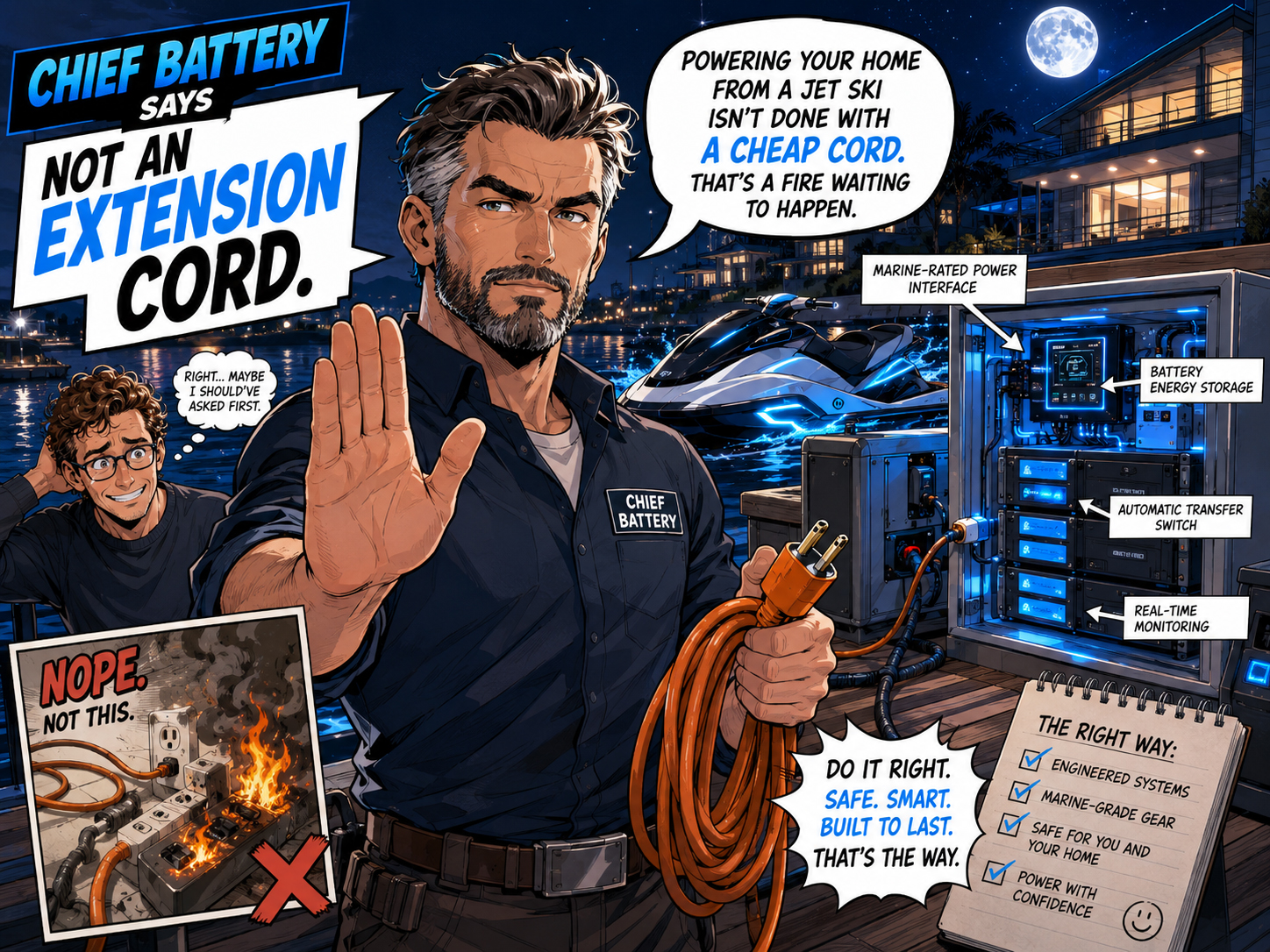
Chief Battery’s safe version
The safe side of the poster is not glamorous because it is complicated. It is glamorous because it works. Proper equipment turns the idea from Brad’s fantasy into something that can be reviewed, installed, tested, labeled, and maintained.
The exact design depends on equipment, codes, site conditions, loads, ratings, and approvals. The manga can explain the direction, but the real installation belongs to qualified professionals.
Safety poster sequence
The comedy should make the safety point impossible to miss.
“If the Jet Ski has a battery, the house has a battery.” Brad draws one suspiciously simple line.
Chief Battery senses danger from three docks away.
“No cheap cords. No backyard science experiments. No wet-dock power hacks.”
Marine-rated interface, transfer equipment, shutoff, monitoring, and critical-load panel.
“Safe first. Then math. Then maybe fun.”
The dock stays quiet. The batteries stay full. Nobody says “oops.”
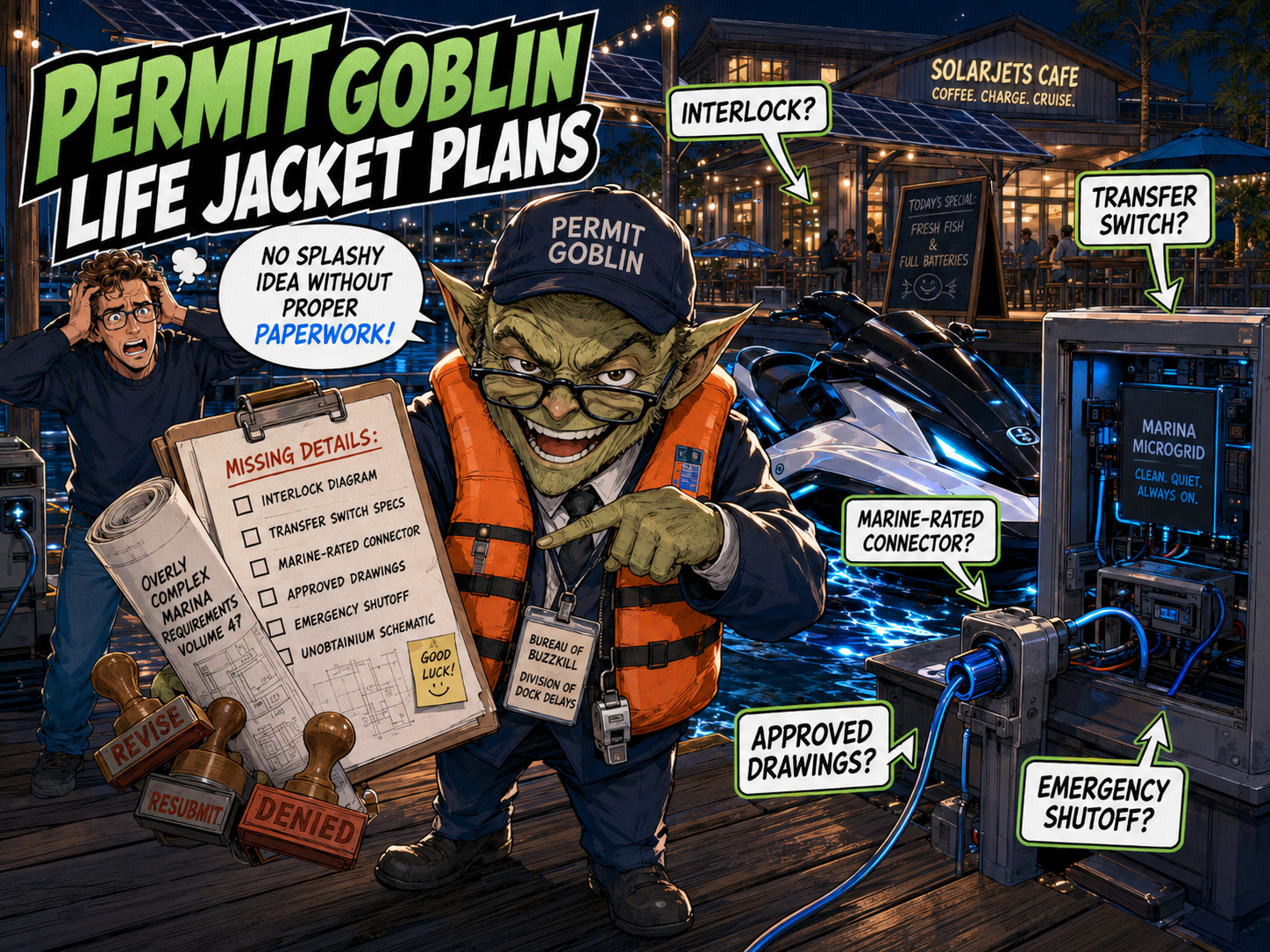
Permit Goblin supports this message
The Permit Goblin may be annoying, but on this page he is useful. He asks for interlocks, transfer switch specs, marine-rated connectors, approved drawings, emergency shutoff, and documentation.
That is not red tape for the sake of red tape. It is how the floating battery idea becomes visible, reviewable, and less likely to hurt people.
Do it right
These are not optional decorations. They are the difference between a concept and a system.
The dock connection must be designed for the environment, movement, corrosion, moisture, and real load.
Backup power must not create unsafe backfeed or ambiguous connections to utility or shore power.
Qualified people should design, install, inspect, test, and explain the system before it is used.
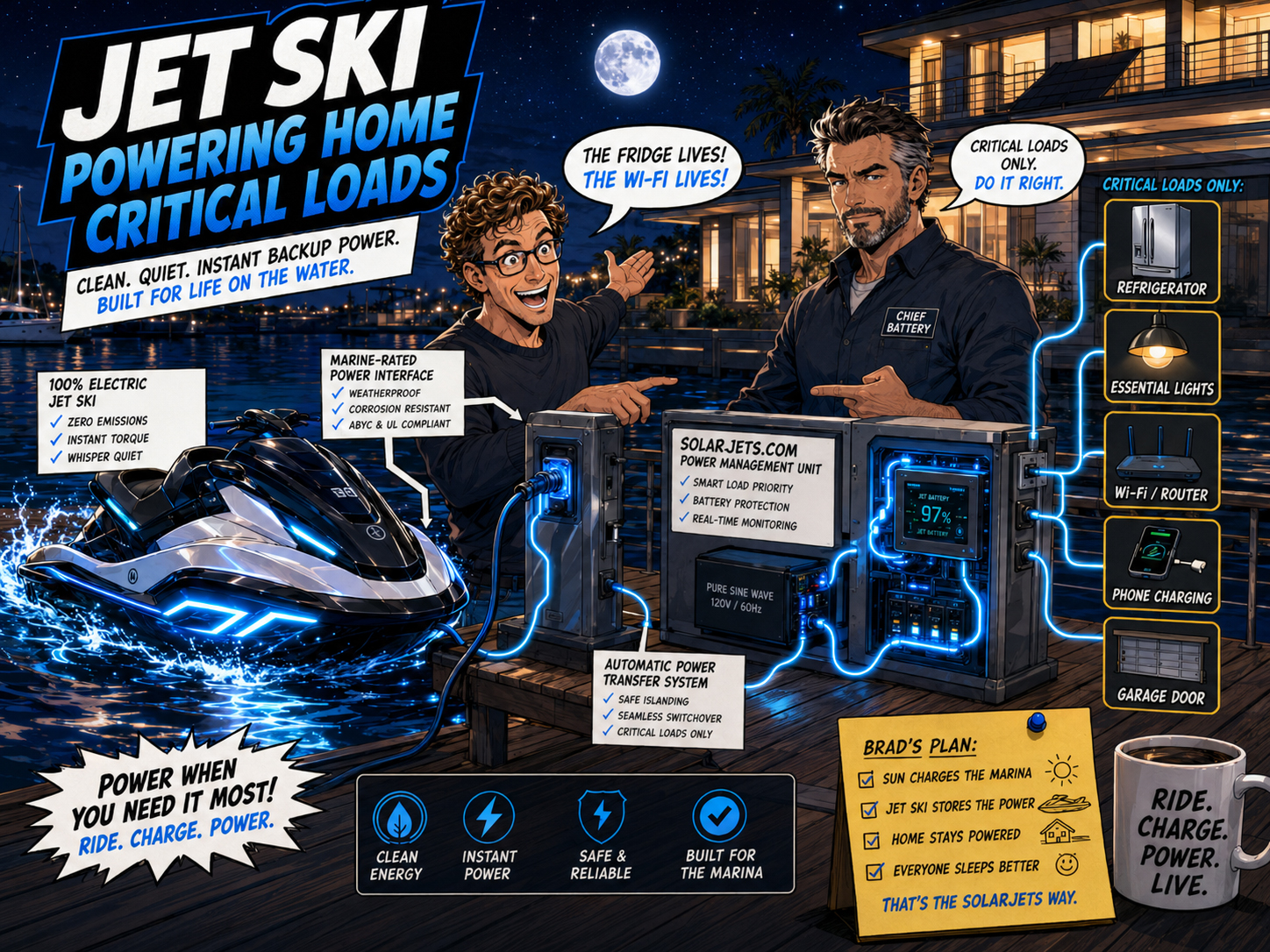
Critical-load discipline
Even a properly engineered system must respect power limits. The safe story is selected critical loads: refrigerator, essential lights, Wi-Fi, phone charging, maybe one protected outlet or clearly defined circuit.
Brad’s fantasy powers everything. Chief Battery’s plan powers what matters first.
Safety cast
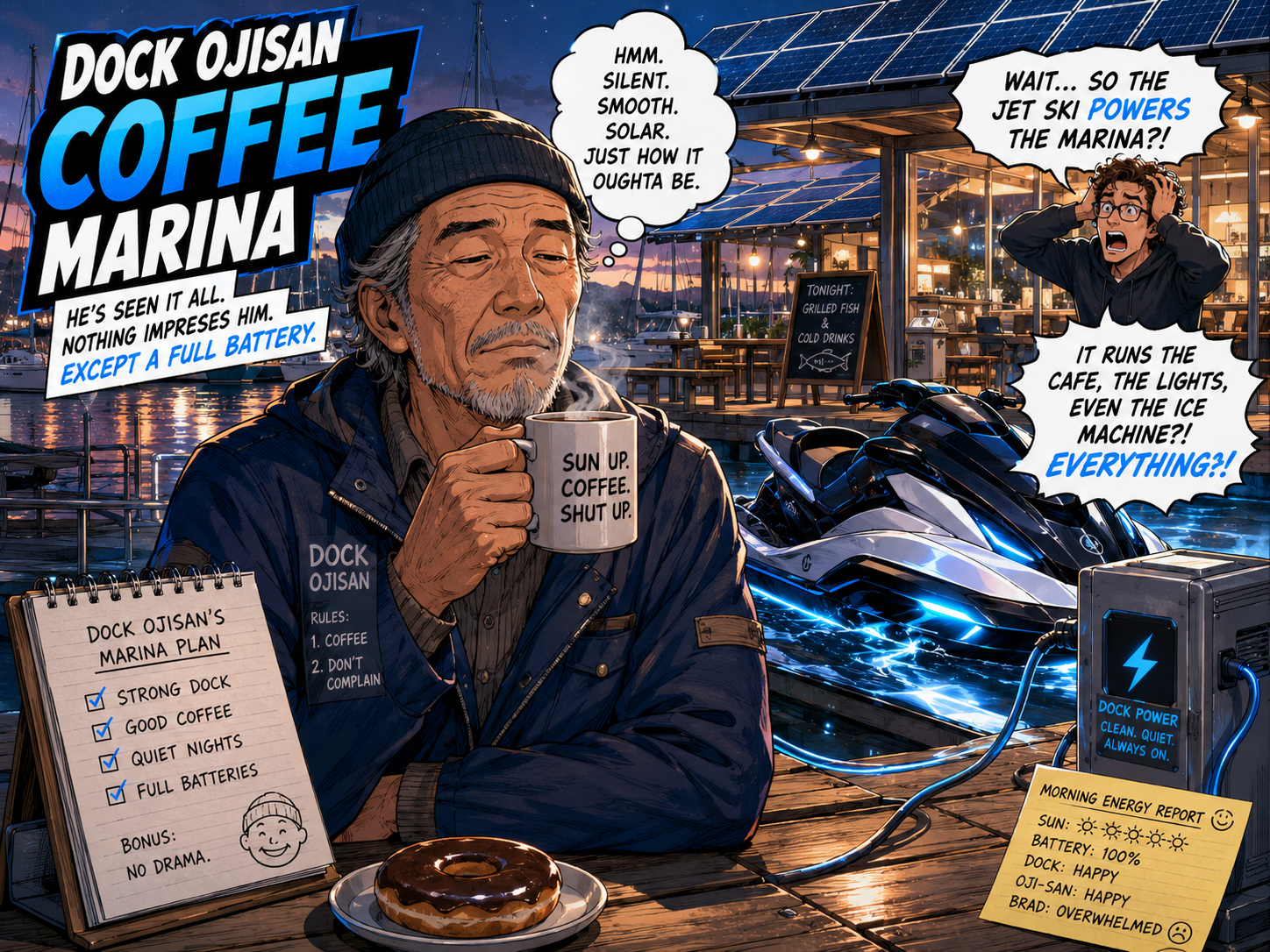
The best part of the poster is that every character has a reason to prevent the shortcut.

The safe dream
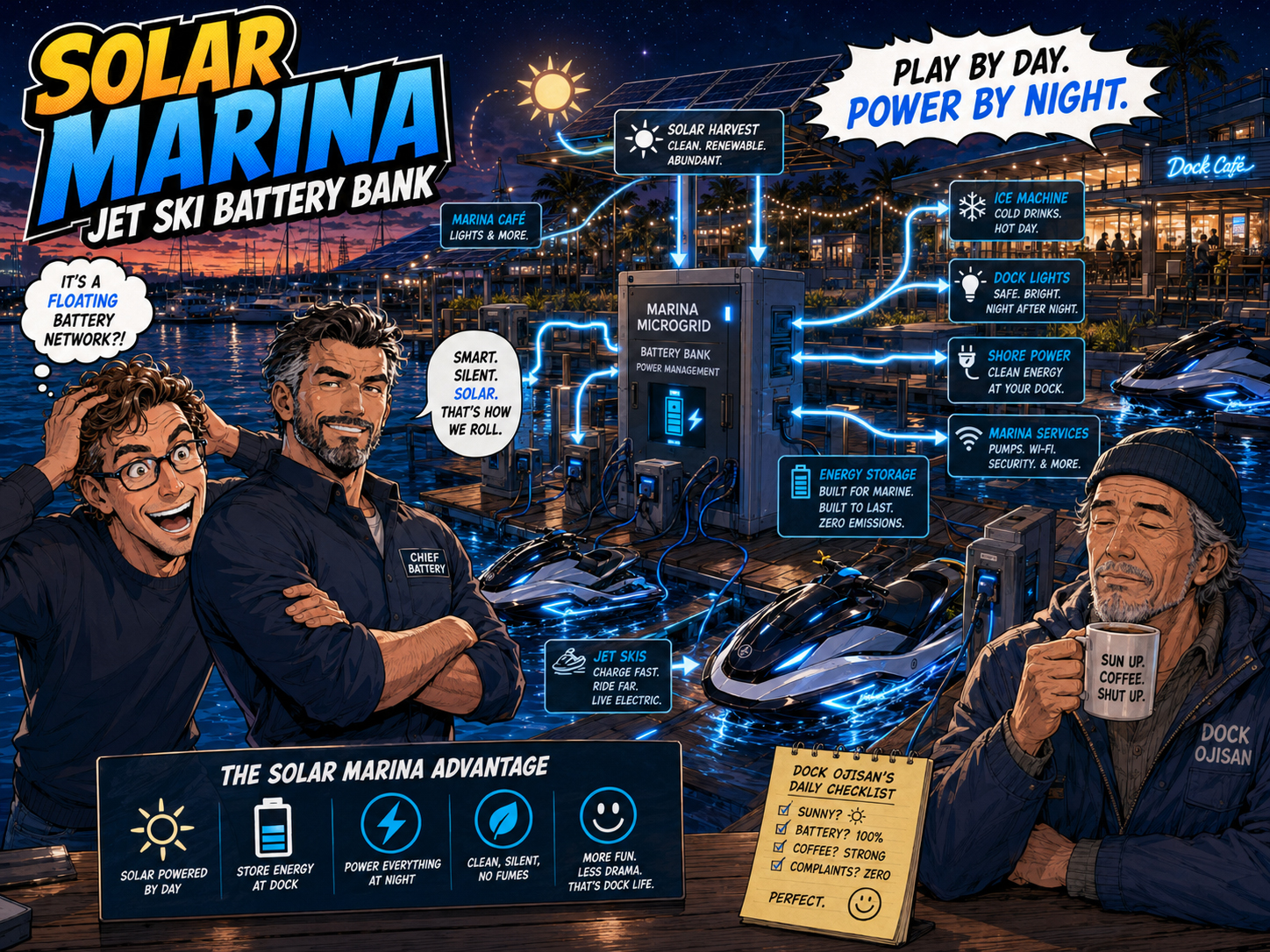
Safety does not kill the SolarJets idea. Safety makes the idea worth taking seriously. A solar marina with dock batteries, electric watercraft, managed loads, and professional equipment can still be fun, futuristic, and manga-worthy.
The final message stays simple: have fun, stay safe, think smart, and call a pro.