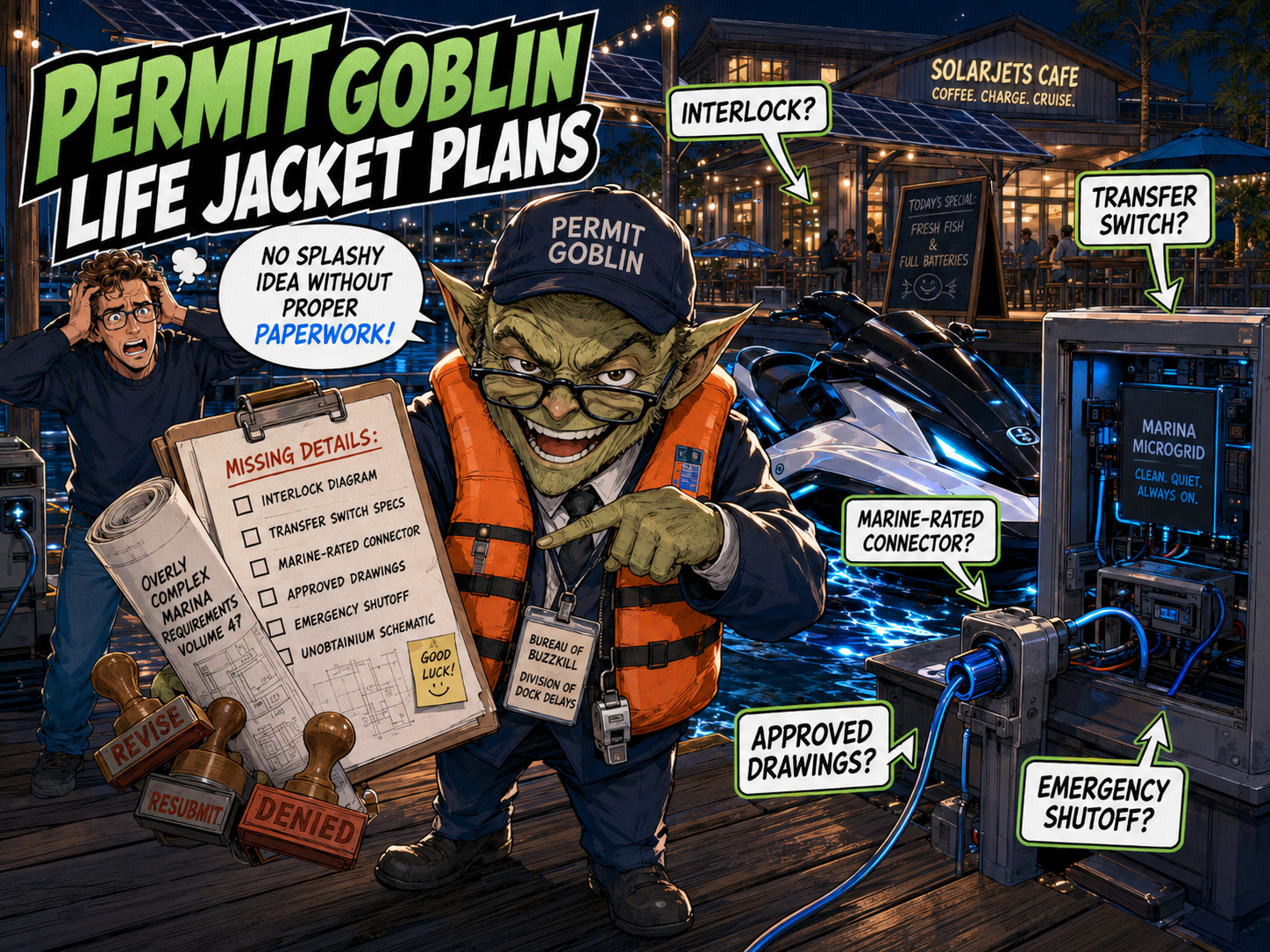
Interlock?
The system needs to prevent unsafe simultaneous power paths and dangerous backfeed conditions.
Marina paperwork villain
No splashy idea without proper paperwork. The Permit Goblin has reached the marina, and this time he brought a life jacket, a clipboard, and five annoying questions that are actually correct.
“Beautiful floating battery.” “Now show me the approved drawings.”
Character profile
Brad thought the Permit Goblin only lived in airport plan rooms. Then the electric Jet Ski idea reached the marina, and the goblin emerged from the dock box wearing a life jacket and carrying rolled drawings.
He is ridiculous, but he is not wrong. A floating battery concept touches marine equipment, home power, dock power, transfer systems, emergency shutoff, water exposure, and human safety.
The five goblin questions
The goblin’s job is to turn Brad’s napkin sketch into something safe enough to discuss seriously.
The system needs to prevent unsafe simultaneous power paths and dangerous backfeed conditions.
Home, dock, boat, or marina loads require a proper transfer method, not a casual plug-in fantasy.
Water, salt air, corrosion, movement, and people on docks demand equipment built for the environment.
Any real system needs a safe, visible, understandable way to stop power when something is wrong.
Chief Battery agrees
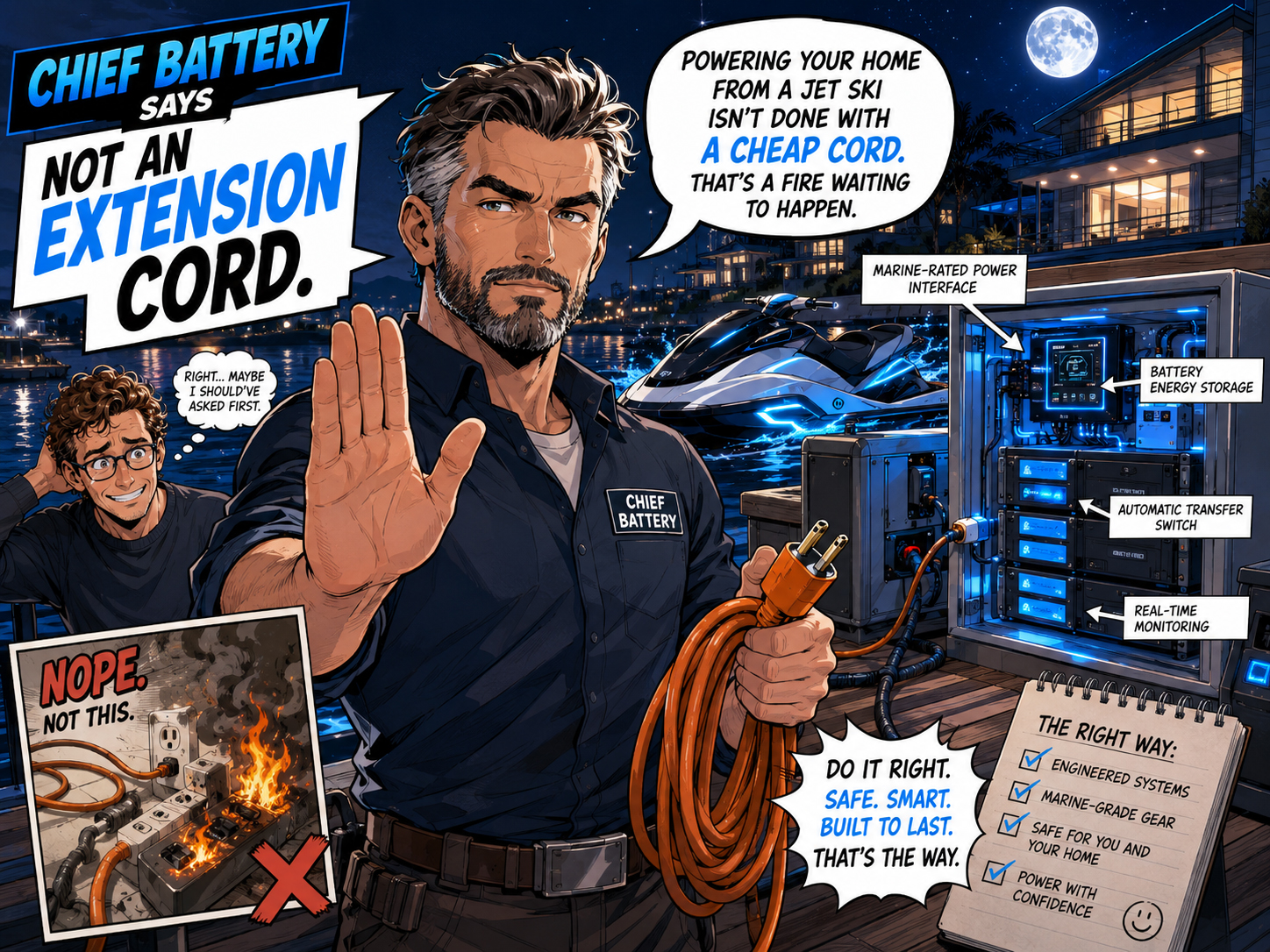
Chief Battery does not enjoy paperwork. He enjoys not having accidents. The goblin’s questions may sound like delays, but each one points to a real safety or operating problem.
A floating battery near water needs proper engineering. The system should have rated equipment, safe transfer behavior, isolation strategy, monitoring, clear labels, and a professional installation.
Goblin panel sequence
A funny six-panel scene that keeps the safety message sharp.
“The Jet Ski powers the house, the dock, the café, and possibly morale.”
A tiny goblin climbs from the dock wearing a life jacket and holding a red stamp.
“Interlock diagram?” Brad says, “I drew arrows.” The goblin smiles.
“Transfer switch? connector rating? emergency shutoff? approved drawings?”
“For once, the goblin is helping.”
“What if I call it a research vessel?” Tomoko closes the brochure.
What the goblin protects
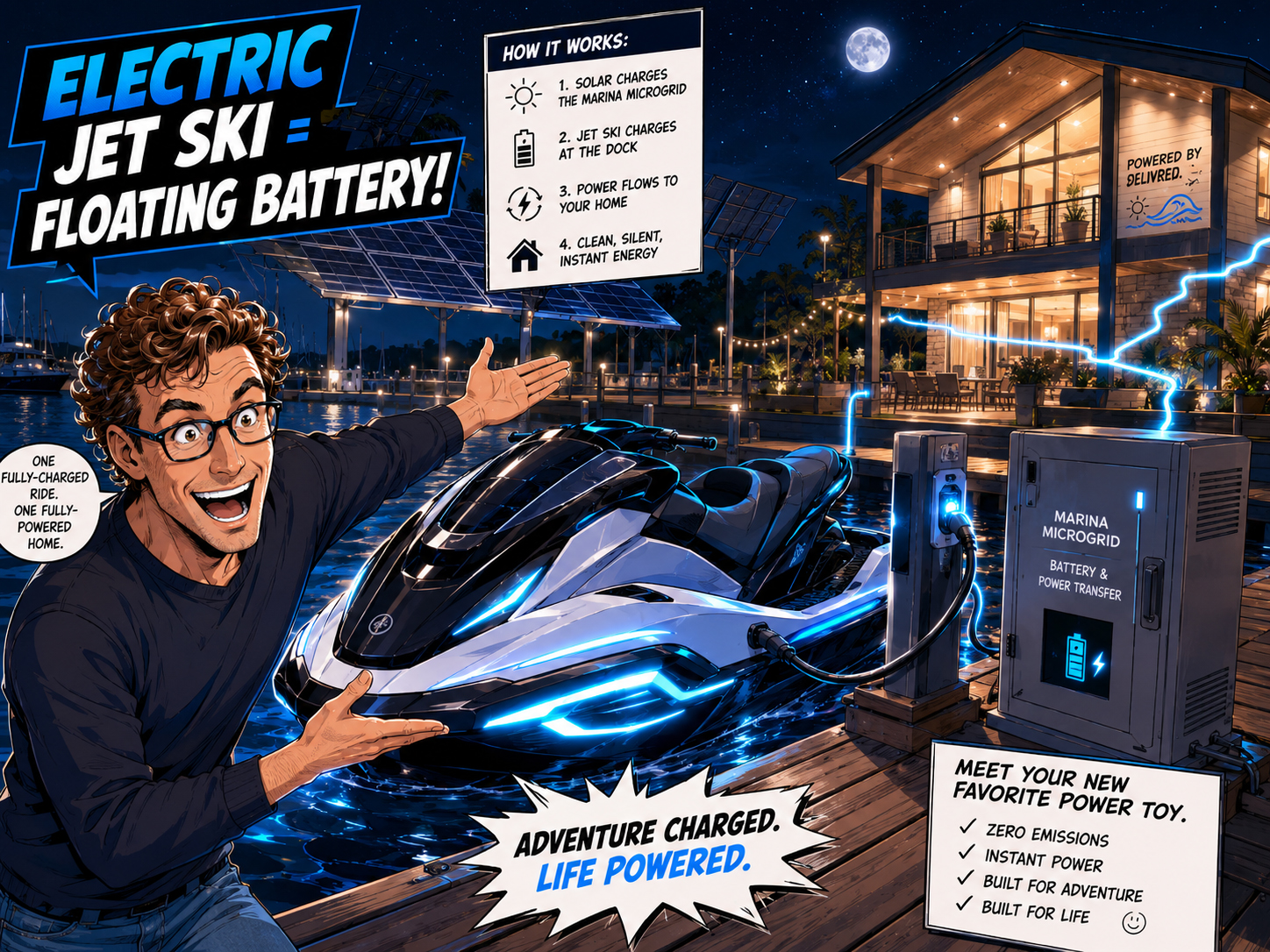
The electric Jet Ski can be the fun part of the drawing, but the system includes much more: dock interface, transfer equipment, battery protection, monitoring, isolation, load priorities, and operating procedures.
The Permit Goblin’s paperwork exists to force that full system into view before anyone starts building.
The drawings should answer
The more clearly the system answers these questions, the less power the goblin has.
What battery or charging source is available, what is its rating, and how is it protected?
How does power move from Jet Ski to dock, dock to transfer equipment, and equipment to selected loads?
Where is emergency shutoff, who can use it, and what happens when the system is stopped?
The goblin’s favorite poster
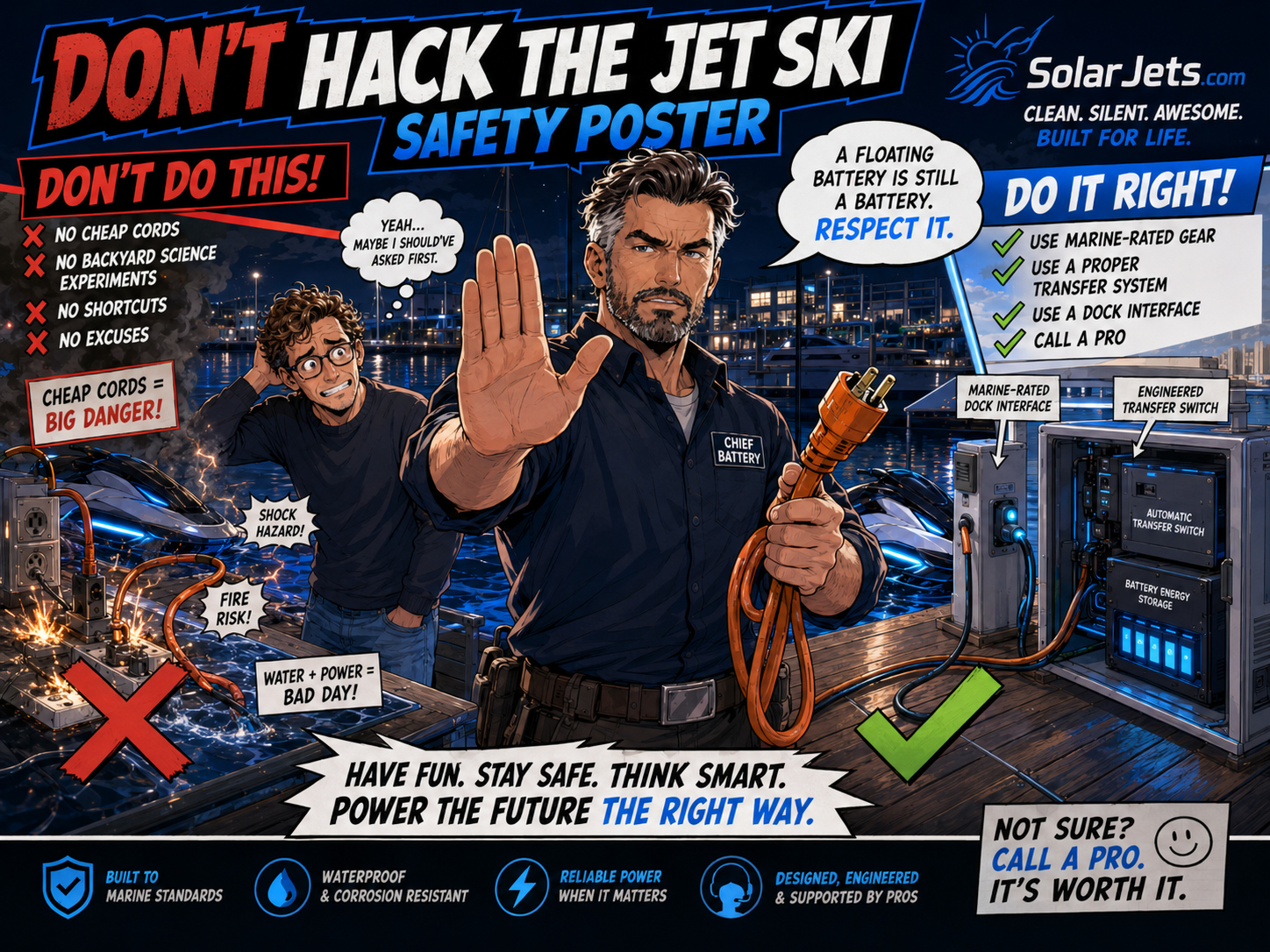
The Permit Goblin loves this poster because it gives him fewer fires to stamp later. The unsafe side has cheap cords, sparks, water, and Brad’s optimism. The safe side has engineered equipment, proper transfer gear, and a professional approach.
The manga can be funny, but the safety message should be unmistakable.
Who the goblin annoys
Every character gets a different version of the same question: “Where is the real plan?”
The better outcome
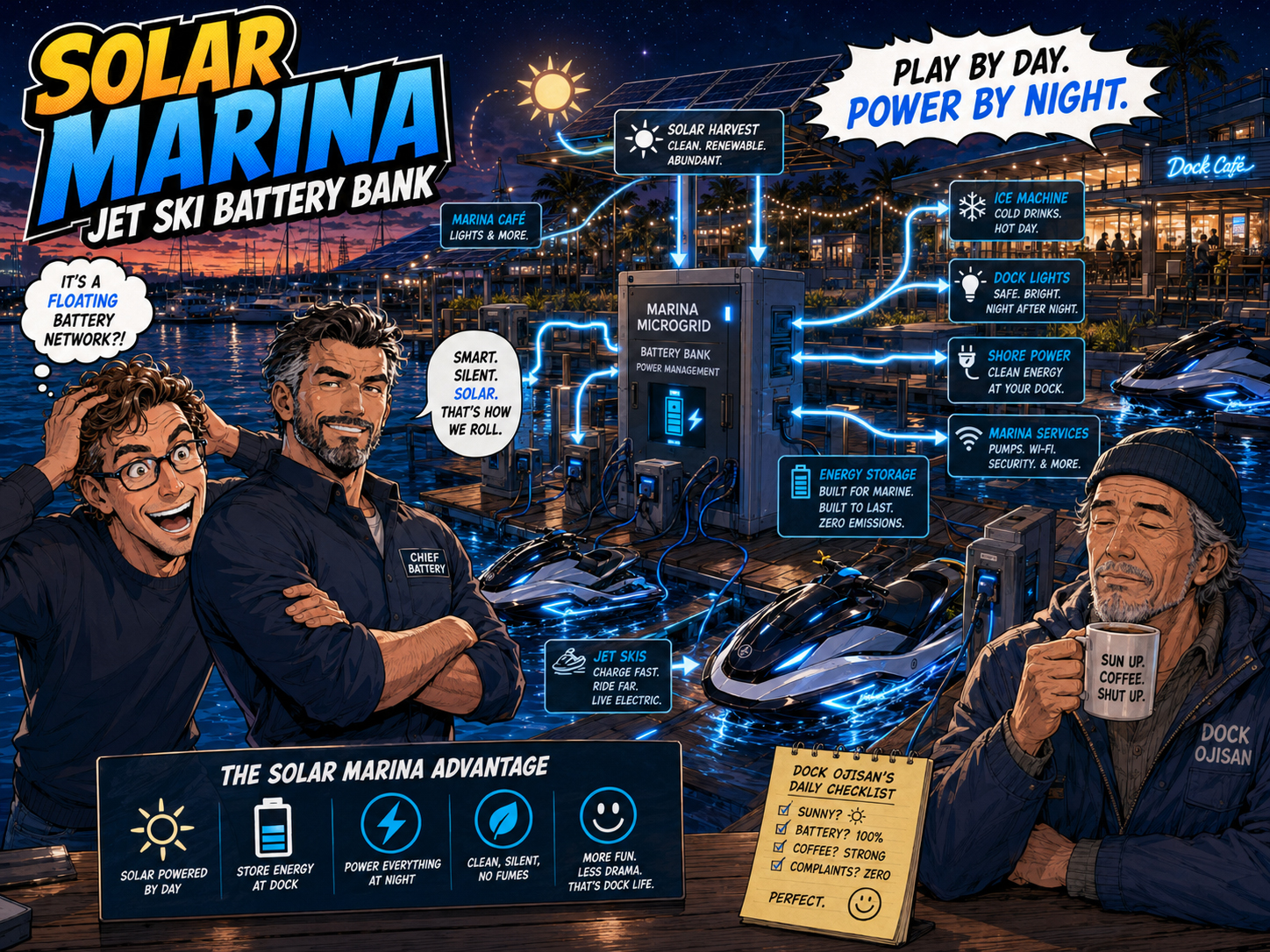
The best ending is not the goblin winning. The best ending is the goblin running out of objections because the project has proper drawings, equipment, labels, shutoffs, monitoring, and load priorities.
That is when the marina gets to be fun: play by day, power by night, no drama at the dock.