Jet Ski charging
Charging is useful, but unmanaged charging during expensive windows is her favorite appetizer.
Marina peak-rate villain
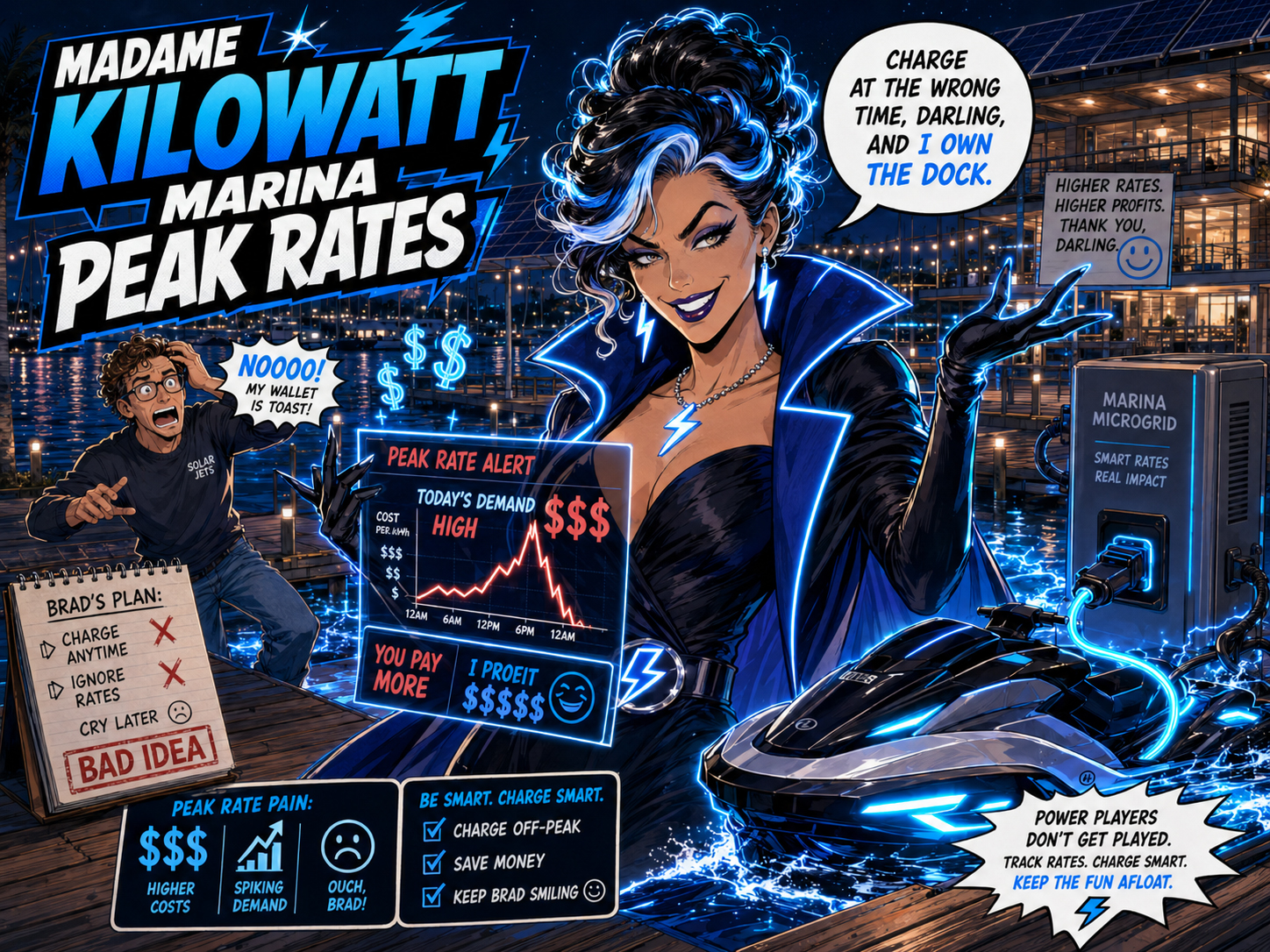
Brad thought the electric Jet Ski would save the bill. Madame Kilowatt followed him to the dock, wearing sunglasses, carrying a rate chart, and smiling at every unmanaged charger.
“Charge at the wrong time, darling.” “And I own the dock.”
The villain arrives
Brad assumed the electric Jet Ski was the answer to the electric bill. Madame Kilowatt heard the word “charging” and booked a table at the marina café.
She loves bad timing: Jet Skis charging at peak hours, dock lights on, café loads running, ice machine humming, shore power active, and no battery strategy in sight.
Her marina attack pattern
At the marina, every fun electric thing becomes a load. If nobody manages the timing, Madame Kilowatt gets paid beautifully.
Charging is useful, but unmanaged charging during expensive windows is her favorite appetizer.
Night marina lighting matters, but it should be part of a planned load strategy.
Comfort loads can stack with charging and turn a fun evening into a rate event.
Boats, docks, and marina services need clear priorities before everything asks for power together.
The counterattack
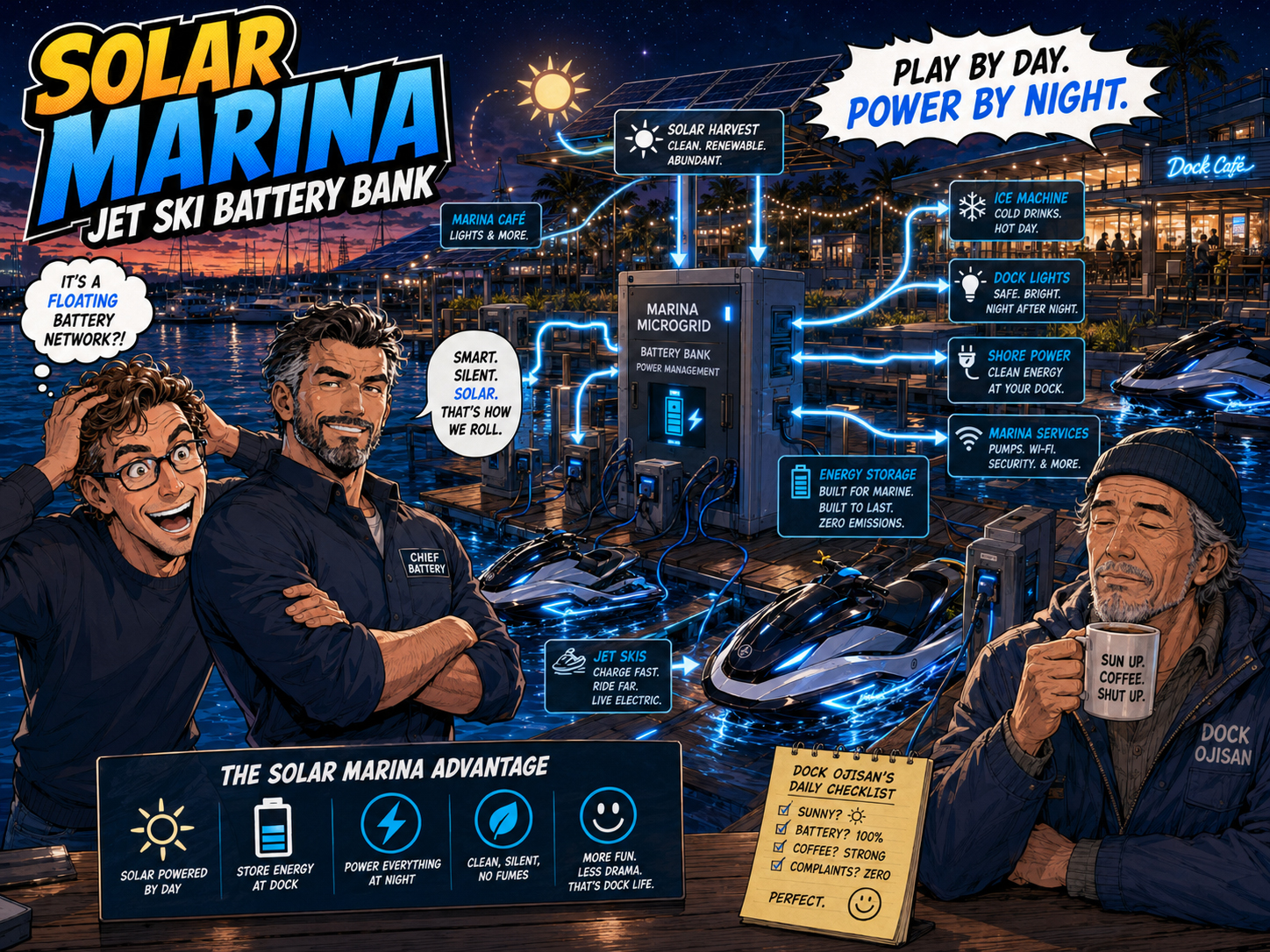
The SolarJets answer is not to fear electric Jet Skis. It is to manage them. A solar marina can charge during better windows, use a battery bank to support selected loads, and coordinate dock equipment through controls.
Madame Kilowatt loses power when the marina sees the whole system: solar production, battery state of charge, charger demand, dock loads, and peak-rate timing.
Episode panels
The scene should be glamorous, funny, and financially painful.
The electric Jet Ski is plugged in. Brad says, “See? I told you it was energy innovation.”
Every charger, light, café load, pump, and dock cabinet starts asking for power at once.
“Charge at the wrong time, darling, and I own the dock.”
“My wallet is taking on water!”
“Rate-aware charging. Battery dispatch. Load priority. Try those before screaming.”
The battery bank carries selected loads. The café stays lit. Ojisan keeps drinking coffee.
Chief Battery explains the bill
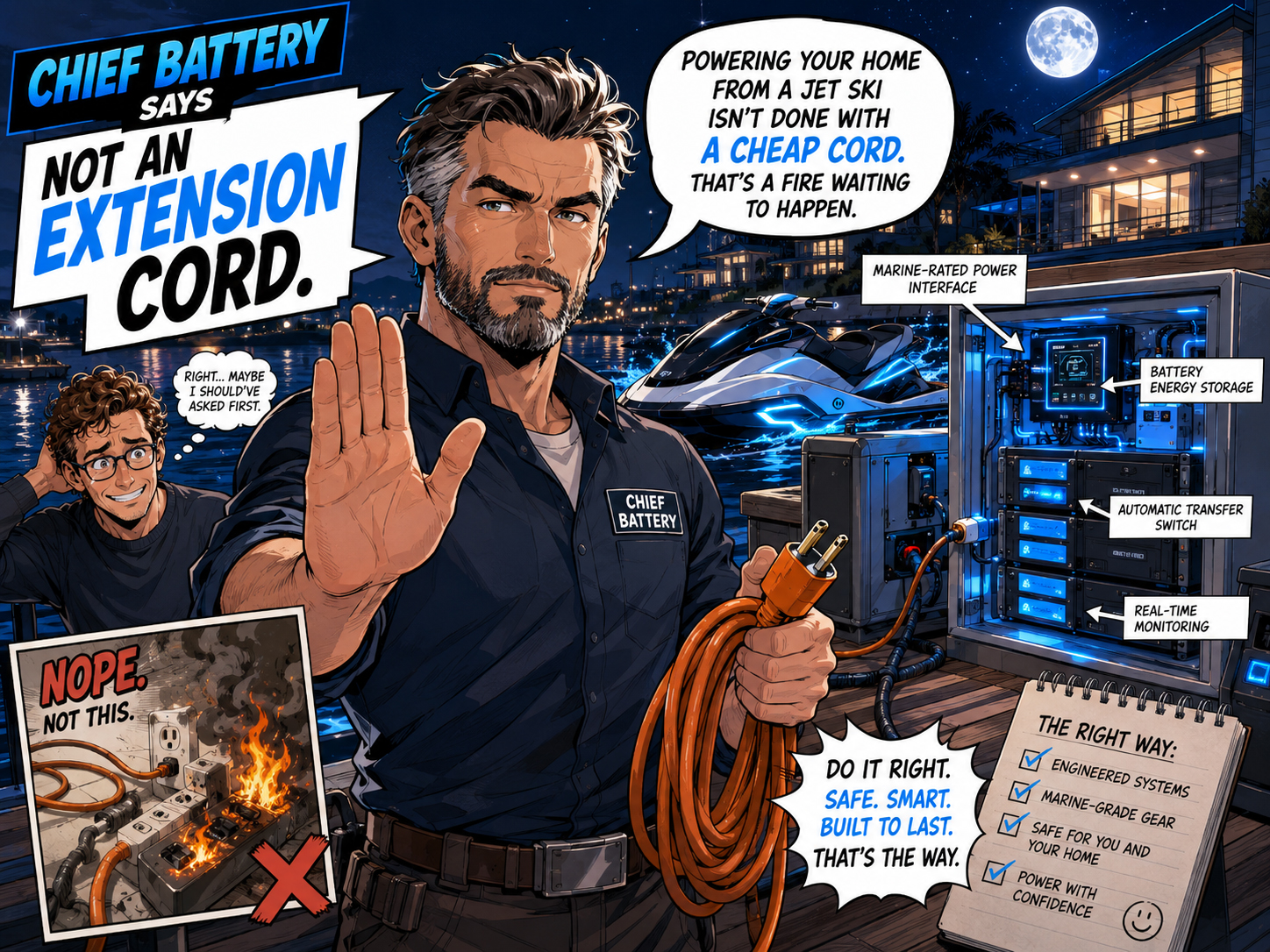
Brad thinks in gadgets. Madame Kilowatt thinks in timing. Chief Battery thinks in operating strategy. The electric Jet Ski may store energy, but the marina has to manage when it charges and what it supports.
The solution is not a shortcut. It is a proper system: solar production, battery storage, charger scheduling, load priority, transfer equipment, and monitoring.
How to make Madame bored
Madame Kilowatt thrives on unmanaged loads. Make the marina boring and she loses her scene.
Identify when charging is cheapest, when power is expensive, and when the marina’s normal loads stack up.
Charge electric Jet Skis and dock batteries when it makes sense, not just whenever Brad remembers.
Decide what matters: dock safety lights, critical marina systems, limited shore power, café loads, or chargers.

Tomoko predicted this
Tomoko did not need to visit the marina to know what would happen. Brad’s “floating battery” idea still needed to pass the bill test, the budget test, the safety test, and the useful-load test.
Madame Kilowatt is what happens when Brad skips the bill test and goes straight to the dock.
Related marina pages
The smarter marina version: play by day, power by night, manage the system.
Open page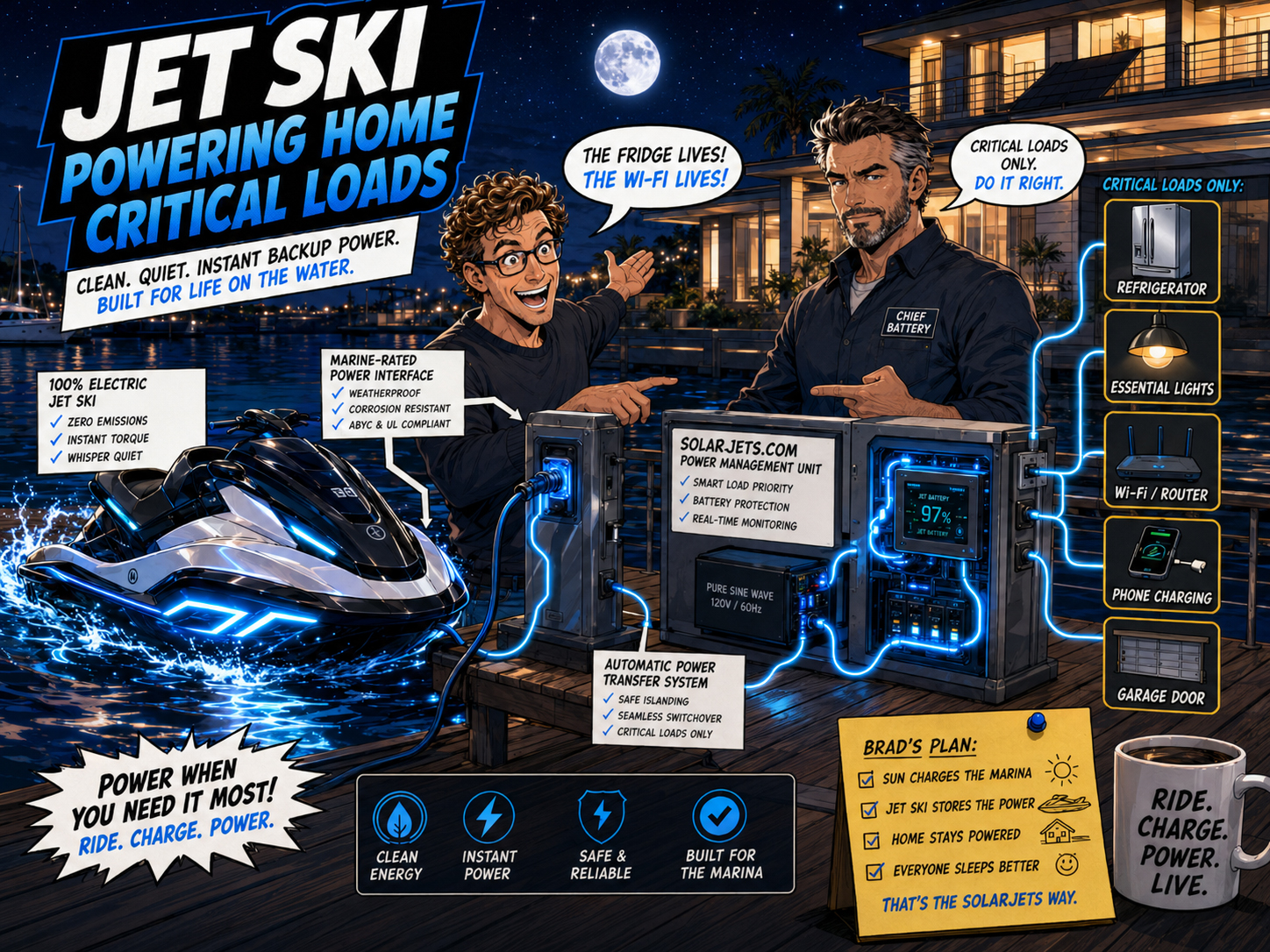
The load plan that keeps Brad from powering everything with one bad assumption.
Open page
The safety page that stops Brad before the bill becomes the second worst problem.
Open safety page
Final marina lesson
Madame Kilowatt is funny because every marina can understand the danger of charging without a plan. Electric Jet Skis, dock batteries, solar canopies, and shore power can all be part of a useful story, but the system needs timing, controls, and professional safety.
Brad can still ride. He just has to stop letting the meter write the punchline.