Shore power
Selected boat loads may need safe, rated dock interfaces and proper isolation from other sources.
Vehicle-to-boat manga
The marina version of Brad’s big idea: electric Jet Skis, solar canopies, shore power, dock lights, café loads, battery banks, and Dock Ojisan making sure nobody does anything stupid.
The boat wants shore power. The dock wants adult supervision.
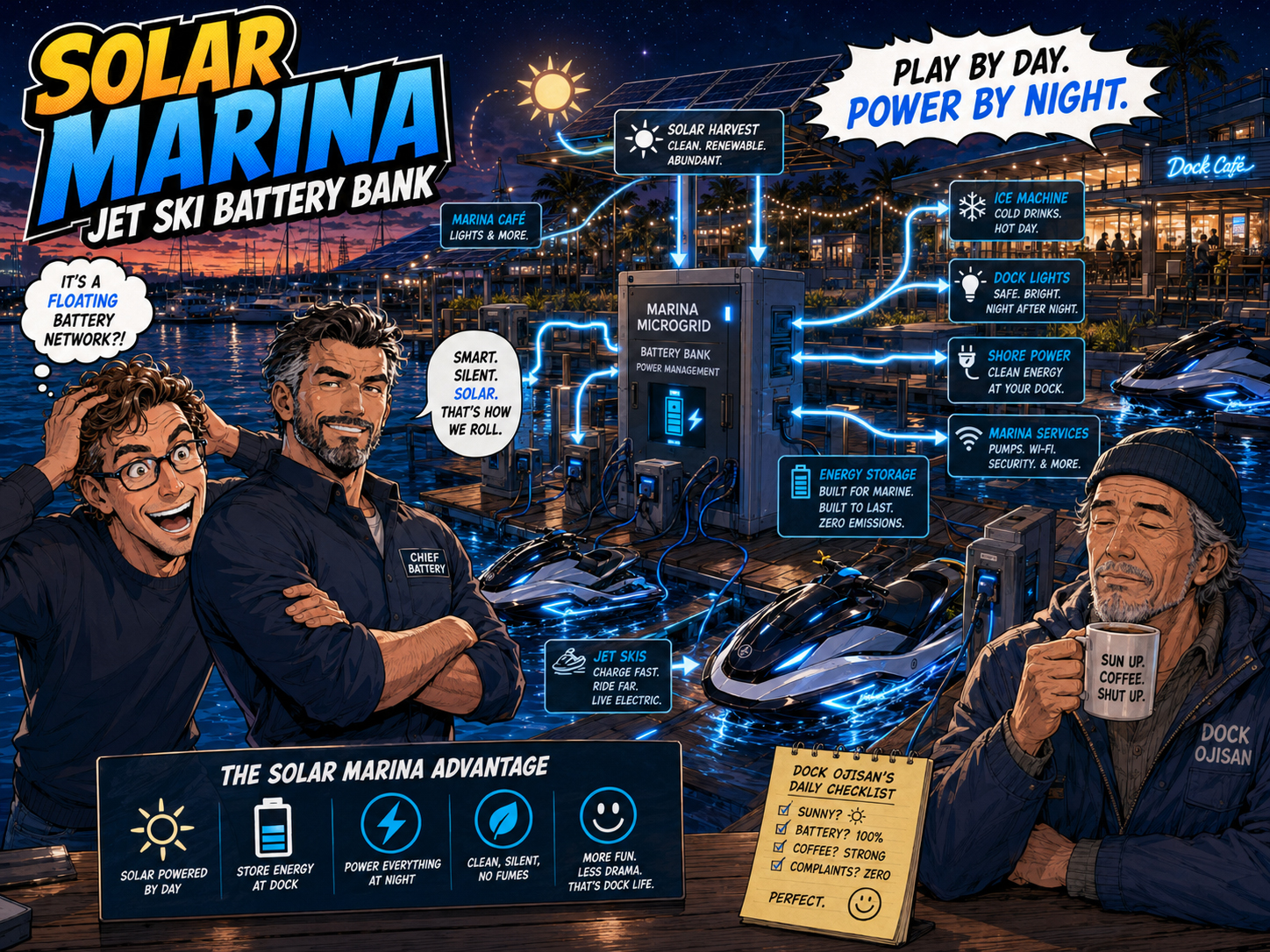
The marina version
Vehicle-to-home is the domestic argument. Vehicle-to-boat is the marina argument. Brad looks at the dock and sees electric Jet Skis as floating batteries. Chief Battery sees shore-power interfaces, battery banks, transfer equipment, monitoring, and load priorities.
The useful version is not one Jet Ski casually feeding everything. It is a solar marina where watercraft, dock loads, shore power, café loads, pumps, lights, and battery storage are all planned as one system.
What could the dock support?
The manga can be funny, but the power list should stay practical.
Selected boat loads may need safe, rated dock interfaces and proper isolation from other sources.
Lighting is a practical marina load that benefits from storage and clear priority planning.
Marina services can become useful critical or important loads when power is limited.
The fun part of the dock still needs a load plan, or Madame Kilowatt starts smiling.

Dock Ojisan’s dock law
Dock Ojisan has no patience for “almost safe.” He likes full batteries, quiet docks, strong coffee, labeled equipment, and power systems that do not make people run around yelling.
In the vehicle-to-boat episode, he becomes the common-sense judge. If the dock power plan cannot be explained clearly to the person who has to maintain it, the plan is not ready.
Vehicle-to-boat sequence
This is the page logic: fun watercraft, useful stored power, serious interface.
Solar canopies and marina power equipment charge batteries and electric watercraft when conditions allow.
The electric Jet Ski becomes one battery source, not the whole system by itself.
The connection between watercraft and dock loads must be rated, protected, monitored, and controlled.
Dock lights, pumps, Wi-Fi, limited shore power, or café loads should be chosen intentionally.
Charge, discharge, import, and backup behavior should follow a real operating plan.
The marina team needs labels, procedures, alarms, and service access — not mystery boxes.
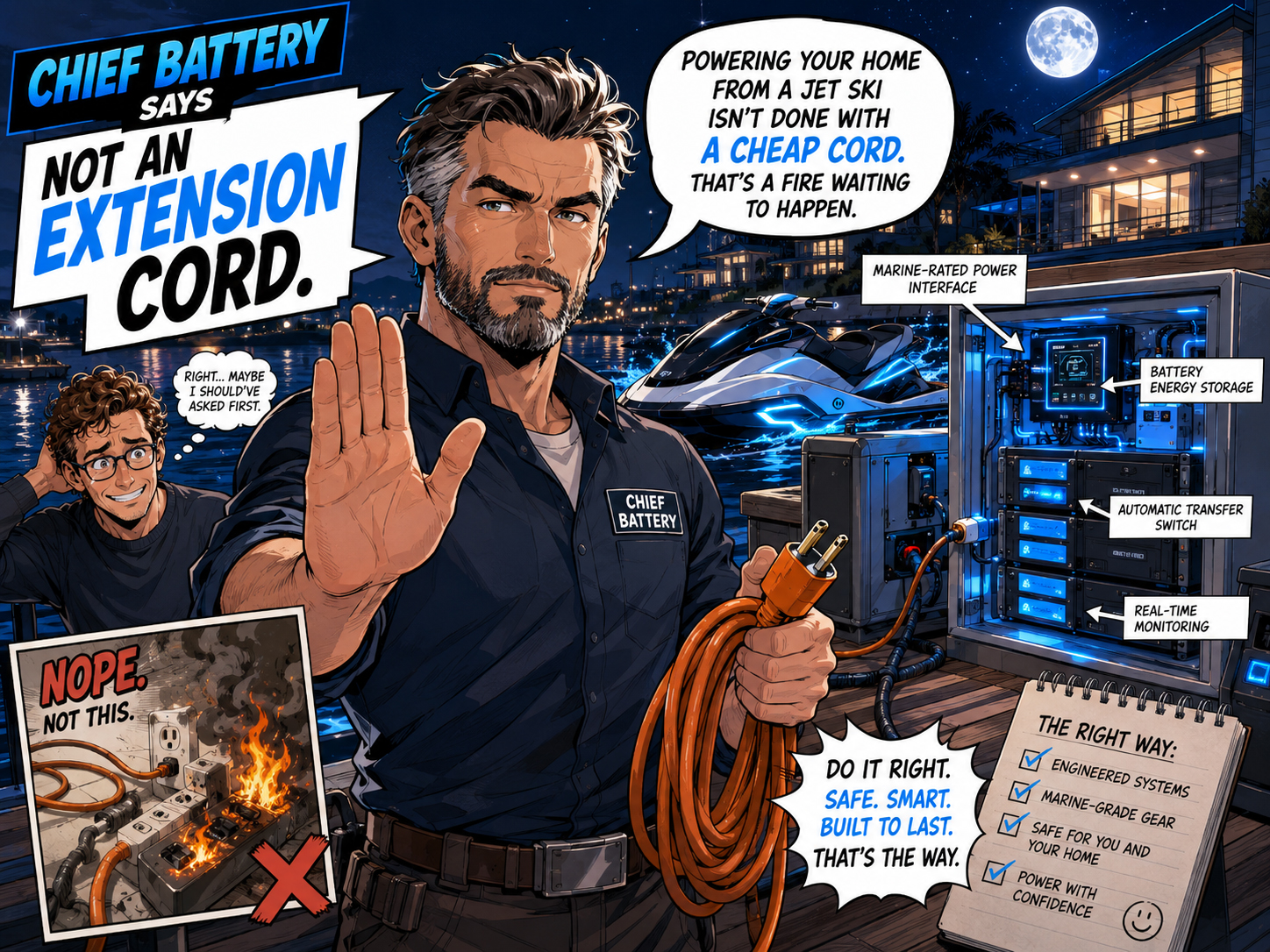
Chief Battery draws the line
Brad wants the dock to become a giant battery party. Chief Battery wants every connector, cabinet, transfer device, inverter, and protection device to be suitable for the job.
The vehicle-to-boat idea must not encourage sketchy shore-power hacks. The safe version requires marine-rated gear, isolation, ground-fault protection, interlocks, emergency shutoff, and professional design.
What the marina powers
The boat and dock version needs the same discipline as the home version.
Limited, properly managed support may make sense when equipment is rated and isolated correctly.
Useful for safety and operations, especially when stored energy is available after sunset.
Wi-Fi, phones, cameras, and monitoring may become priority loads during power trouble.
Café lights and ice machines are fun, but they still need a realistic energy budget.
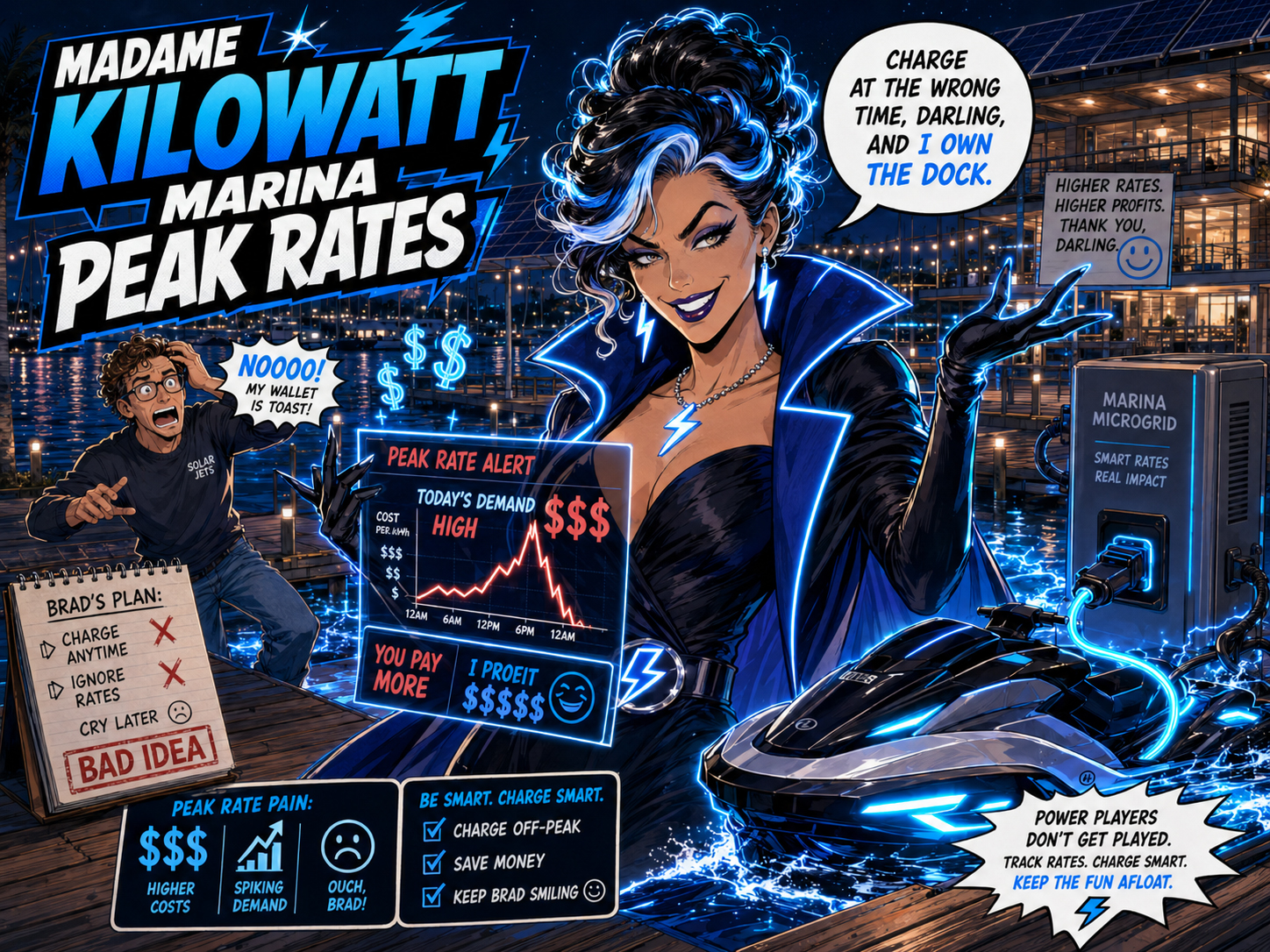
Madame Kilowatt at the dock
The marina makes rate timing more obvious. If every Jet Ski, boat charger, café load, pump, and dock light demands power at the same expensive hour, Madame Kilowatt gets the best seat at the café.
A smarter system charges when appropriate, stores energy when useful, and dispatches it according to the marina’s priorities.
The paperwork dock monster
The water version adds even more reasons to get the drawings right.

Interlock? transfer switch? marine-rated connector? approved drawings? emergency shutoff?
Open goblin page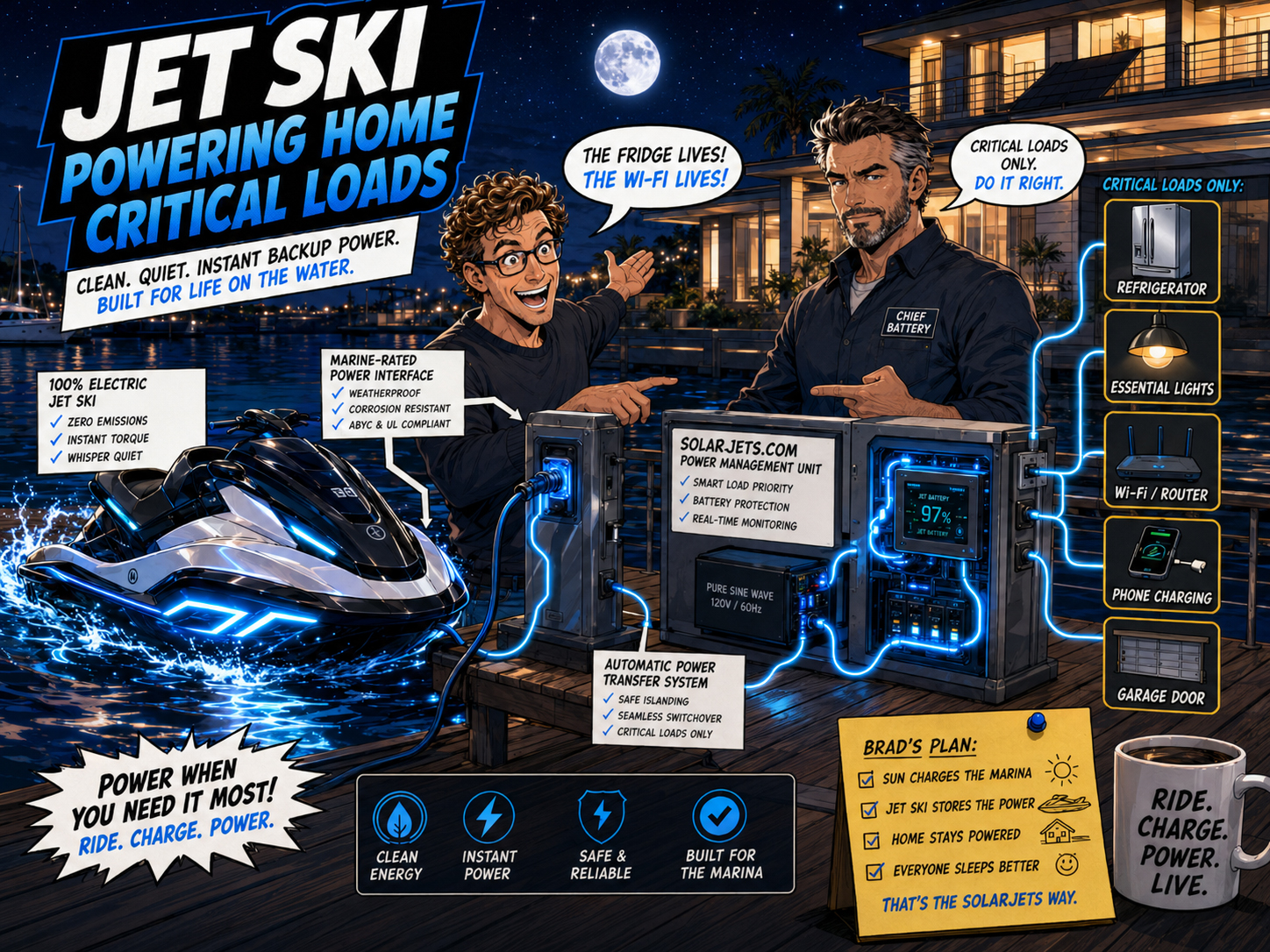
The same rule applies to homes, boats, and docks: select the loads before promising power.
Open critical loads
Safety ending
Vehicle-to-boat power can be a funny and memorable manga idea, but the page should not make marine electrical work seem casual. Water, batteries, shore power, utility power, and boats require careful engineering.
Dock Ojisan’s closing rule is simple: play by day, power by night, no drama at the marina.