Battery capacity
Stored energy is the attraction, but capacity alone does not make a safe home-power system.
Floating battery manga
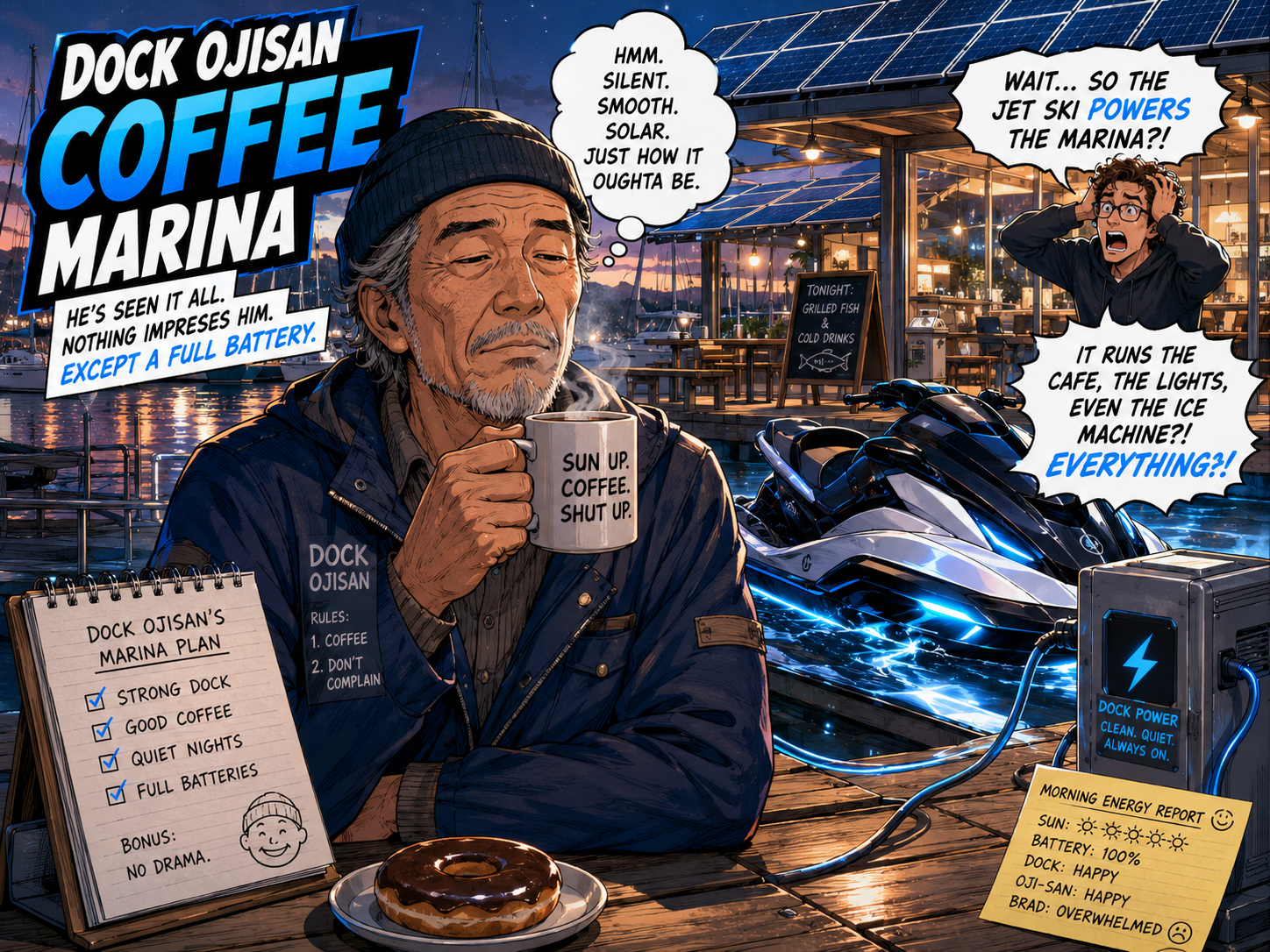
Brad calls it freedom. Tomoko calls it another bill. Chief Battery calls it a battery near water that needs proper engineering before anybody touches a plug.
It floats. That does not make the wiring optional.
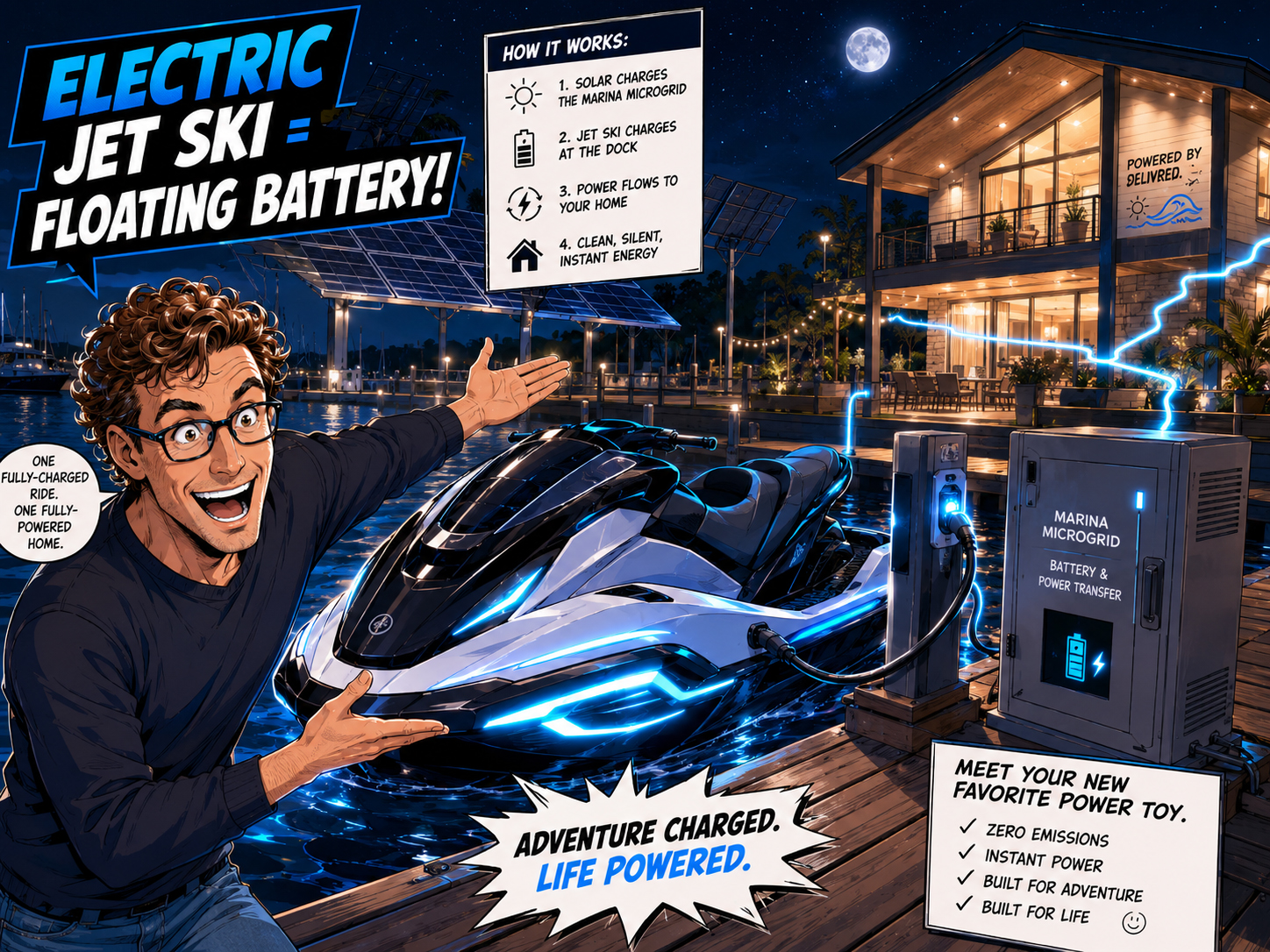
The concept
The electric Jet Ski becomes funny the moment Brad tries to explain it as home energy equipment. But the idea has a real hook: an electric vehicle on water contains stored energy, and stored energy can be useful if it is connected safely and intelligently.
The manga point is simple. The Jet Ski is not the system. It is only one battery source inside a larger, engineered arrangement involving solar, dock equipment, transfer gear, monitoring, and critical-load planning.
What makes it useful?
Brad sees the ride. Chief Battery sees the interface, transfer equipment, critical loads, and operating logic.
Stored energy is the attraction, but capacity alone does not make a safe home-power system.
The dock connection must be engineered, marine-rated, protected, and clearly monitored.
Home or marina loads require proper transfer gear, interlocks, isolation, and professional installation.
The goal is selected useful loads, not Brad powering everything because the brochure looked exciting.
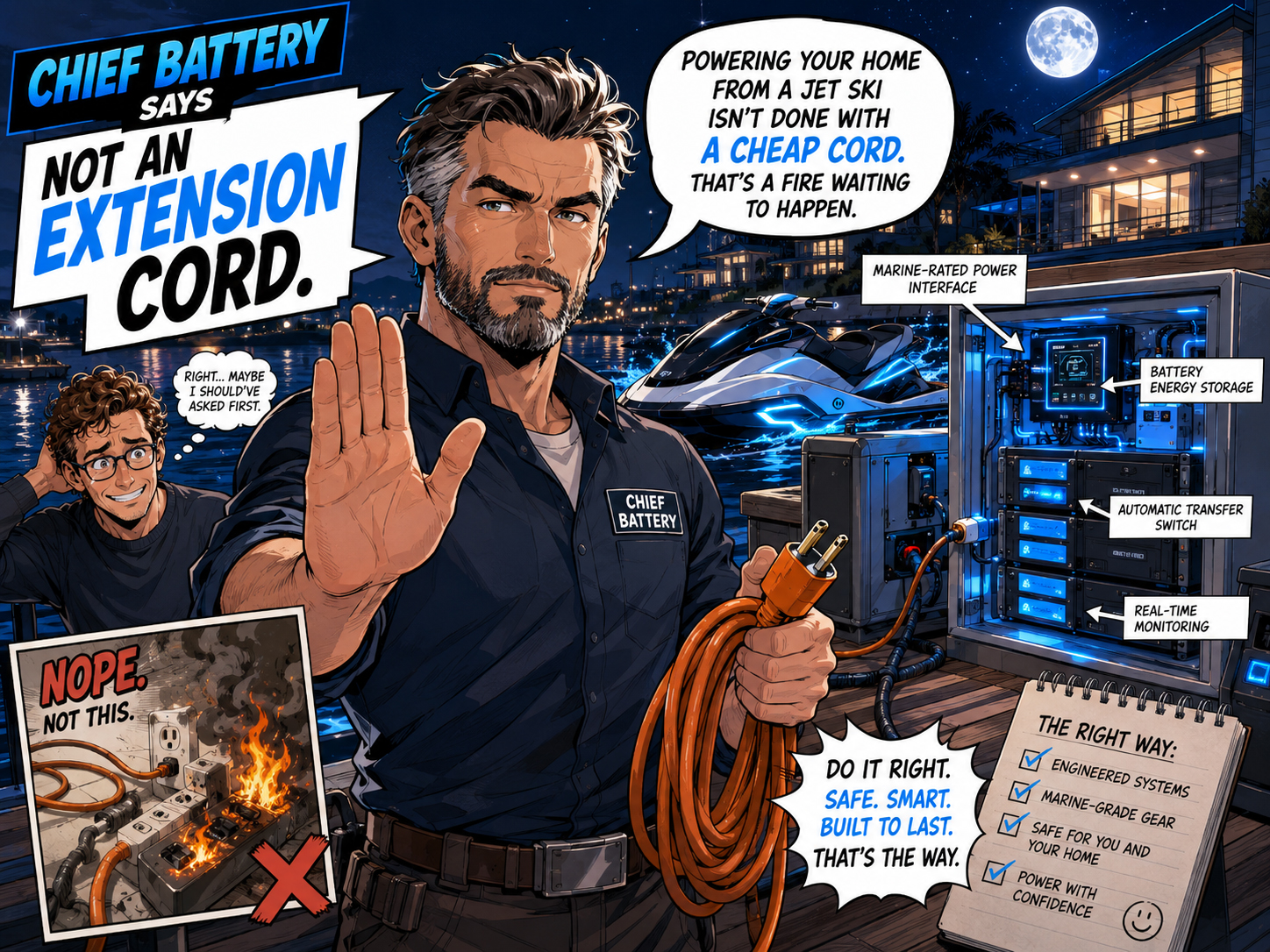
Chief Battery interrupts
Brad’s first mental diagram is always one cable too optimistic. Chief Battery stops the fantasy before it becomes a wet-dock experiment with sparks.
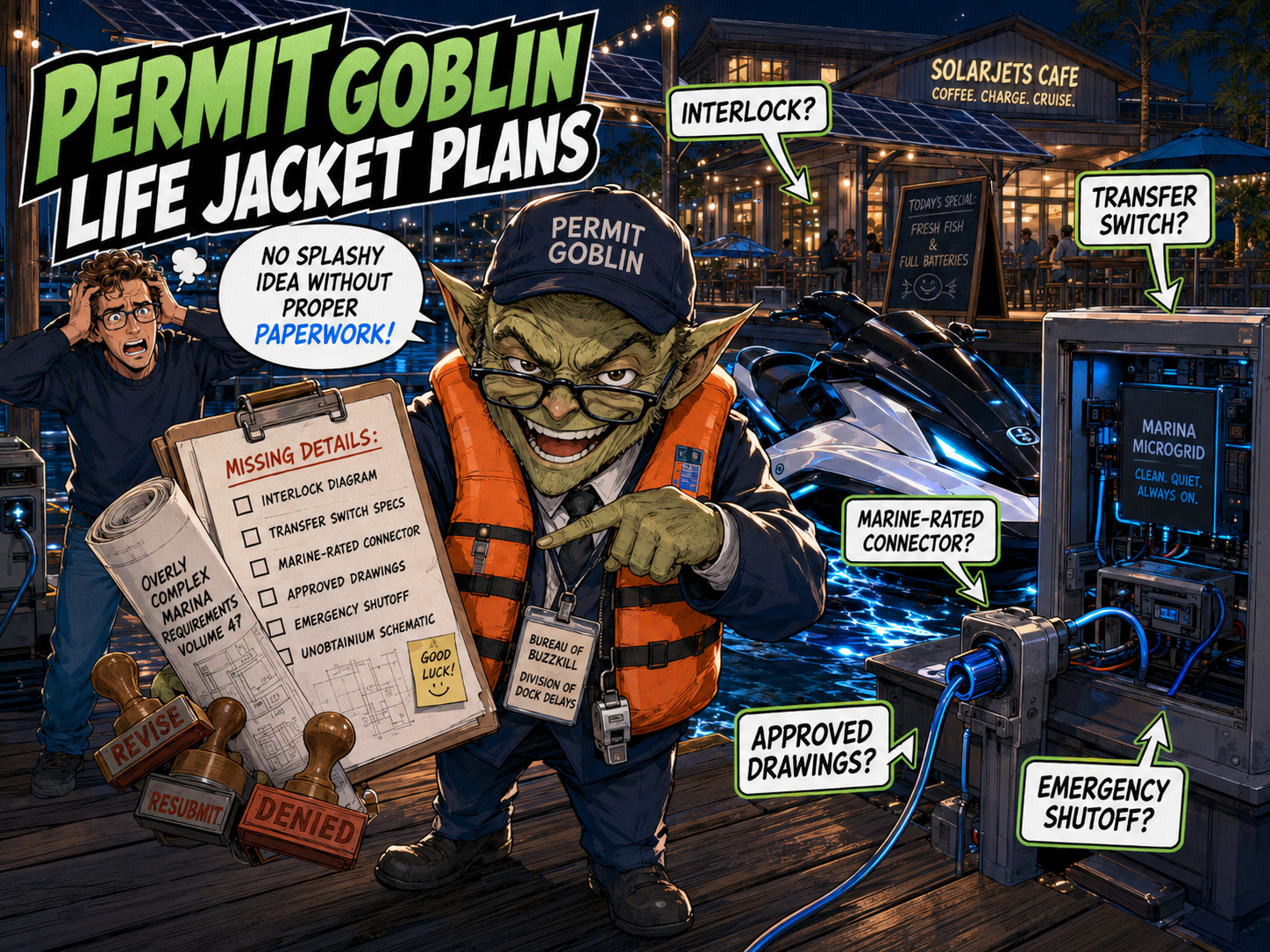
A floating battery power concept requires equipment made for the environment and the job: marine-rated connectors, safe transfer systems, emergency shutoff, isolation monitoring, ground-fault protection, and clear operating rules.
The manga panel sequence
The episode starts as Brad’s purchase excuse and becomes a safety-engineering comedy.
Brad sees the electric Jet Ski and says, “That is not a toy. That is a residential energy platform.”
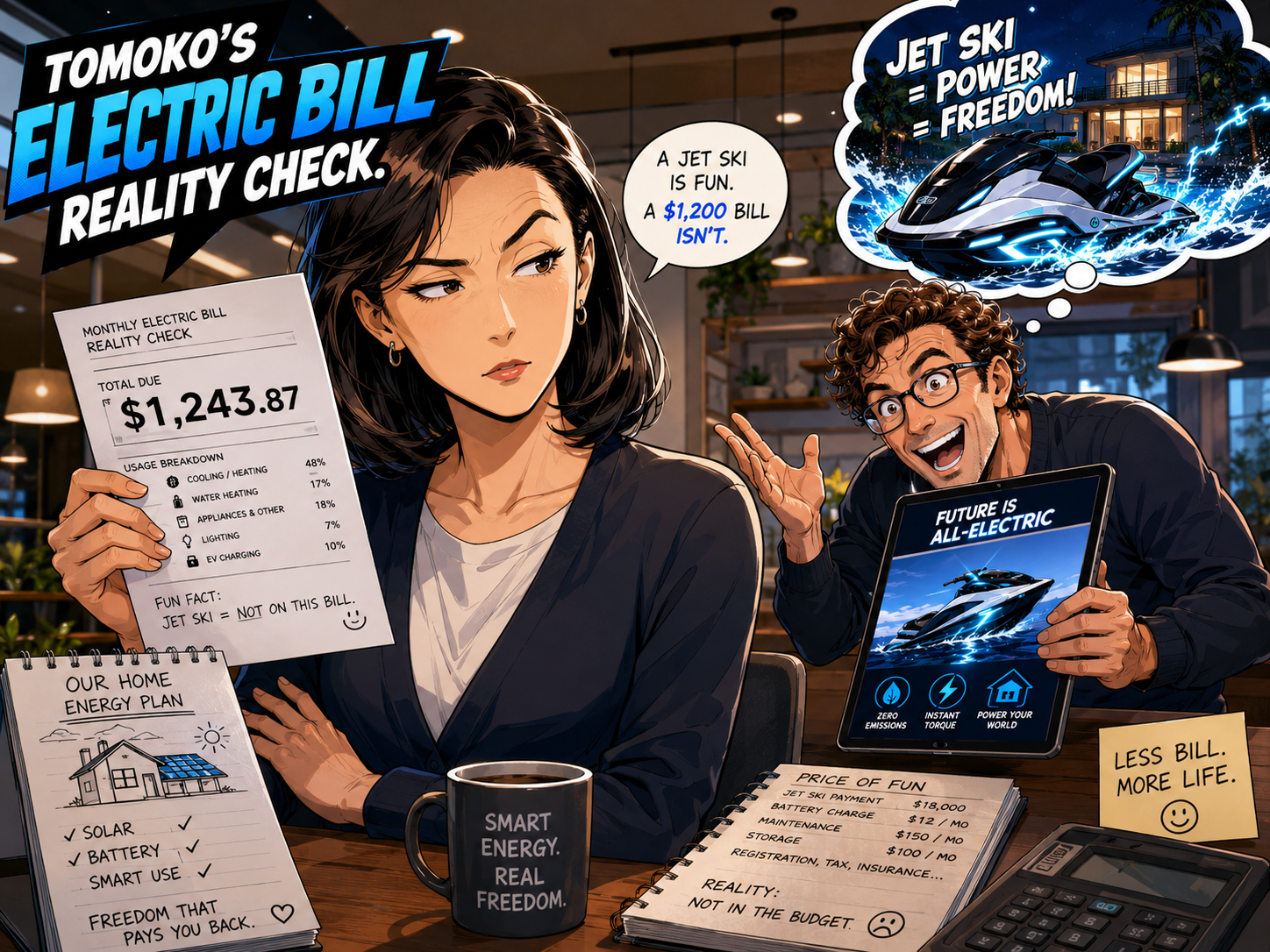
Tomoko raises the electric bill and asks whether the “platform” also comes with a payment plan.
Brad points to the dock: solar canopy, Jet Ski battery, home power, total victory.
Chief Battery appears and removes the extension cord from the universe.
Permit Goblin arrives in a life jacket and demands interlocks, drawings, emergency shutoff, and a transfer switch.
The system powers selected critical loads safely. Brad still calls it freedom. Tomoko calls it “better.”
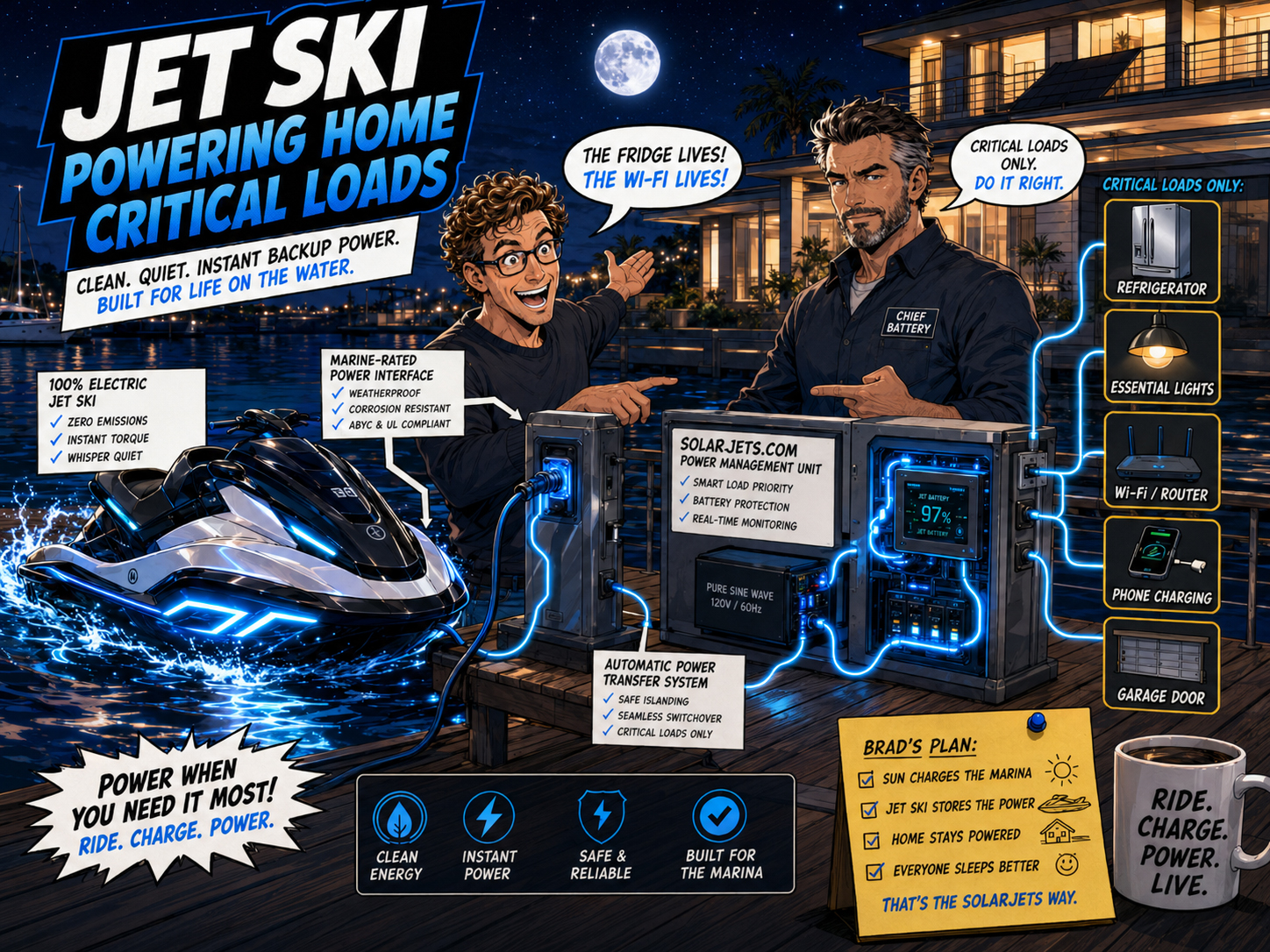
The home-power version
The safe story is not “power everything forever.” The safe story is selected loads, properly separated, properly transferred, properly monitored, and properly understood.
A floating battery concept makes the most sense when it is specific: refrigerator, essential lights, communications, phone charging, maybe a garage door or selected outlet circuit. The joke gets funnier when Brad has to admit the hot tub is not a critical load.
Who understands the floating battery?
The dream survives because everyone except Brad forces it to become a real system.
The marina version
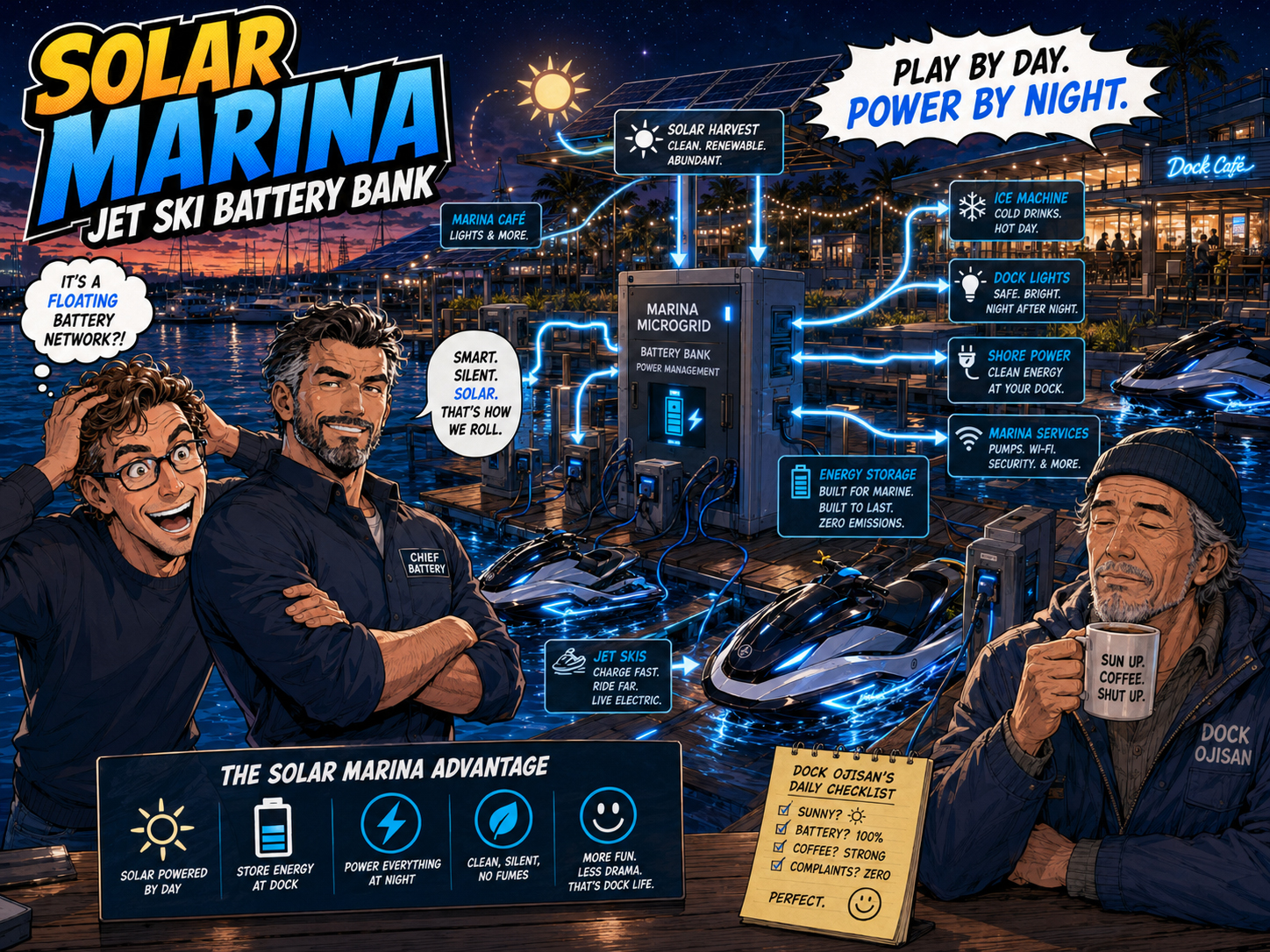
The bigger manga idea is not only one Jet Ski and one house. It is a solar marina where dock canopies, shore power, electric watercraft, battery banks, café loads, lights, pumps, Wi-Fi, and monitoring all become one visible energy ecosystem.
That version gives Brad more to talk about and Tomoko more to audit. It also gives Chief Battery a reason to build something that looks fun but behaves like infrastructure.
Villains at the dock
Every SolarJets villain finds a new marina costume.
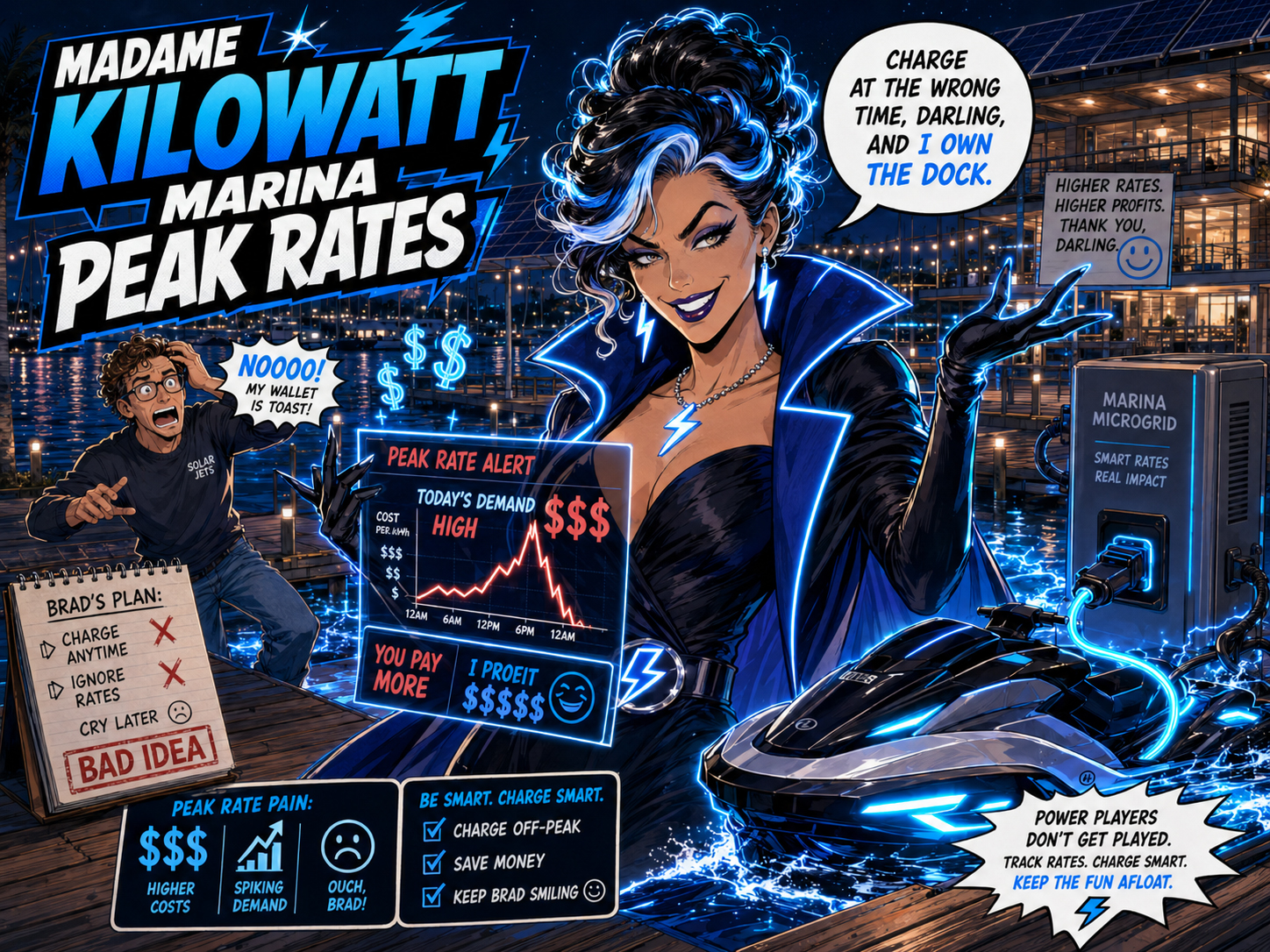
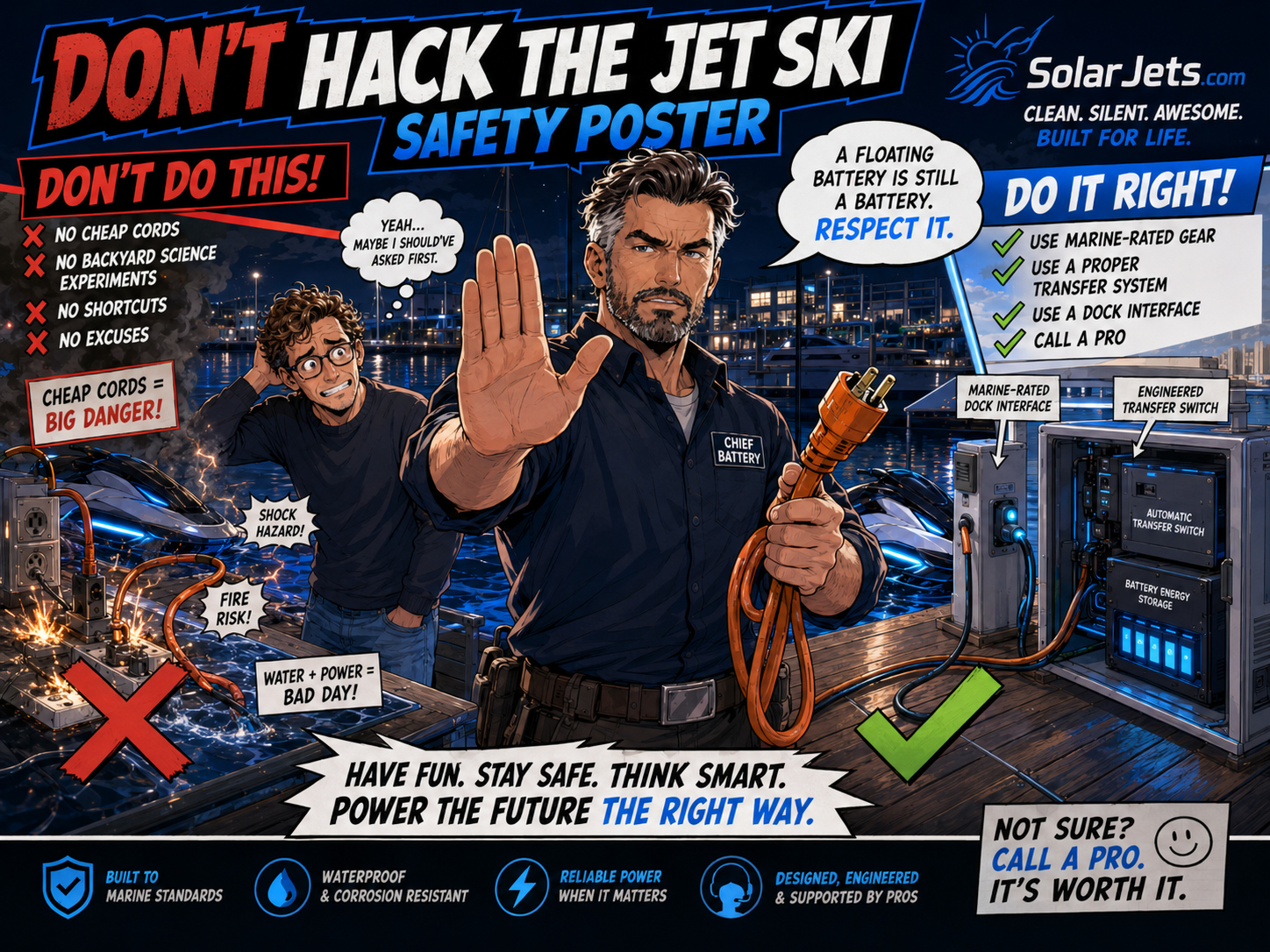
Cheap cords, wet docks, and backyard science experiments are the real villains.
Safety poster
The safety ending
This page should make the electric Jet Ski idea look fun, but never casual. A battery on water deserves more respect than a sales brochure, an orange cord, or Brad saying, “I saw a diagram once.”
The correct ending is SolarJets-style: play by day, power by night, engineer it properly.