Airport solar
Canopies, rooftops, hangars, service buildings, and parking areas can become clean-energy surfaces.
Future aviation comedy
The future of flight is not only in the aircraft. It is in the airport power system: solar canopies, batteries, chargers, microgrid controls, runway power, and the crew that keeps everything working.
The future flies overhead. The power system starts on the ground.
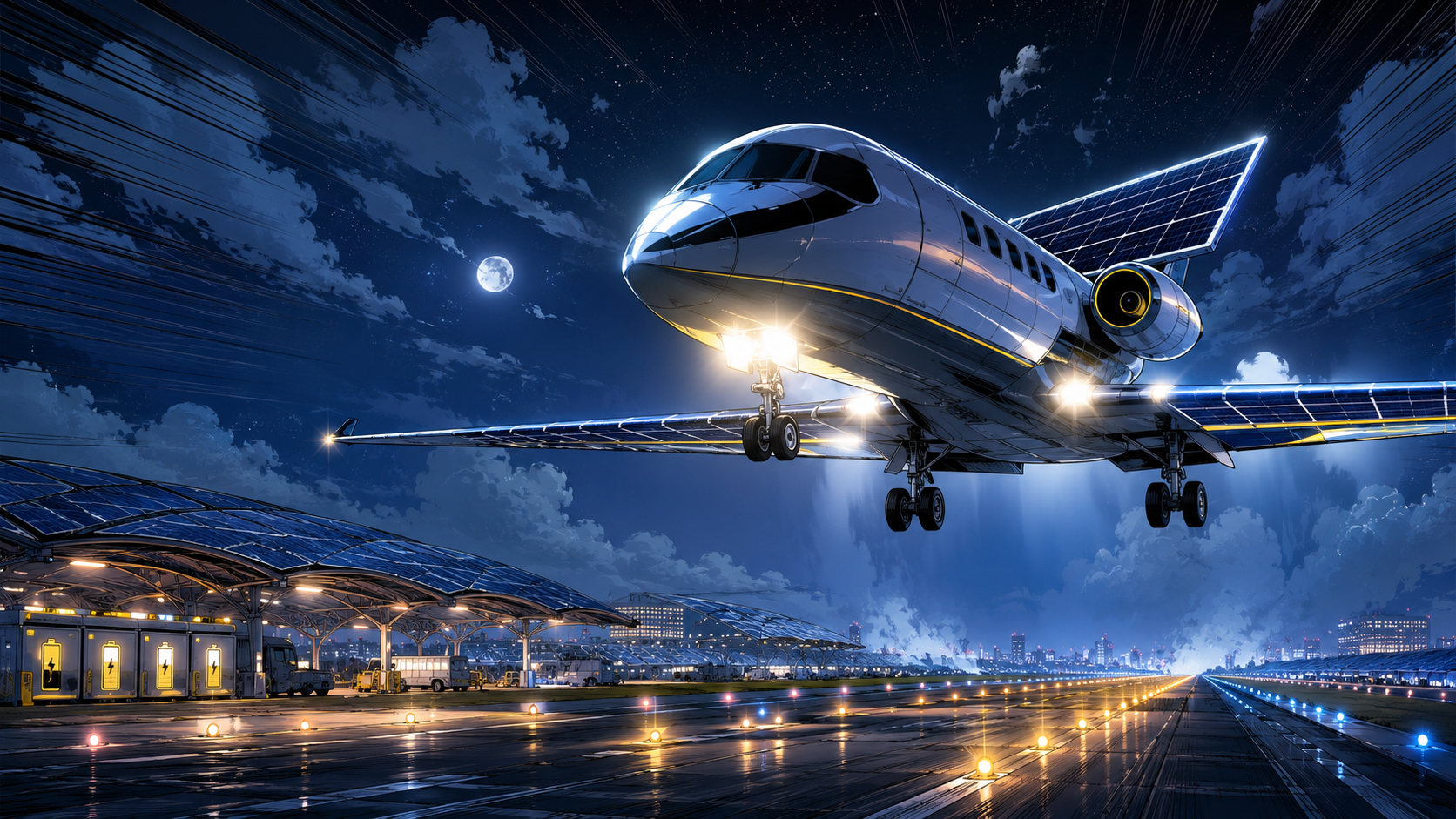
The big idea
Captain SolarJet wants a clean-energy aircraft that looks heroic in every panel. Chief Battery keeps pointing at the airport below: canopies, hangars, chargers, batteries, runway systems, control rooms, and the loads that never stop asking for power.
SolarJets.com turns that contrast into manga comedy. The impossible solar jet gets the laugh. The practical airport microgrid gets the landing.
What the future needs
Electric flight, air taxis, and cleaner airport operations all point back to power planning.
Canopies, rooftops, hangars, service buildings, and parking areas can become clean-energy surfaces.
Stored power helps bridge night, clouds, peak pricing, grid trouble, and high-demand charging windows.
Electric aircraft, air taxis, service vehicles, and ground equipment need planned power capacity.
The airport needs a brain that coordinates solar, batteries, chargers, priority loads, and utility power.
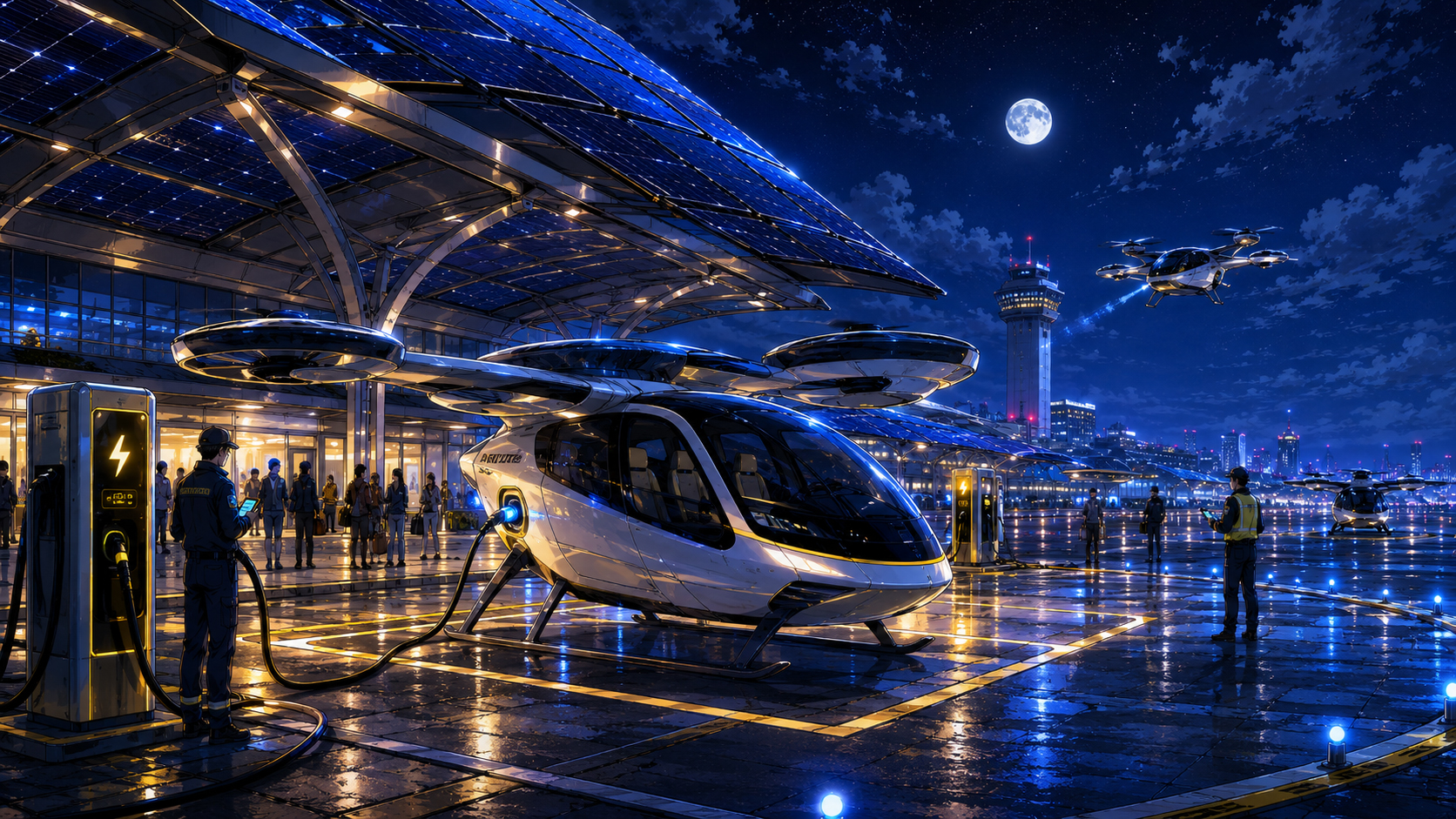
Electric aviation
Electric aviation is exciting because it makes flight feel cleaner, quieter, and more futuristic. But every electric aircraft still has a ground-side question: where does the electricity come from, when is it needed, and what else is using power at the same time?
That is why air taxi charging belongs in the same conversation as solar canopies, battery storage, utility capacity, controls, and airport operations.
Future-flight checklist
A future aviation plan should arrive with a power plan, not just a dramatic rendering.
Identify existing facility loads, runway-related systems, hangar loads, chargers, security, controls, communications, and future electric aviation loads.
Combine solar generation, battery storage, utility service, charger planning, and backup strategy around real operating needs.
Use controls and monitoring so solar, batteries, chargers, runway power, and priority circuits act like one coordinated airport brain.
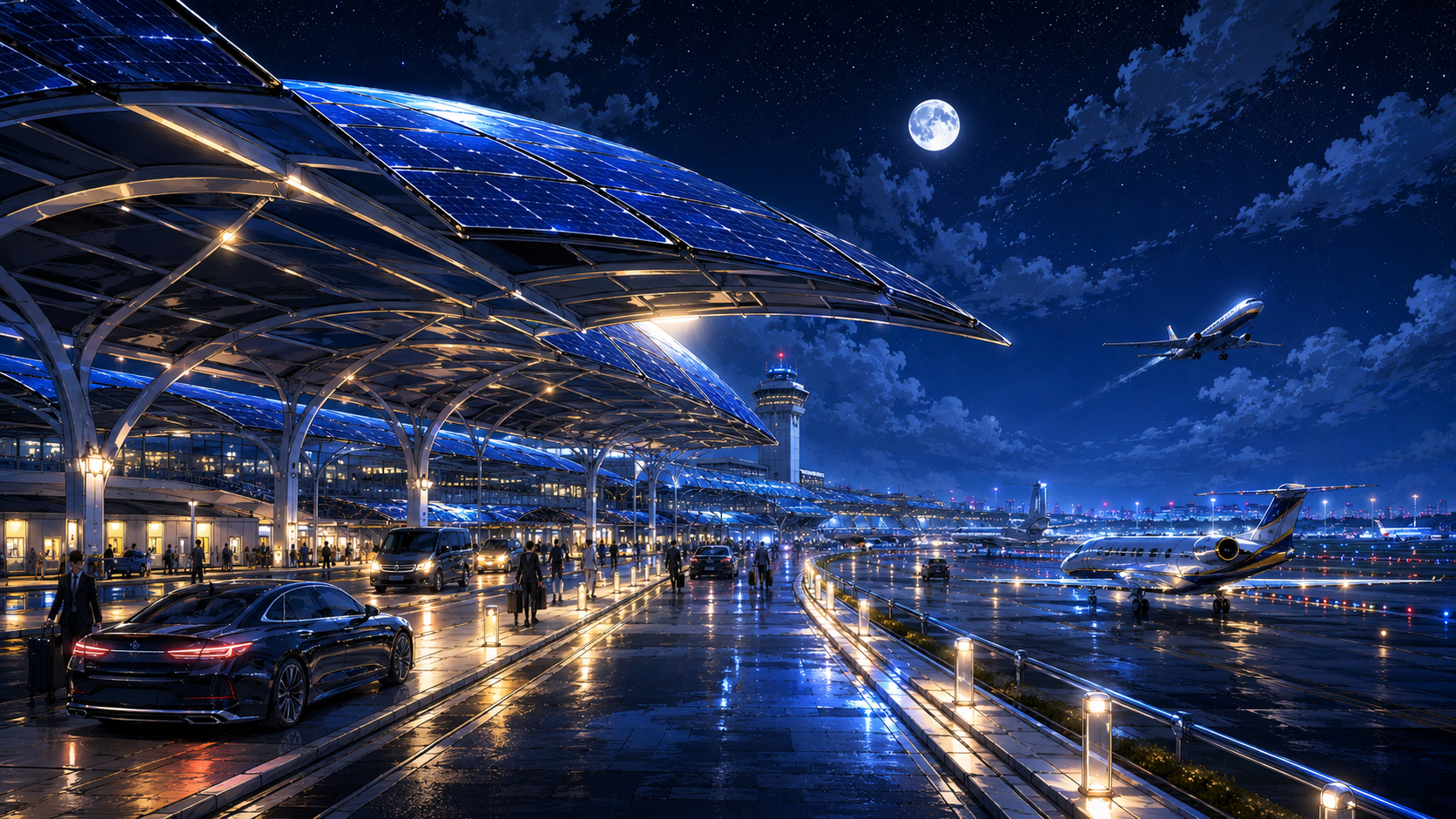
Solar architecture
The absurd version puts panels on the jet and calls it done. The useful version looks at the airport: canopies over parking and drop-off areas, hangar roofs, service buildings, maintenance zones, and places where solar can be integrated with real loads.
Solar can provide shade, clean generation, public visibility, and a foundation for batteries and chargers. It becomes stronger when it is part of the airport plan, not a decorative afterthought.
The manga cast explains the future
That is why SolarJets.com works: each character represents one piece of the airport power puzzle.


Sees charging curves, storage duration, control modes, and priority loads.
Chief’s future
Sees maintenance access, labels, service calls, and what happens at midnight.
Ojisan’s future

Microgrid future
As airports electrify, the power system needs better visibility. Operators should understand what solar is producing, what the batteries have stored, what chargers are demanding, what critical systems need support, and how the utility service is behaving.
The microgrid control room is where the future of flight becomes operational instead of merely inspirational.
Where the future lands
The solar jet remains absurd. The airport power opportunity is real enough to deserve its own flight path.
The future aircraft story that brings new charging loads to the airport.
Open page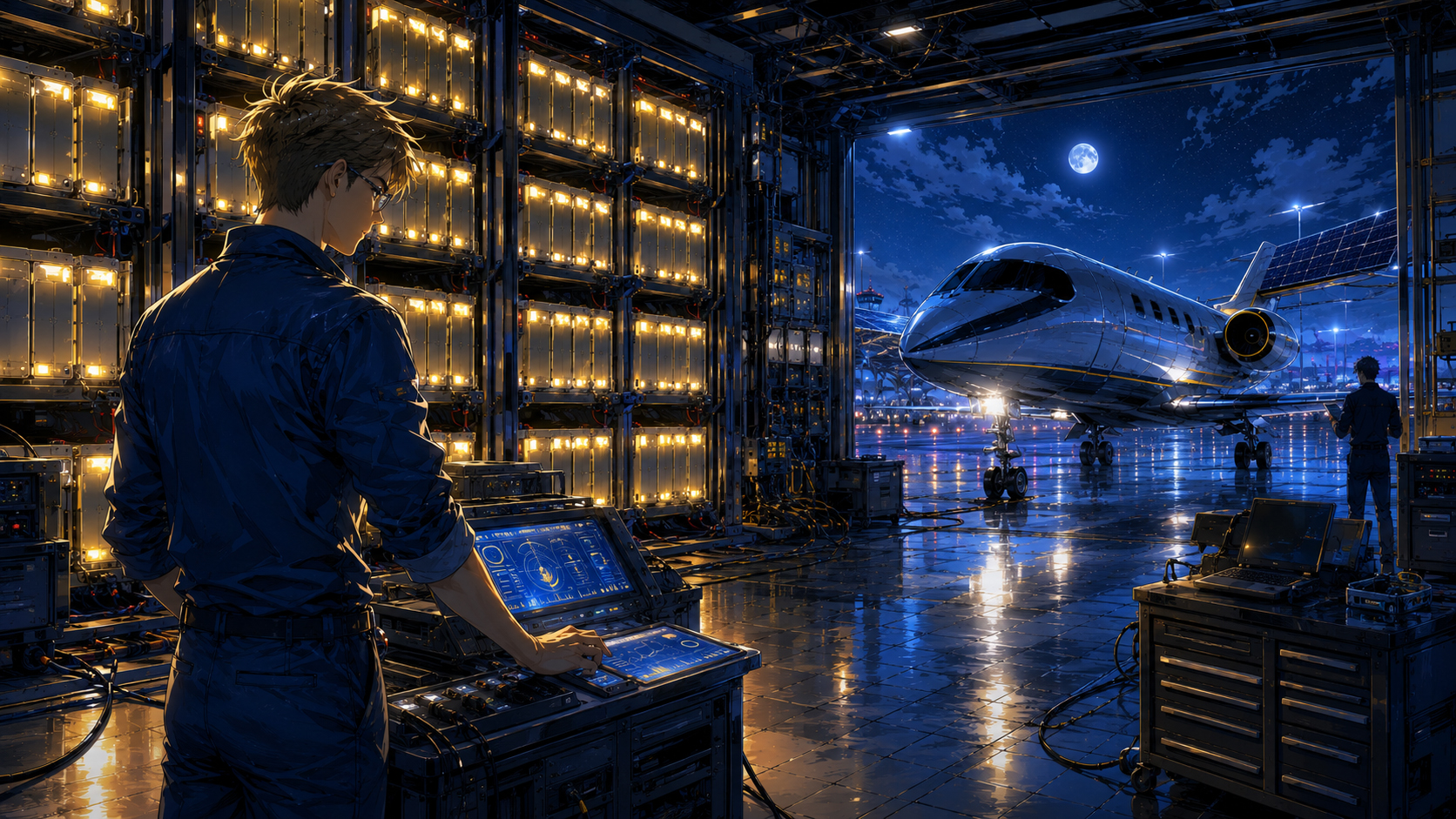
The stored-power layer that helps solar work beyond the perfect sunny hour.
Open page
The control-room story where the future power system gets a brain.
Open page
Ground crew future
The future of flight will need construction crews, electricians, engineers, service teams, controls specialists, permitting coordination, inspections, labeling, troubleshooting, and maintenance discipline.
The SolarJets.com manga makes the idea memorable. The real work still happens on the ground, with people who know how to make power systems operate safely and predictably.
Related pages

The slogan page that turns the SolarJets joke into the complete airport power design brief.
Open page
The future-flight load that makes airport charging and controls more important.
Open page
The crew that brings the future down from the poster and into the equipment room.
Open page