Power demand
Electric aircraft support can add large, time-sensitive loads to an already busy airport profile.
Future flight loads
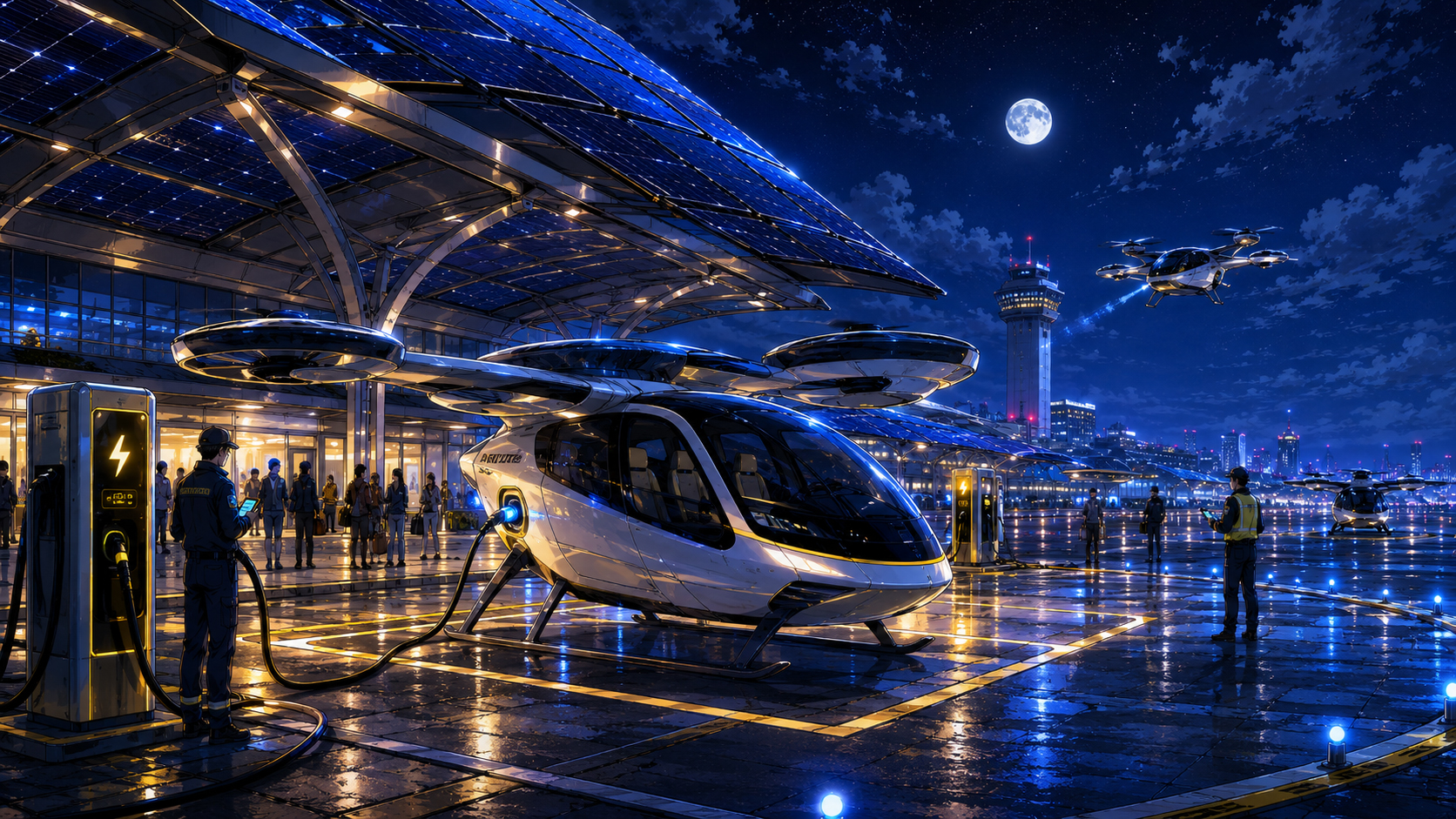
Electric flight still plugs into something on the ground. Air taxis, chargers, batteries, solar canopies, and microgrid controls turn the future of flight into an airport power problem.
The air taxi is electric. The meter noticed.
The new airport load
Captain SolarJet wants the audience to stare at the aircraft. Chief Battery watches the charger. eVTOLs and electric air taxis may look like aviation magic, but every battery-powered aircraft brings a practical question back to the ground: where does the electricity come from?
Solar canopies, battery storage, utility service, charger placement, load management, and controls can become part of the future-flight conversation long before the first passenger climbs aboard.
Charging reality
A charger is not a prop. It is a load with timing, capacity, safety, access, and operating consequences.
Electric aircraft support can add large, time-sensitive loads to an already busy airport profile.
Solar canopies and airport rooftops can help serve daytime loads and charge storage when conditions allow.
Storage can help manage timing, support selected loads, and reduce stress during expensive windows.
The control system decides when charging happens, what has priority, and how the airport avoids chaos.

Madame Kilowatt smiles
Air taxi charging can become expensive if it arrives at the wrong time, stacks with other airport loads, and has no battery or control strategy behind it. Madame Kilowatt loves a future that plugs in without looking at the rate schedule.
Chief Battery does not fight her with optimism. He fights her with load profiles, charging schedules, storage dispatch, priority logic, and clear monitoring.
Air taxi power checklist
The future of flight should arrive with a power plan, not just a glossy rendering.
How many aircraft, how often, how fast, at what time of day, and what else is running when the chargers demand power?
Solar can support the daytime side of the story. Batteries can help carry useful energy into expensive or operationally important windows.
Charging should not blindly compete with runway support, security, communications, hangar systems, and other critical airport loads.

Solar canopy opportunity
Airport charging areas are natural places to think about solar canopies. They can provide shade, visible clean-energy architecture, and local generation near the loads they support.
But canopies are not magic either. They need structure, foundations, electrical routing, protection, access, permitting, phasing, and a connection to the broader airport power plan.
The microgrid answer
Chargers, solar, batteries, runway power, and hangar loads should not behave like strangers.

The control room watches solar production, battery storage, charger demand, and priority loads.
Enter the control room
Stored power can support selected loads and help manage charging when timing gets difficult.
Study battery backup
Charging is exciting, but runway and safety systems still need defined priority.
Review runway power
Chief Battery’s warning
Chief Battery treats charging as a managed load, not a surprise event. If the charger is hungry at the wrong time, it can compete with other systems and invite Madame Kilowatt into the control room.
The solution is not to fear electric aviation. The solution is to plan it: charger capacity, operating windows, battery dispatch, solar production, utility limits, and priority modes all need to be visible.
Manga cast reaction
Air taxi charging gives every SolarJets character a new reason to complain, explain, or pose heroically.



Ground crew reality
Future flight does not arrive only in the aircraft. It arrives in conduit, chargers, switchgear, batteries, controls, protective bollards, service clearances, drawings, inspections, and crews who know how to make equipment work safely.
SolarJets.com makes air taxi charging funny, but the practical message is direct: electric aviation infrastructure needs serious power planning on the ground.