Species
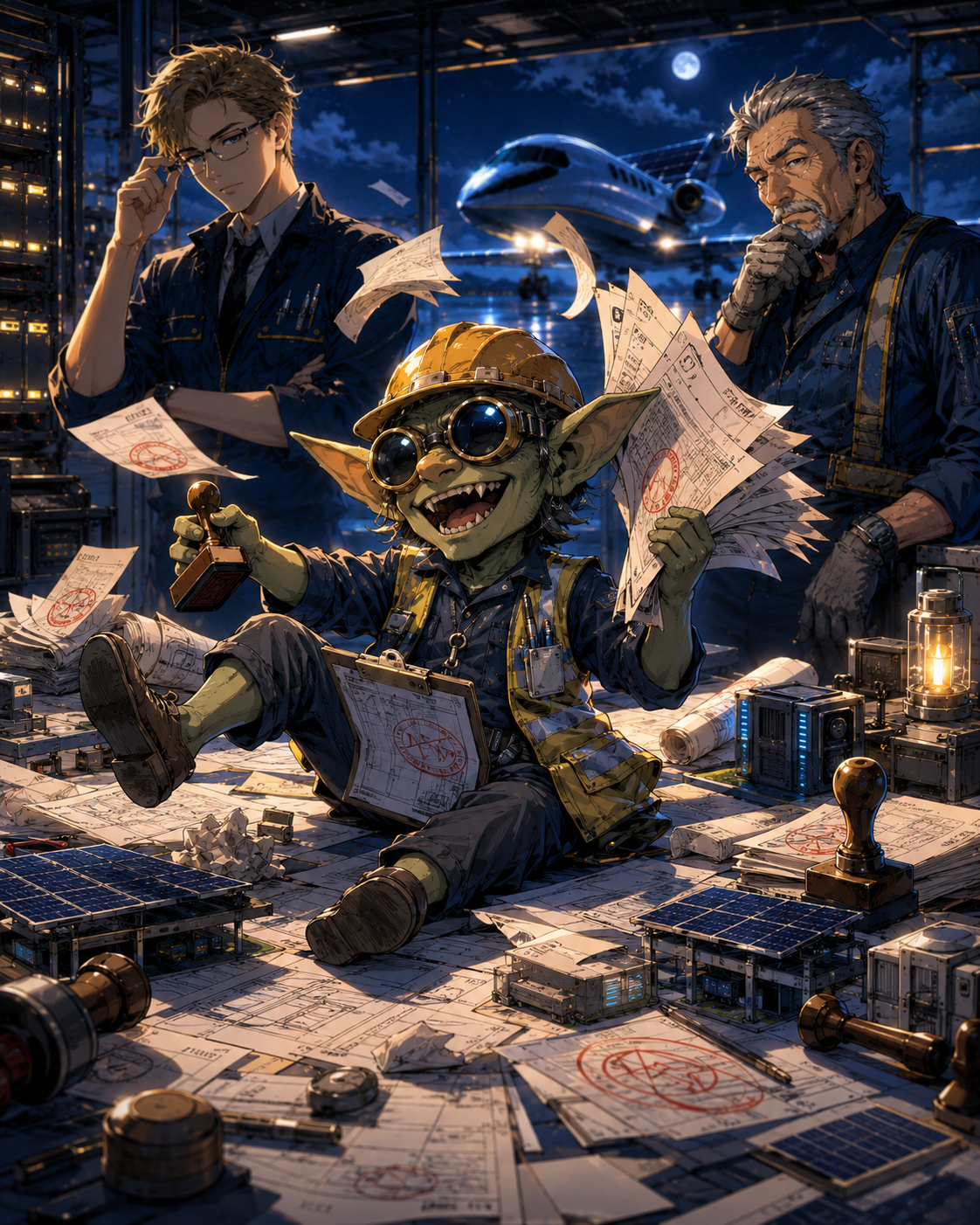
Plan-check goblin, clipboard class, red-stamp subspecies.
Paperwork villain file
Small body. Huge clipboard. The Permit Goblin lives inside airport solar drawings, stamped comments, missing details, plan check notes, and that one form nobody remembered.
“Beautiful solar canopy.” “Now show me sheet E-3.2, revision cloud 7.”
Character profile
The Permit Goblin is not strong. He is worse. He is procedural. He appears when Captain SolarJet says, “We can start next week,” and quietly asks whether the structural details, utility interconnection notes, fire access, equipment clearances, and airport coordination are actually complete.
He is comic because he is real. Every serious airport solar, battery, canopy, charger, or microgrid project has to survive drawings, reviews, approvals, revisions, inspections, and the slow grinding music of paperwork.
Official stats
He does not stop the project because he hates solar. He stops the project because the notes are not answered.
Plan-check goblin, clipboard class, red-stamp subspecies.
A rubber stamp, three comments, and a request for one more revised drawing.
Complete drawings, clear scope, coordinated trades, and crews who read the details.
Can turn one missing clearance note into a two-week character arc.

Airport solar reality
Solar canopies look glamorous in the hero image. In the drawing set, they become foundations, steel, wind loads, drainage, lighting, conduits, trenching, equipment locations, protective bollards, maintenance access, signage, utility coordination, and airport operations phasing.
The Permit Goblin loves the gap between the rendering and the buildable plan. The ground crew closes that gap by turning the dream into a coordinated scope of work.
Permit Goblin checklist
The faster these are answered, the less power he has over the manga.
Panels, batteries, inverters, disconnects, chargers, conduits, bollards, transformers, and controls all need real locations — not just vibes.
Airport operations, parking, ground crews, maintenance access, passengers, security, fire access, and utility crews all need to be considered.
The plan set should answer the obvious questions before the goblin turns them into formal comments.
Chief Battery’s response
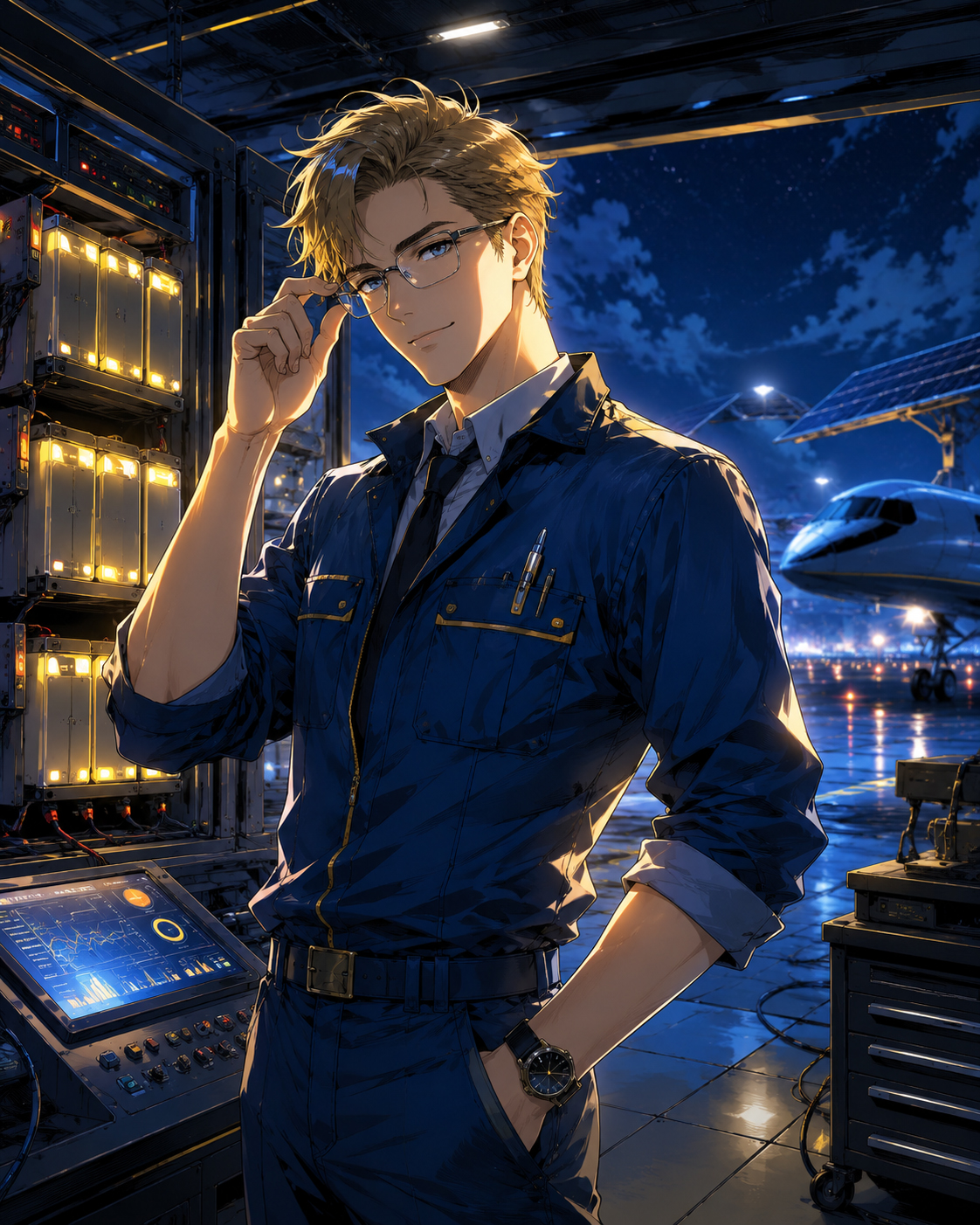
Chief Battery does not defeat the Permit Goblin with charisma. He defeats him with a complete design package, clear load priorities, equipment specs, safe disconnects, control logic, labeling, and enough patience to answer comments without turning the meeting into a manga battle scene.
For airport solar and battery projects, the paperwork is not separate from the power system. It is how the system becomes buildable, inspectable, maintainable, and safe.
Goblin habitats
Every missing detail is a little cave. Every unclear scope note is a snack.

Equipment clearances, battery placement, disconnects, ventilation, service access, and electrical coordination.
Enter the hangar
Charger loads, cable routing, protection, traffic flow, passenger areas, and power capacity.
Charge the taxi
Critical loads, redundancy, controls, access, labeling, and the old question: what must stay on first?
Study runway power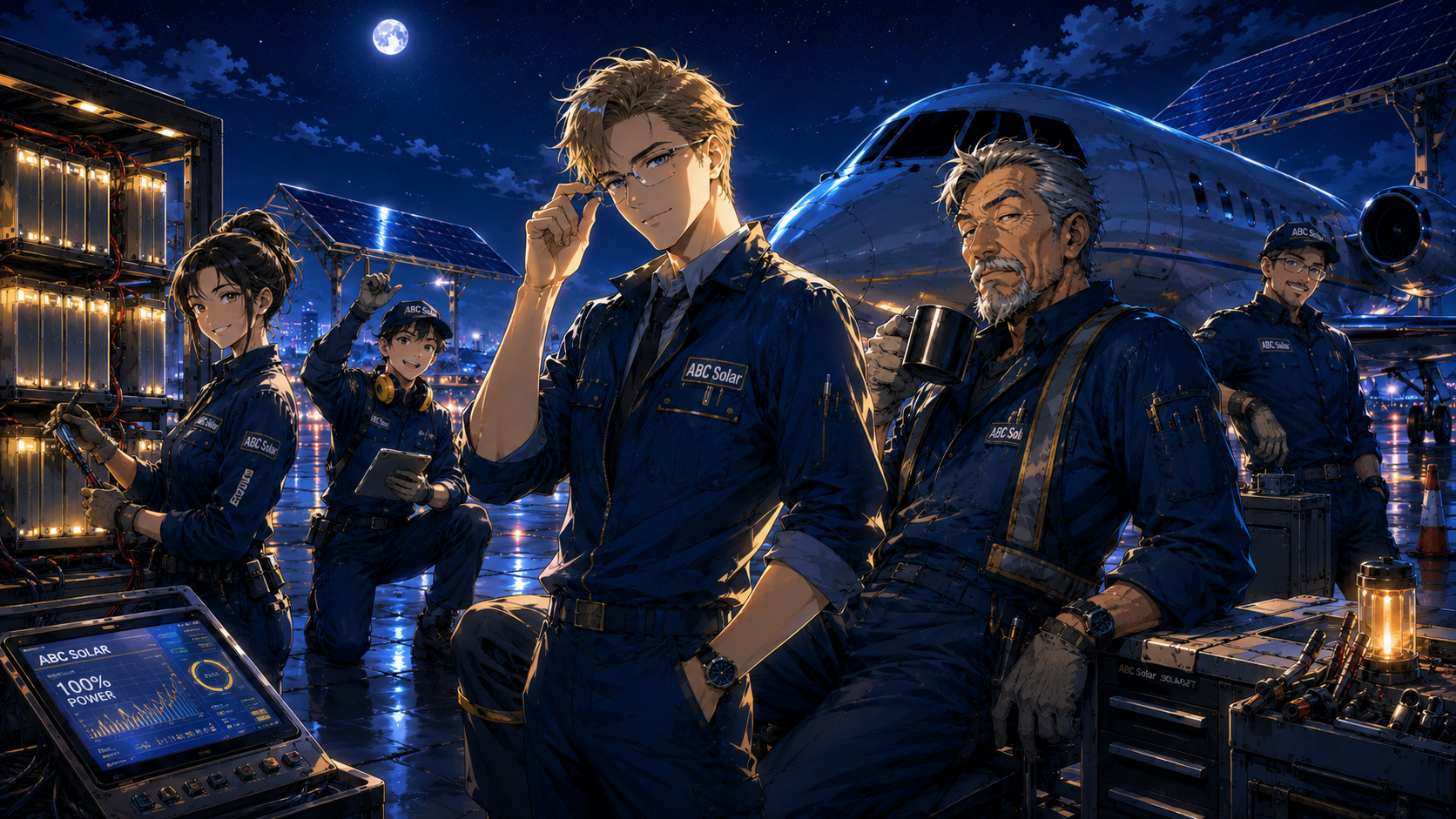
Ground crew reality
The Permit Goblin wants chaos. The ground crew wants a clean install. The difference is preparation: site walks, drawings, materials, equipment ratings, construction phasing, access, safety, and an honest understanding of what the project really requires.
That is why the Permit Goblin is not only a villain. He is also a reminder. The project that survives him is usually better documented, better coordinated, and more likely to work.
Related pages
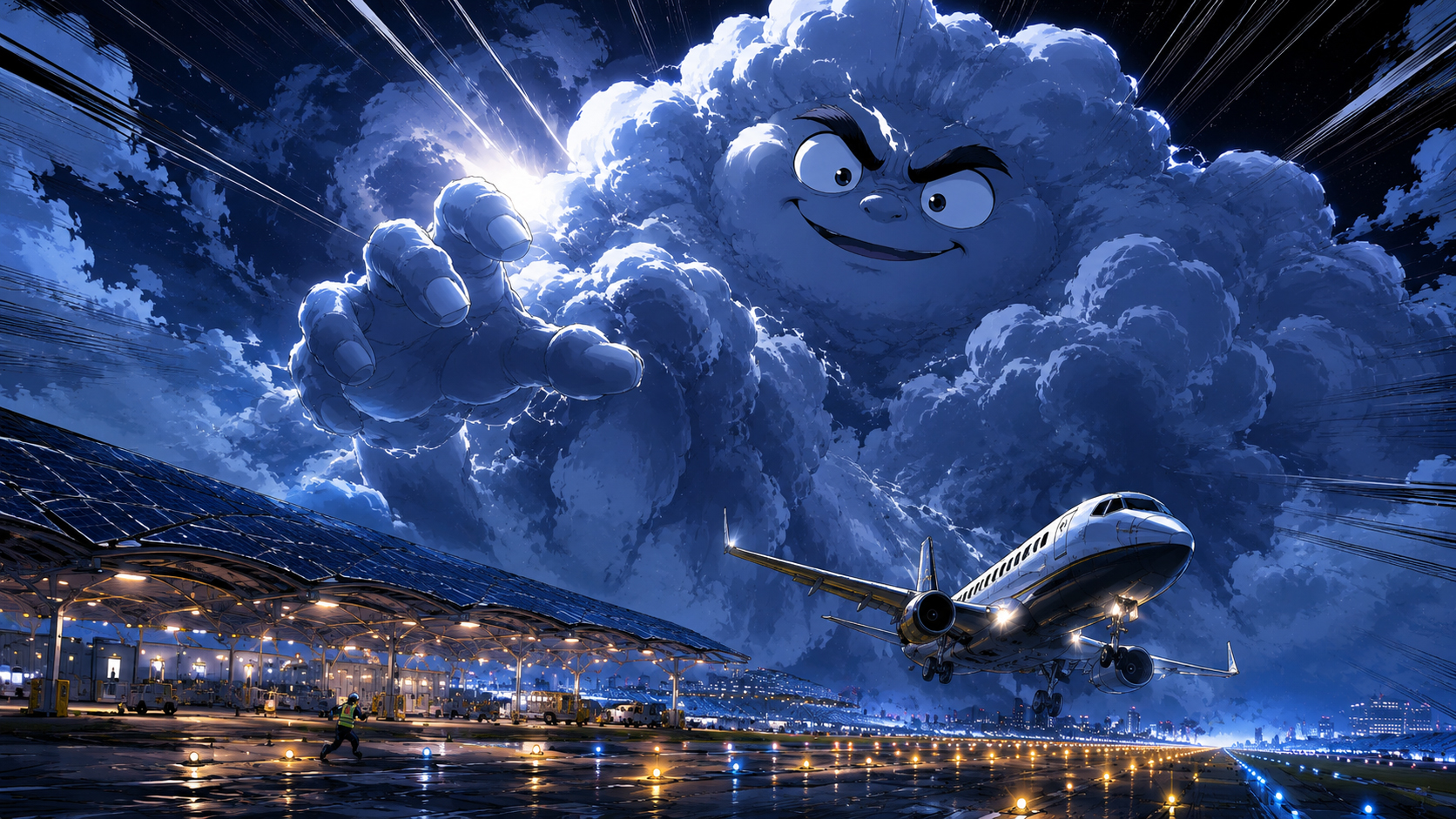
Weather is the villain that asks whether your sunny-day design has an ugly-day plan.
Meet Cloudzilla
Utility costs in villain form, waiting for bad timing and hungry loads.
Meet Madame Kilowatt
The team that turns heroic solar ideas into real wires, real labels, and real systems.
Meet the crew