Solar production
The panels generate when conditions allow. The control room watches how much is actually available.
Manga control room
The airport needs a brain. Solar panels, batteries, chargers, runway lights, hangars, and critical loads all need one calm control room before Captain SolarJet touches another button.
Solar makes power. The microgrid decides what happens next.

Episode opening
Captain SolarJet sees a runway. Madame Kilowatt sees a bill. Cloudzilla sees a chance to block the sun. The Permit Goblin sees one missing revision note.
Chief Battery sees the whole system: solar production, battery state of charge, charger demand, runway support, hangar loads, grid import, and the priority list that decides what matters first.
Microgrid manga logic
The comedy becomes useful when every dramatic villain becomes a measurable operating condition.
The panels generate when conditions allow. The control room watches how much is actually available.
Stored energy becomes a tool for nighttime, peak periods, cloudy moments, and selected backup loads.
Runway lights, hangars, chargers, security, pumps, tools, communications, and control systems all compete for power.
The system must know what stays on first, what can wait, and what happens when conditions change.

Chief Battery’s command chair
Chief Battery is calm because the system is visible. He can see whether solar is producing, whether the batteries are charged, whether chargers are pulling too much, and whether critical loads are protected.
In the manga, this makes him look almost supernatural. In real life, it is simply good controls, good metering, good labels, and a system designed so operators are not flying blind.
The episode in panels
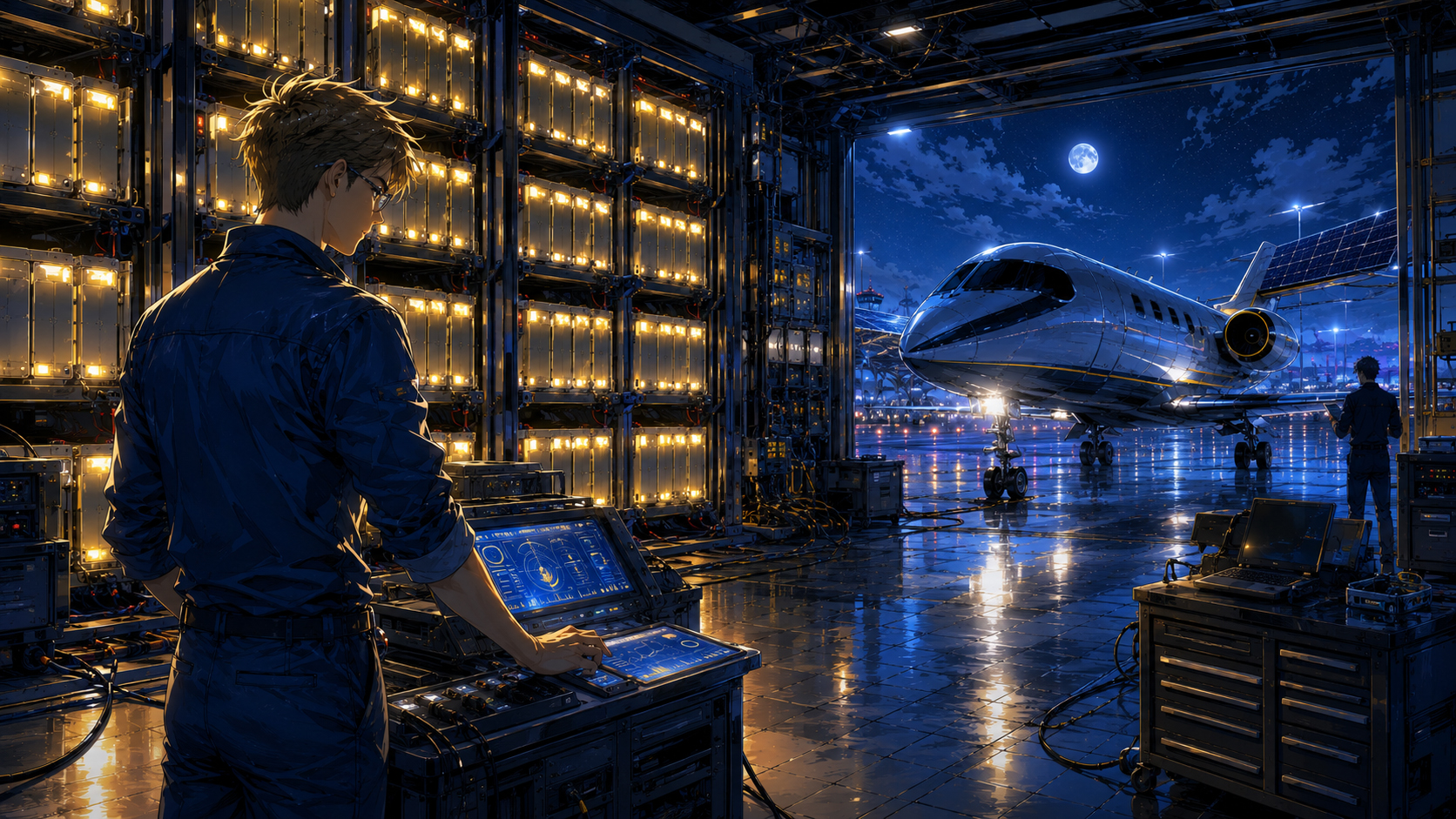
The manga panel where screens, batteries, and runway lights become more heroic than the jet.
Cloudzilla blocks the sun. Solar production drops. Captain SolarJet yells at the sky.
Madame Kilowatt appears as chargers, lights, and hangar loads stack into the evening window.
Chief Battery watches the dashboard and says, “Switch to priority mode.”
The storage system supports selected loads while the grid import stays controlled.
The lights hold. The airport keeps moving. Runway Ojisan nods once and goes back to coffee.
Captain learns that the control room is where clean power becomes operational power.

Priority loads
A microgrid is not only about producing clean energy. It is about deciding what that energy should do. Runway and taxiway support, safety systems, communications, controls, selected chargers, and essential hangar loads may need different treatment than convenience loads.
The control room gives the airport a hierarchy. In the SolarJets universe, that hierarchy is what keeps the joke from becoming an outage.
The villains become data
Clouds, peak rates, charger loads, and paperwork all get easier when the system is visible and planned.





Future loads
Electric air taxis, service vehicles, charging stands, and electrified ground operations can make airport load profiles more complex. That does not make solar impossible. It makes control more important.
The microgrid has to understand charger demand, solar production, battery capacity, and the operating schedule. Otherwise the future of flight becomes another way to make Madame Kilowatt laugh.