Charging loads
Aircraft and support-equipment charging can add concentrated demand during important operating windows.
Future aviation power
The future of flight may be electric, but the power problem lands on the ground: airport solar, batteries, chargers, controls, and a plan for when everything wants electricity at once.
Electric aircraft still need an outlet. The airport becomes part of the aircraft.
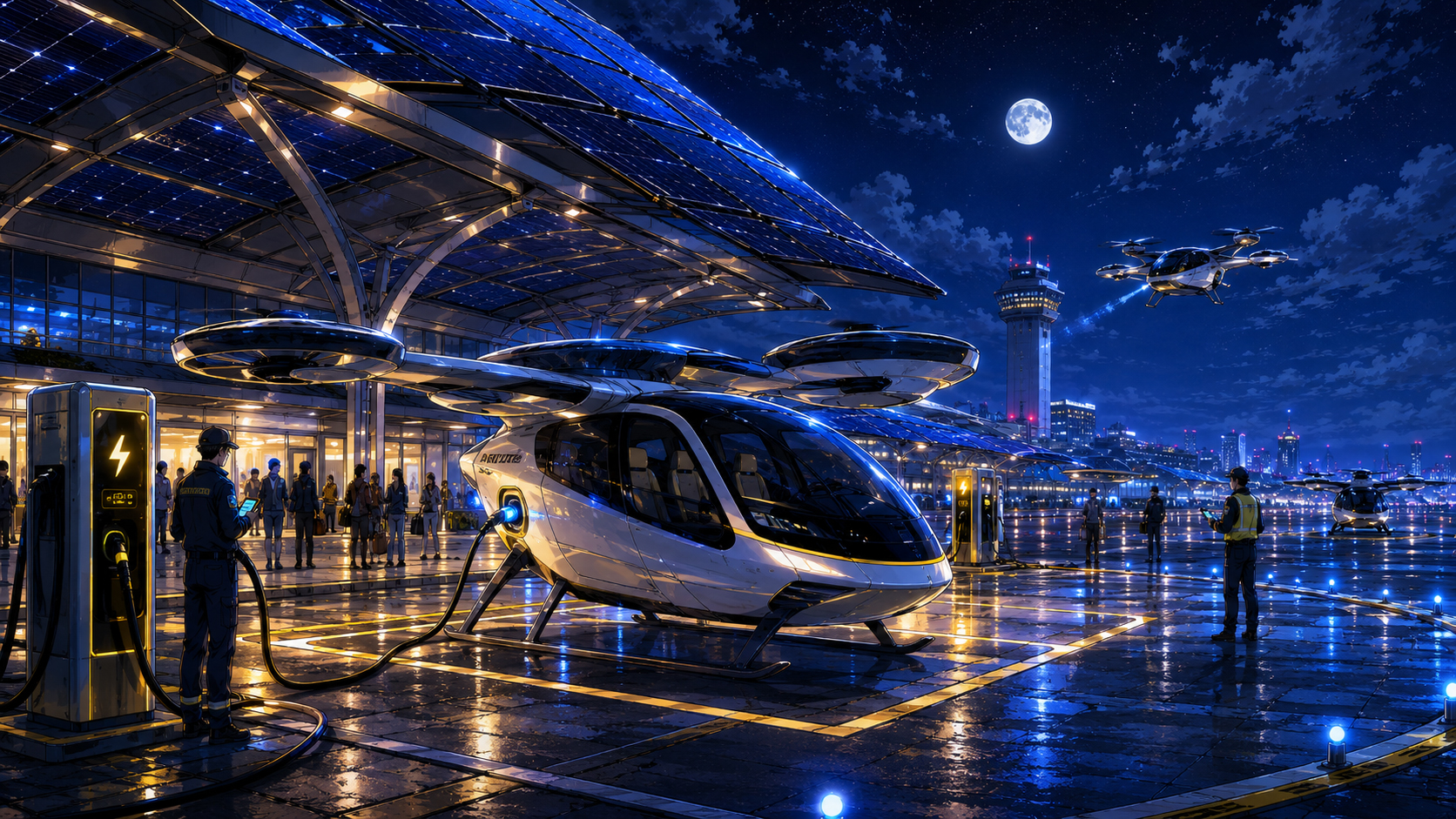
The real flight path
Captain SolarJet wants to talk about the aircraft. Chief Battery wants to talk about the charger. Runway Ojisan wants to know who labeled the disconnect. Madame Kilowatt wants to know what time everyone plugs in.
That is the SolarJets.com electric aviation lesson: the aircraft may be exciting, but the airport power system decides whether charging, operations, and reliability can work together.
What changes
Air taxis, ground support vehicles, maintenance tools, and aircraft charging can all reshape airport load planning.
Aircraft and support-equipment charging can add concentrated demand during important operating windows.
Airport canopies, hangars, rooftops, and service buildings can help provide local clean energy.
Stored power can help manage timing, support selected loads, and make solar useful beyond midday.
Controls coordinate solar, batteries, chargers, utility power, and airport priorities.

Solar canopies
Electric aviation makes airport solar more interesting because the loads are closer to the airport. Parking areas, passenger drop-offs, service yards, hangars, and charger zones can all become part of the energy map.
Solar canopies can provide shade, visible clean-energy architecture, and local generation near future electric loads. But they still need real engineering: structure, routing, protection, utility coordination, access, and approvals.
Electric aviation checklist
The future of flight should not arrive as a surprise load.
Identify when charging happens, how much power is required, what else is running, and whether the airport has capacity for the new demand.
Solar can serve daytime loads and charge batteries. Storage can help move useful energy into evening or high-priority operating windows.
Chargers, batteries, solar, runway support, hangars, and priority loads need one operating strategy, not six disconnected guesses.

Microgrid management
Electric aviation makes the airport microgrid more important because charging is not a passive load. It can be large, time-sensitive, and potentially expensive if it stacks with other demand.
Chief Battery’s control room sees the whole airport: solar production, battery state of charge, charger demand, runway support, hangar loads, grid import, and the priority logic that keeps the airport moving.
The villains approve
In the SolarJets manga universe, every airport power risk gets a face.


Reminds everyone that solar production is not guaranteed exactly when charging wants it.
Meet Cloudzilla
Wants charger locations, conduit routes, clearances, protection, and drawings.
Meet the Permit Goblin
Wants to know who is maintaining this future after the press event.
Meet Runway Ojisan
Battery support
Batteries can help make future flight charging more manageable by giving the airport another operating tool. They can store solar energy, help support selected loads, and reduce the shock of charging at the wrong moment.
The battery is not the whole answer, but it is a critical part of the conversation. Charging without storage and controls can turn future aviation into a rate problem with wings.
Ground crew future
Electric aviation will not be built by headlines. It will be built by crews, drawings, equipment, and testing.

The team that turns future-flight power ideas into real equipment, wiring, labels, and commissioning.
Meet the crew
Hangars may become key places where charging, storage, maintenance, and solar all meet.
Enter the hangar
Future flight still depends on the old truth: critical airport systems need reliable power.
Study runway power
The slogan still wins
Electric aviation makes the slogan more important, not less. Aircraft may charge in daylight or darkness. Airports may operate in fog, smoke, storms, and peak-rate windows. The energy system must be planned for the hour when the load appears.
Solar is the takeoff. Batteries are the landing gear. Controls are the pilot who keeps the airport from doing something foolish.
Related pages
The closer look at electric aircraft charging and future airport loads.
Open page
The solar-generation foundation for future electric aviation infrastructure.
Open page
The big SolarJets.com view of comedy, aviation, and airport power infrastructure.
Open page