Captain sees flight.
A shining jet, heroic music, and a future where every cloud politely moves out of the way.
Episode file
Captain SolarJet imagines the perfect aircraft: sleek, heroic, covered in solar panels, and completely unwilling to discuss clouds, night, fuel density, or runway power.
“The sun will carry us!” “Captain, the sun is currently below the horizon.”
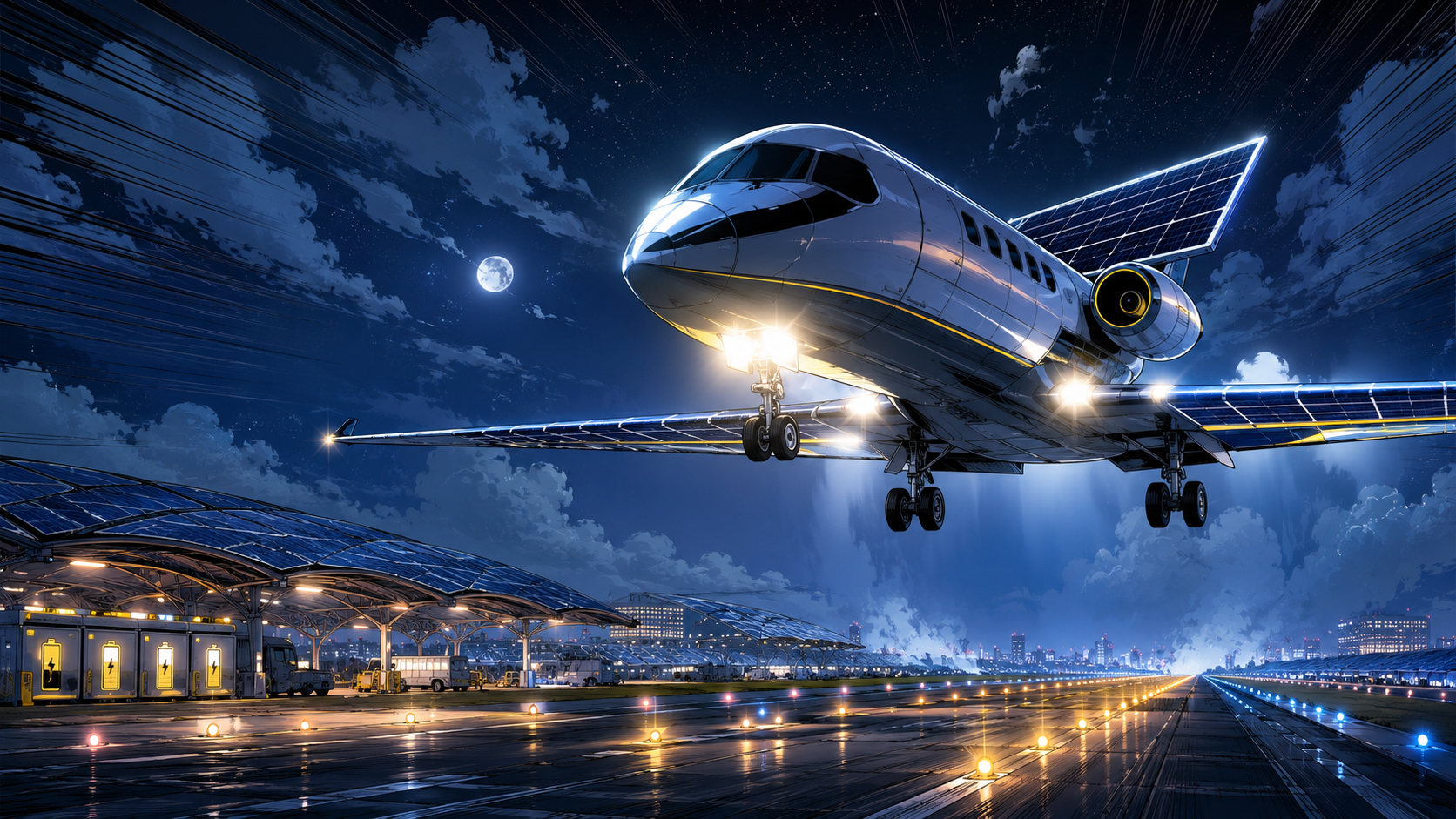
Opening scene
The Solar Jet Dream begins with a poster-perfect moment. The runway shines. The solar canopies sparkle. Captain SolarJet steps forward and announces that the future of flight will run on pure sunlight.
It is dramatic. It is glamorous. It is almost useful. Then Chief Battery looks at the flight plan and asks the question that ruins every heroic shortcut: “What happens after sunset?”
The dream sequence
The comedy works because everyone is looking at the same airport and seeing a different problem.
A shining jet, heroic music, and a future where every cloud politely moves out of the way.
Battery capacity, control logic, priority circuits, charge windows, and actual operating hours.
Labels, access, breakers, lights, wet pavement, coffee, and one more thing that will fail at midnight.
A busy airport, unmanaged demand, expensive timing, and a meter that knows how to smile.
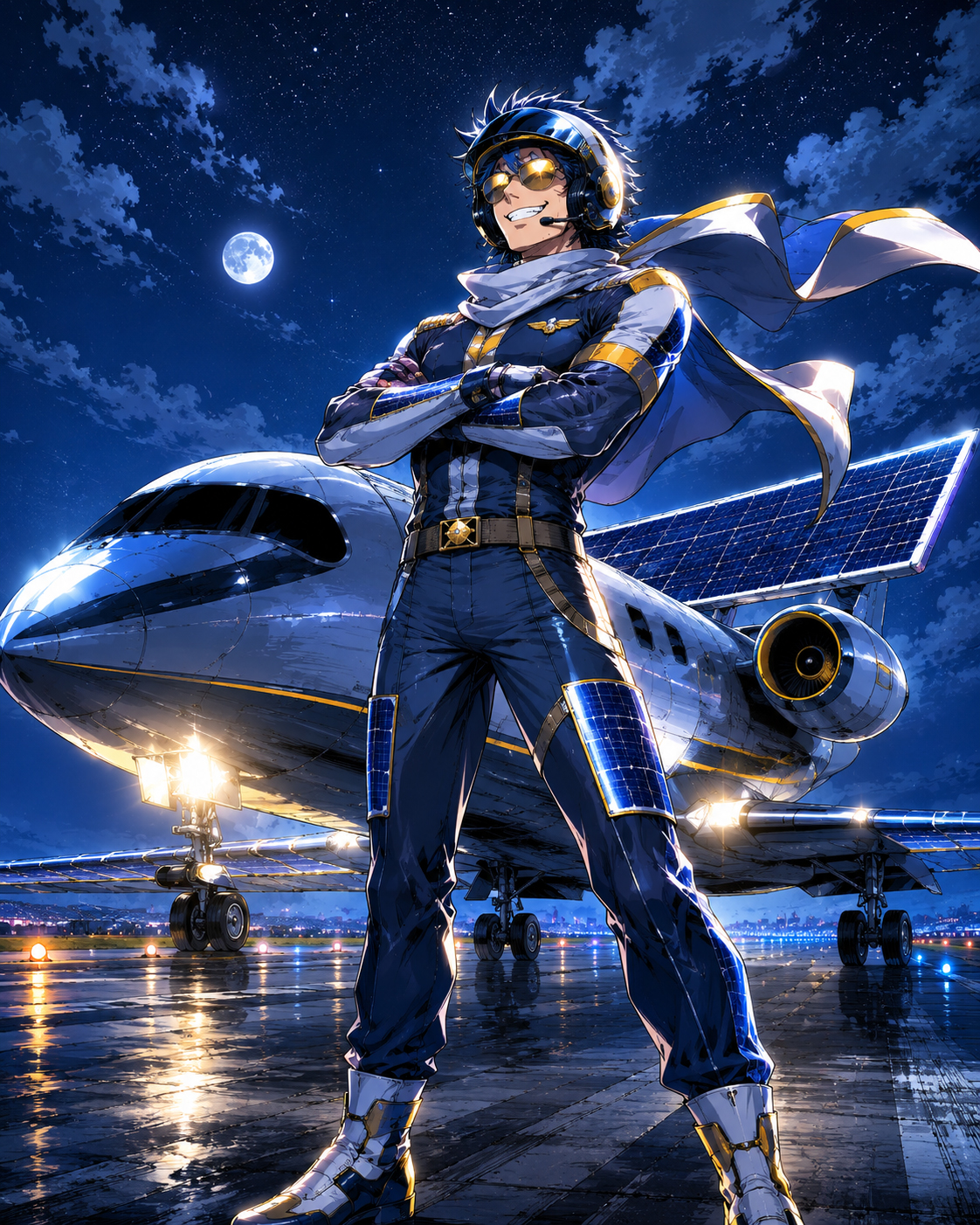
Captain’s pitch
Captain SolarJet is not embarrassed by technical gaps. Technical gaps are where he puts dramatic lighting. He talks about clean flight, solar wings, heroic takeoffs, and the great destiny of the sky.
The crowd loves him because the dream is beautiful. Chief Battery respects the dream too. He just refuses to let the dream taxi without storage, controls, backup logic, and a sober look at the loads.
Episode panels
A manga setup that begins in the clouds and lands in the electrical room.
The hangar doors open. The solar jet gleams under floodlights. Captain SolarJet raises his helmet like the future has already signed the contract.
“Today we fly on pure sunlight!” The reporters cheer. The solar panels sparkle. Runway Ojisan sips coffee and says nothing.
Chief Battery adjusts his glasses and asks, “What is the storage plan?” The music stops for half a second.
Cloudzilla appears over the runway, smiling like a creature who has ruined better press conferences.
Madame Kilowatt steps from the shadows with a peak-rate chart and the confidence of a villain who knows nobody read the tariff.
The battery room glows. The runway lights stay on. Captain learns that heroism requires a backup circuit.
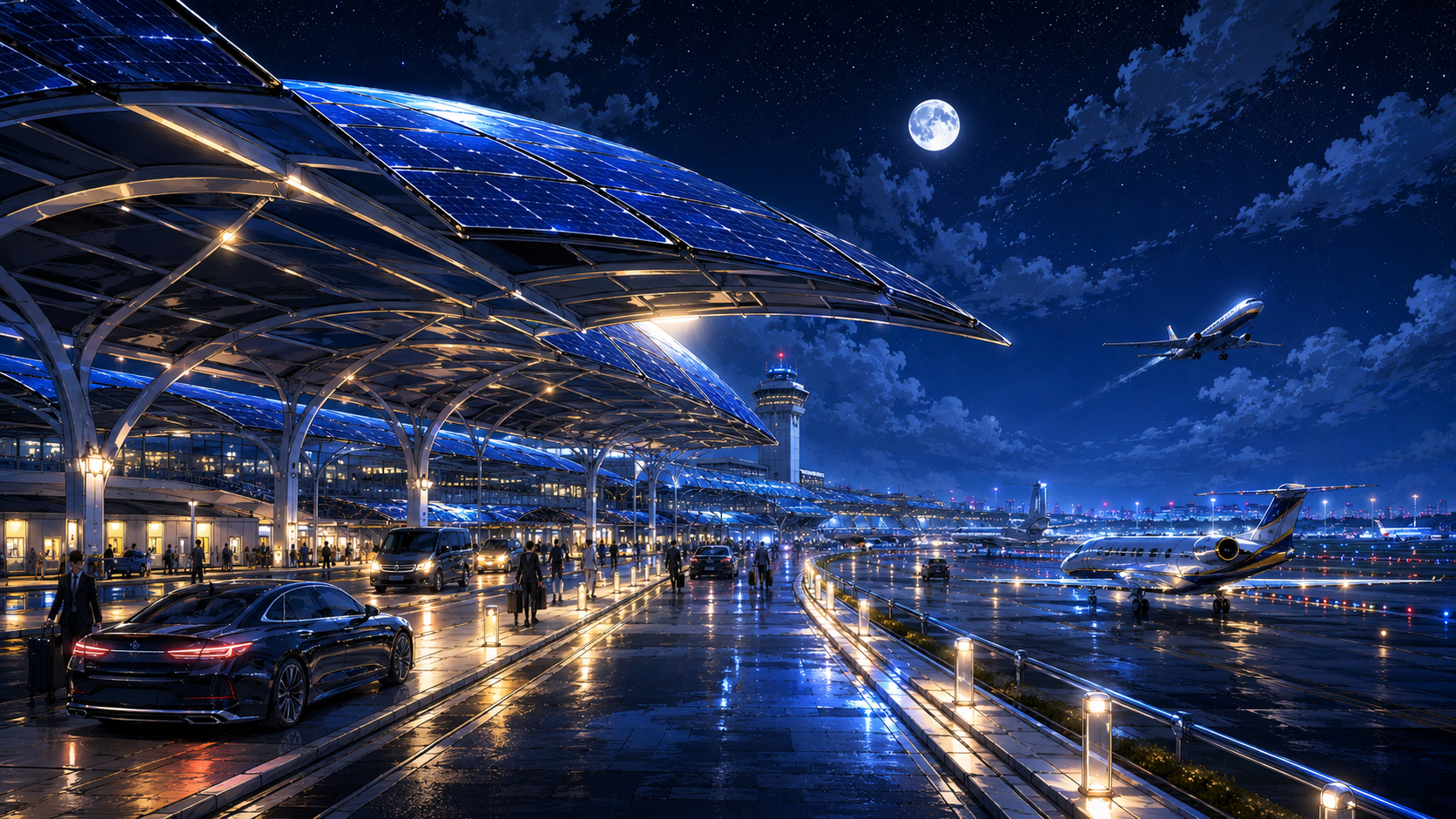
Where the dream becomes useful
Covering a jet with solar panels is the joke. Covering airport canopies, parking areas, hangars, terminals, maintenance buildings, and ground operations with well-designed solar is the practical direction.
Airports have large surfaces, daytime loads, security needs, lighting needs, electric ground equipment, chargers, and public visibility. That makes the ground side of aviation a strong place to talk about solar, storage, and microgrids.
The reality check
The dream fails when it pretends one technology solves every condition. The dream works when solar becomes part of a complete power system.
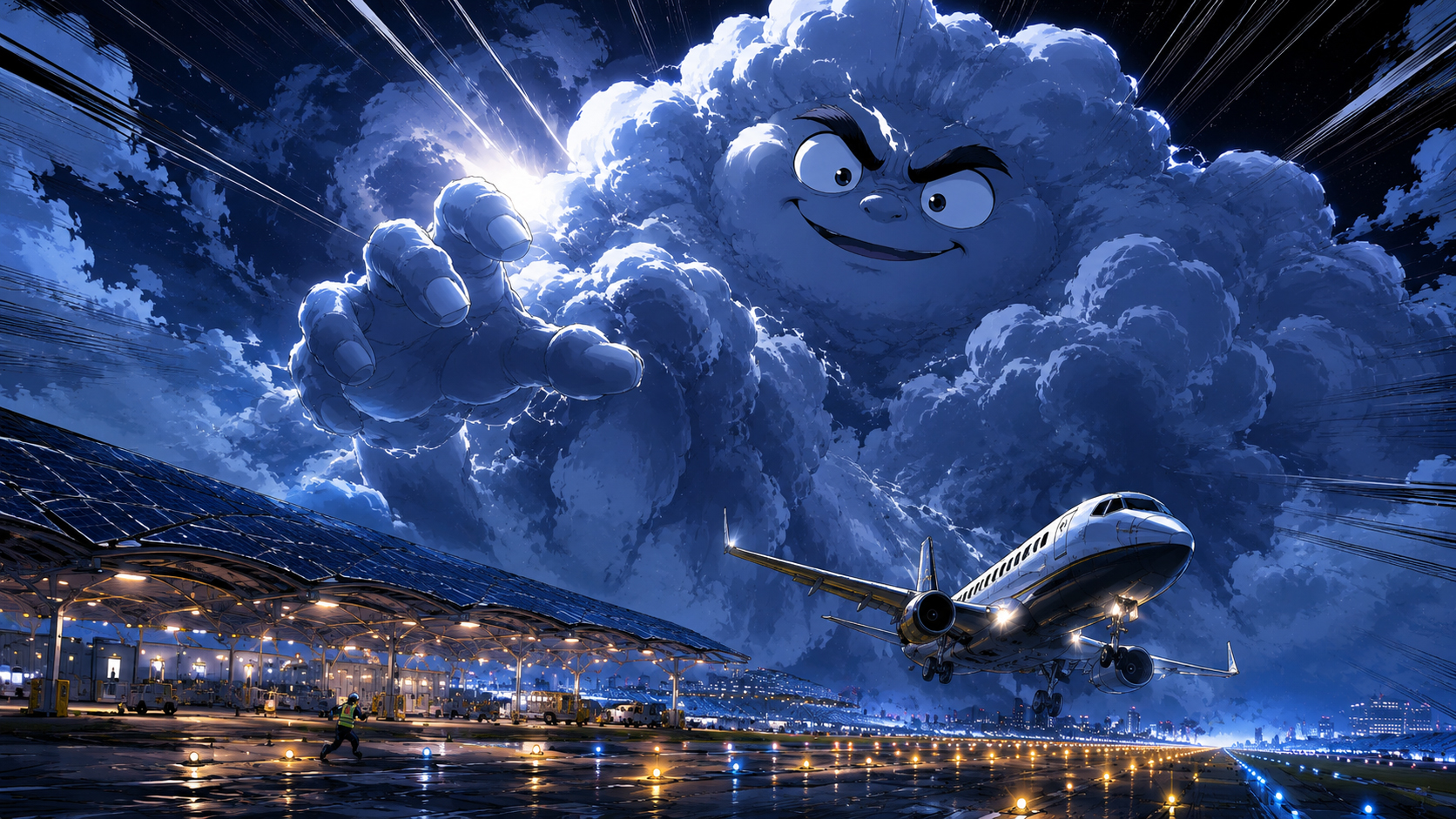
The weather monster that turns a sunny promise into an intermittency lesson.
Meet Cloudzilla
Stored power turns solar from a midday hero into a system that can support selected loads after dark.
Study battery backup
The airport still needs lights, controls, and critical systems when the panels are asleep.
Explore runway power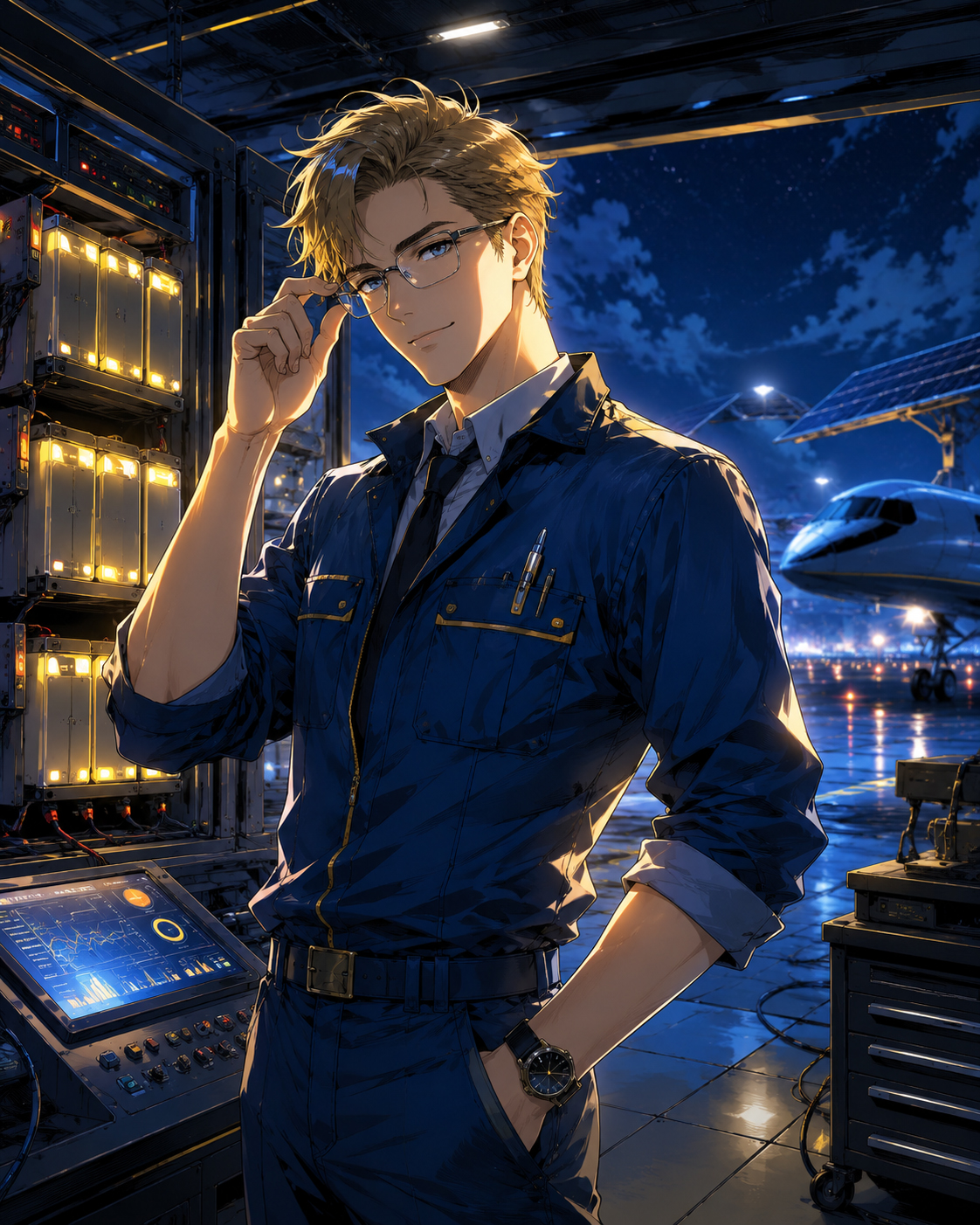
Chief Battery’s correction
Chief Battery does not kill the dream. He lands it. His answer is not “no.” His answer is “show me the load list, the storage duration, the control strategy, the equipment ratings, and the priority circuits.”
That is how a silly solar jet fantasy becomes a real discussion about airport energy systems. The panels create the romance. The batteries create the reliability.
Next episodes
Captain SolarJet survives the first lesson, which means he is ready to make several more confident mistakes.
The weather becomes a character, and Captain discovers that optimism is not a power source.
Open episode
The solar jet returns after dark and learns the runway has standards.
Open episode
Chief Battery finally gets the whiteboard and the manga becomes electrical.
Open episode